

A break-in rarely happens at a convenient time. It happens when you are asleep, at work, out running errands, or trying to keep a business moving. That is why many property owners ask the same question: are monitored alarms worth it, or is a basic self-monitored system enough?
The honest answer is that monitored alarms are worth it for many homes and small businesses, but not for everyone. It depends on what you are protecting, how quickly you can respond to alerts, and how much peace of mind matters to you when you are not on site.
What a monitored alarm actually does
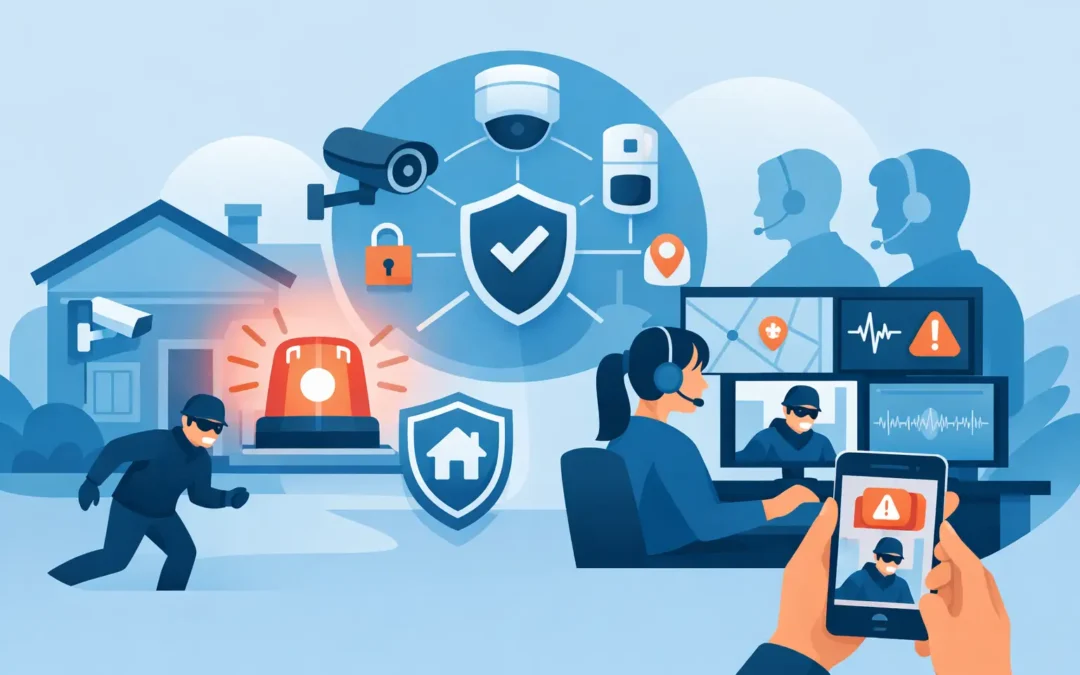
A monitored alarm system does more than sound a siren or send a notification to your phone. When the system is professionally monitored, an alarm event is also sent to a monitoring center. From there, trained staff can verify the alert, contact you, and request emergency response if needed.
That changes the role of the system. Instead of only telling you something may be wrong, it creates a backup response process when you miss a call, sleep through a notification, or cannot act right away.
For many people, that backup is the real value. Security problems do not always happen when you can check your phone and decide what to do next.
Are monitored alarms worth it for homeowners?
For homeowners, the biggest benefit is coverage during the hours when life gets in the way. If you are at work, on vacation, or simply away from your phone, a monitored alarm adds another layer between an alert and no response at all.
That matters even more if your household includes children, older adults, or anyone who may need help during an emergency. A monitored system can also support smoke, carbon monoxide, and panic alerts, which extends its value beyond burglary protection.
Still, not every homeowner needs monitoring. If you are almost always home, have strong neighborhood awareness, and are comfortable handling every alert yourself, self-monitoring may be enough. Some people are fine getting an app notification and deciding whether to call a neighbor or the police. Others know they do not want that responsibility every time the system goes off.
A useful way to think about it is this: if you want security to keep working even when you are distracted, unavailable, or offline, monitoring becomes a lot more appealing.
Are monitored alarms worth it for renters?
Renters often assume monitored alarms are only for homeowners, but that is not the case. If you live in an apartment, condo, or rental home, your risk is still real. Package theft, unauthorized entry, and after-hours incidents can happen anywhere.
Monitoring can make sense for renters who travel often, work irregular hours, or live alone. It can also help if you want a stronger response plan without relying entirely on building management or nearby neighbors.
The main trade-off is cost versus length of stay. If you plan to move soon, you may want a simple, portable system without a long service commitment. In that situation, the best answer is not just whether monitored alarms are worth it, but whether the terms fit your living situation.
Why small businesses often see more value
For small business owners, monitored alarms are often easier to justify. A store, office, salon, warehouse, or service location may sit empty overnight, on weekends, or during holidays. If an alarm goes off at 2:00 a.m., someone still needs to know and act.
That is where monitoring helps most. It reduces the chance that a missed call, dead phone battery, or busy schedule leaves your property exposed. It also helps owners who do not want employees making security decisions during stressful situations.
If your business has inventory, equipment, cash, customer records, or restricted areas, the cost of a monitored system may be small compared with the cost of even one serious incident. The same applies to property managers responsible for vacant units, common areas, or multiple entry points.
The main benefits of professional monitoring
The biggest advantage is response support. A monitored alarm does not just make noise. It creates a process. That matters when seconds count, but it also matters when you are simply not in a position to handle the situation yourself.
It also adds consistency. Self-monitoring depends on you noticing the alert, understanding it, and responding quickly. That can work well, but it also leaves room for missed notifications, delayed reactions, and uncertainty about what is happening.
Another benefit is peace of mind. That phrase gets overused, but in security it matters. Many people are not buying monitoring because they expect an alarm every week. They are buying it because they do not want to wonder who gets the alert if something happens while they are unavailable.
For some properties, monitored alarms can also support insurance requirements or help strengthen an overall risk management plan. That is especially common in small commercial settings.
When monitored alarms may not be worth it
Professional monitoring is not automatically the best choice in every case. If your main goal is a low-cost alert system and you are comfortable managing everything through your phone, self-monitoring may meet your needs.
It may also be less valuable if the property is almost never left unattended, if several responsible adults are always available to respond, or if the protected space has a very low risk profile. In those cases, paying monthly for monitoring may feel unnecessary.
False alarms are another factor. A poorly installed or poorly managed system can create frustration, and repeated false alarms may lead some users to question the value of monitoring. That is not usually a reason to avoid monitored systems altogether, but it is a reason to choose a setup that is simple, reliable, and properly configured.
Cost matters too. If the monthly fee stretches your budget, you may be better off with a well-designed self-monitored system than a monitored system you resent paying for and eventually cancel.
How to decide if a monitored alarm is worth it for you
A practical decision starts with a few simple questions. How often is the property empty? How quickly can you respond to an alert? What would one serious incident cost you in money, time, stress, or disruption? And do you want to be the only person responsible for responding every time?
If you own a small business, ask whether you are comfortable being the first and only line of response after hours. If you manage property, think about whether you can realistically monitor every alert yourself. If you are a homeowner or renter, consider your schedule, your travel habits, and whether you want backup when life gets busy.
The more limited your ability to respond, the more value monitoring tends to offer.
What to look for if you choose monitoring
If you decide to move forward, keep it simple. Look for a system that is easy to use, clear about pricing, and built around the type of property you actually have. You do not need a complicated package full of features you will never use.
Ask how alerts are handled, what happens during an alarm event, whether fire and carbon monoxide monitoring are included, and what support is available if you need help. Good security should make decisions easier, not harder.
That is where working with a straightforward provider matters. A company like Simple Security Solutions focuses on making protection easier to understand, so you can choose what fits without sorting through layers of jargon or pressure.
So, are monitored alarms worth it?
For many homes, rentals, and small businesses, yes. They are worth it when you want more than a loud siren and a phone notification. They are worth it when you need a backup response, when the property is often unattended, or when the cost of a delayed reaction is simply too high.
If you are confident you can handle every alert yourself, a self-monitored setup may be enough. But if you want security that keeps working when you cannot, professional monitoring is often money well spent.
The right system should not leave you guessing. It should fit your property, your routine, and your budget well enough that you can get on with your day knowing someone will respond when it matters.