

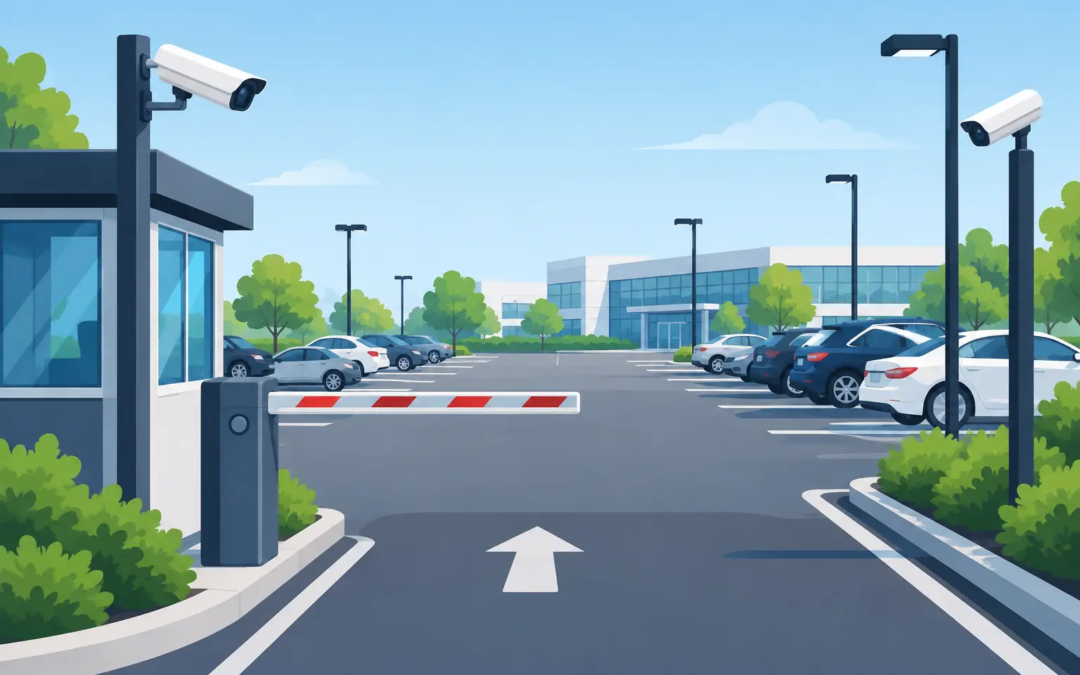
A parking lot can feel like an afterthought until a break-in, vehicle theft, slip and fall, or suspicious encounter happens there. The best parking lot security features make the area easier to see, harder to access without notice, and more comfortable for the people who use it. For a small business, apartment community, or residential property, the goal is not to build a complicated security operation. It is to address the real risks with practical layers of protection.
A good parking lot plan starts with one question: what happens in this space after normal business hours? A customer parking lot that is empty overnight needs a different approach than an apartment lot with residents coming and going at all hours. The right setup should match how the property is used, where people feel exposed, and what incidents you want to prevent.
The Best Parking Lot Security Features Work Together
No single device can cover every risk. Bright lights help people see, but they do not record an incident. Cameras can provide evidence, but only if they capture a useful view. Access controls can limit entry, but they need clear rules and regular upkeep.
The strongest results come from combining a few straightforward features that support each other. Start with the areas that create the most concern: entrances, exits, walkways, payment stations, loading areas, dumpsters, side doors, and sections of the lot hidden by landscaping or buildings.
Reliable lighting is the first line of defense
Poor lighting creates opportunity. It also makes ordinary visitors feel uneasy, especially when they are walking alone or returning to their vehicle after dark. Consistent exterior lighting is one of the most effective ways to improve both safety and perceived security.
Focus on even coverage rather than simply installing the brightest possible fixtures. Dark gaps between light poles, shadows around dumpsters, and poorly lit paths to building entrances can undermine an otherwise well-lit lot. LED fixtures are often a practical choice because they provide clear light and generally require less maintenance than older options.
Motion-activated lighting can be useful near side entrances, storage areas, or smaller lots that do not need full-time lighting. For busy customer or resident parking, steady lighting is usually the better choice. Motion-only lights may leave people briefly in the dark or create inconsistent camera footage.
Lighting needs maintenance to remain useful. Burned-out bulbs, damaged fixtures, and overgrown trees can turn a good plan into a weak one. A simple monthly nighttime walk-through can reveal problems that are easy to miss during the day.
Security cameras should capture useful details
Visible cameras can discourage some unwanted activity, but their real value is helping you understand what happened if an incident occurs. That means placement matters more than the number of cameras on the wall.
A camera at each vehicle entrance and exit can help document traffic in and out of the property. Cameras aimed at parking rows, pedestrian walkways, building doors, and payment or pickup areas can cover the places where people and vehicles are most likely to interact. Position them high enough to prevent easy tampering, while still providing a clear view of faces, vehicle movement, and key activity zones.
Avoid treating cameras as decorative equipment. A camera pointed into glare, aimed too wide, blocked by a sign, or installed without enough light may not provide usable footage. Night vision and adequate lighting should be planned together. It is also wise to confirm how long video is stored and who can access it when needed.
For many small properties, a professionally installed camera system with remote viewing offers a practical balance. Owners or managers can check activity when away from the site without having to monitor screens all day. However, remote access should be protected with strong passwords and limited to trusted users.
Controlled access limits unnecessary traffic
Not every parking lot needs a gate. A retail business that welcomes the public during open hours has different needs from a private office lot, condominium community, or employee-only facility. Still, controlling vehicle access can reduce trespassing, illegal dumping, unauthorized overnight parking, and repeated suspicious activity.
Gates, keypads, key fobs, access cards, and mobile credentials can all work, depending on the property. The simplest option that fits the site is often the best one. A small gated residential lot may do well with a keypad and resident codes. A business with frequent staff changes may benefit from access credentials that can be removed quickly when someone leaves.
Access control should never interfere with emergency access. Fire lanes must remain clear, and first responders need a reliable way to enter. Clear procedures matter just as much as the equipment itself.
Even without a gate, signs and pavement markings can establish boundaries. Mark private parking areas, reserved spaces, visitor zones, and tow-away rules clearly. These details will not stop every violation, but they remove confusion and make enforcement more consistent.
Clear sightlines help people and cameras
Security is partly about what people can see. Tall shrubs, dense trees, stacked materials, and large signs can create hiding places or block views between the lot and the building. Trimming landscaping and keeping common areas clear makes the property easier to monitor naturally.
Pay attention to the route from parking spaces to entrances. People should be able to see where they are going, identify an open doorway, and avoid walking through isolated corners. If a walkway is hidden behind a building or fence, consider adding lighting, a camera, or a different route.
This approach is often called natural surveillance, but the idea is simple: a space that is visible is generally less inviting for unwanted activity. It can also make employees, residents, and customers more likely to report something that does not look right.
Emergency communication adds reassurance where it matters
Emergency call stations, panic buttons, intercoms, or clearly posted contact information can give people a way to ask for help quickly. They are especially useful in larger lots, medical offices, multifamily communities, late-night businesses, and properties where people may arrive or leave alone.
This feature is not necessary for every site. A small lot directly outside a staffed storefront may be better served by strong lighting, cameras, and clear employee procedures. But if users regularly park far from the building or the property has limited staff after hours, a reliable communication option can make a meaningful difference.
If you install an emergency device, test it regularly and make sure calls go somewhere that can respond. A call box that no one answers creates a false sense of security.
Simple Procedures Make Security Features More Effective
Equipment works better when people know what to do with it. Property managers and small business owners should have a basic process for reviewing camera footage, reporting damaged lights, responding to gate failures, and handling suspicious activity. The process does not need to be long or technical. It just needs to be clear.
Employees should know which doors are expected to remain locked, where visitors should park, and who to contact after hours. Residents may need reminders not to share gate codes or prop open access doors. These small habits close gaps that equipment alone cannot fix.
A regular check of the lot also helps catch issues early. Look for vandalized cameras, faded signs, broken gates, pooling water, loose fencing, and areas where lighting is no longer adequate. Conditions change over time as trees grow, tenants change, or nearby construction alters traffic patterns.
How to Prioritize Your Parking Lot Security Budget
If you cannot improve everything at once, begin with the feature that addresses the clearest risk. For most properties, that means repairing lighting problems first. Next, add camera coverage at entrances, exits, and vulnerable areas. After that, consider access controls or emergency communication based on how private the lot is and when it is used.
Do not let a low-cost camera package drive the entire decision. A few properly placed cameras, dependable lighting, and a workable response plan are usually more valuable than a large collection of devices that no one checks or maintains. The best setup is one your property can actually operate day after day.
Parking lot security does not have to be confusing. Start by making the space visible, keeping access appropriate for the property, and giving people a clear way to get help or report concerns. Those practical steps can turn an overlooked area into one that feels safer every time someone walks to their car.