

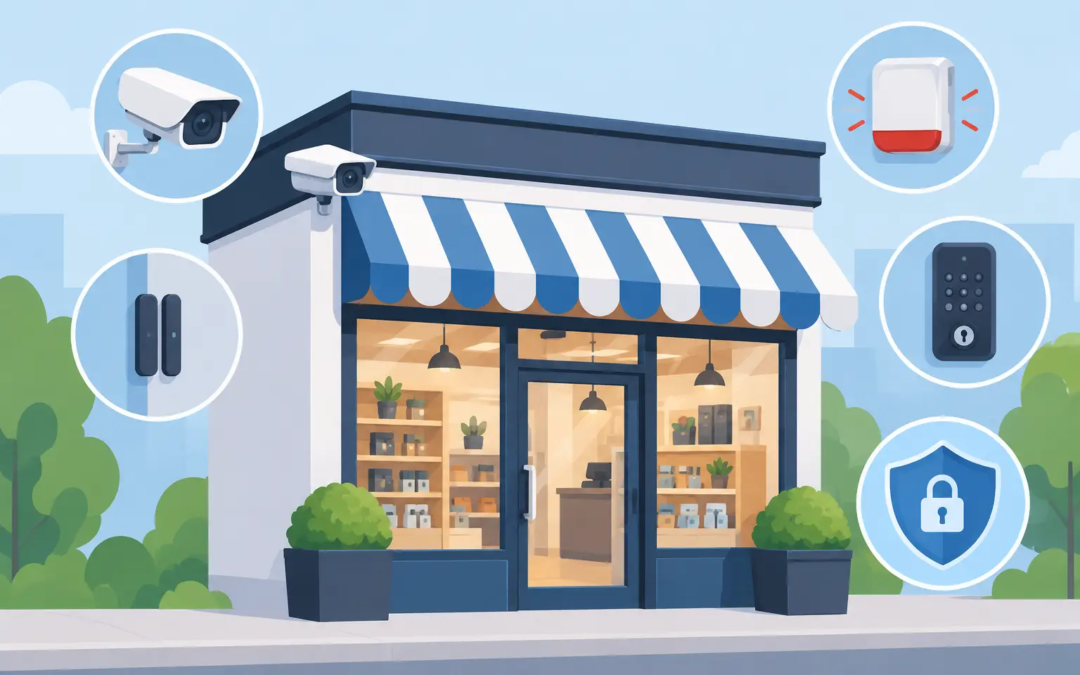
A small shop can feel secure during a busy afternoon and vulnerable just minutes after closing. A back door that does not latch, a dark side entrance, or a register left too visible from the street can create an avoidable opportunity. The best security improvements for small shops are not always the most expensive. They are the practical changes that make your people, inventory, cash, and building harder to target – and easier to monitor.
The right setup depends on your location, hours, inventory, and the layout of the property. A neighborhood gift shop has different concerns than a convenience store or repair business. Still, most small businesses benefit from the same approach: secure the physical entry points, improve visibility, add reliable detection, and build simple daily routines.
Start With the Risks Around Your Shop
Before buying equipment, walk through your shop as if you were arriving after hours. Look at the front entrance, rear door, windows, receiving area, dumpster enclosure, and any shared hallways or parking spaces. Ask where someone could enter unnoticed, hide from view, or take merchandise without being observed.
This walk-through often reveals useful fixes that do not require a major remodel. A broken gate latch, overgrown shrubs near a window, or stacked boxes blocking a camera’s view can weaken an otherwise good security plan. Check the property during daylight and after dark. Lighting conditions can change dramatically once the surrounding businesses close.
Also consider the risks during business hours. Shoplifting, fraudulent returns, unauthorized access to storage rooms, and cash-handling mistakes can cause losses without a forced entry. Good security should support your staff and daily operations, not only protect the building overnight.
Improve Doors, Locks, and Windows First
The strongest alarm system cannot make up for a door that is easy to force open. Exterior doors deserve immediate attention, especially rear and side entrances that receive less traffic and less visibility. Doors should fit tightly in their frames, close fully, and have commercial-grade deadbolts or other appropriate hardware installed correctly.
For glass storefront doors, consider the condition of the frame, lock, and glass itself. Security film can help hold broken glass together and delay entry, though it is not a replacement for proper locks or monitoring. If you use roll-down gates or shutters, make sure employees know how to secure them consistently and report damage right away.
Windows need the same attention. Keep display windows clear enough for people outside to see into the shop when possible. Avoid creating blind spots with tall displays, heavy signage, or clutter near entrances. For windows that do not need to open, secondary locks or other reinforcement may be worthwhile.
Key control matters, too. Keep a simple record of who has keys, access codes, and alarm credentials. When an employee leaves, collect keys and change codes promptly. It may feel like a small administrative task, but it closes a common gap that can remain unnoticed for months.
Use Lighting to Remove Hiding Places
Good lighting is one of the most practical security improvements for small shops because it improves visibility without making the space feel unwelcoming. Focus on entryways, walkways, rear doors, loading areas, parking spaces, and trash or storage areas. Employees should be able to see clearly when opening or closing the business.
Motion-activated exterior lights can be helpful for low-traffic areas. They draw attention when someone approaches while avoiding the cost of running every fixture at full brightness all night. For areas with regular after-hours activity, steady lighting may be the better choice. The goal is simple: eliminate dark corners where someone can work without being seen.
Inside, keep the sales floor, register area, and aisles well lit. Clear sightlines help staff notice when customers need assistance and can discourage theft at the same time. This is one of the few security measures that can also improve the customer experience.
Add Cameras Where They Can Actually Help
Security cameras are most useful when they are placed to answer real questions: Who entered? Which door was used? What happened at the register? What occurred in the stockroom? A camera mounted too high, pointed toward glare, or blocked by merchandise may record footage without providing useful details.
Prioritize coverage at entrances and exits, cash-wrap areas, high-value displays, storage rooms, and rear access points. Make sure cameras capture faces near doors and enough detail around registers to review transactions when needed. Cameras facing outward can also help document activity near the storefront or parking area.
Remote viewing can give an owner or manager added peace of mind, particularly if the business is closed overnight. But it should not turn into a reason to watch employees constantly or respond to every minor alert. Set notifications for events that matter, such as after-hours motion or a door opening outside normal business hours.
Cameras are a record of an event, not always a way to stop it. Pair them with visible signage, good lighting, strong locks, and an alarm system for better protection.
Choose an Alarm System That Fits Your Routine
A monitored alarm system adds a layer of protection when the shop is empty or when employees need help during an emergency. Door and window contacts can alert you to unauthorized entry, while motion detectors add coverage inside the building. Panic buttons may be appropriate for businesses that handle cash, work late, or face a higher risk of confrontations.
The best system is one your team can use without confusion. Employees need clear instructions on arming, disarming, responding to false alarms, and contacting a manager if something is not working. Keep the process short and consistent. If arming the system takes too long or regularly creates errors, people may skip it when they are tired or in a hurry.
Do not overlook testing and maintenance. Check door contacts, replace batteries when needed, and confirm that the monitoring contact list is current. A system that has not been tested in a year may give a false sense of security.
Make Cash and Inventory Less Exposed
Cash procedures should reduce the amount of money available at the register and limit who can access it. Use regular cash drops, keep the till at a set amount, and avoid discussing cash-handling schedules where customers can hear. If you use a safe, choose a location that is not obvious from the sales floor and establish who can open it.
For inventory, focus first on items that are small, high-value, easy to resell, or frequently missing. Place those products where staff have a clear view or use secured displays when appropriate. Keep stockrooms locked, organized, and accessible only to employees who need entry.
There is a balance to strike. Locking every item behind a counter can frustrate customers and slow down sales. A better approach is to protect the highest-risk items while keeping the rest of the shop open, clean, and easy to browse.
Build Simple Opening and Closing Habits
Equipment works best when daily habits support it. Create a short opening and closing checklist that staff can follow without guessing. Opening tasks may include checking doors and windows, turning on lights, and looking for signs of damage. Closing tasks should include checking bathrooms and stockrooms, securing cash and inventory, locking all access points, and arming the alarm.
Whenever possible, avoid having one employee close alone. If staffing does not allow that, establish a check-in procedure with a manager or another team member. Employees should know they can pause a closing routine and ask for help if someone is lingering outside or a situation feels unsafe.
Train staff to be alert, not confrontational. Friendly customer service, visible employee presence, and a clear policy for calling a manager or law enforcement can prevent small concerns from becoming larger problems. No sale or piece of merchandise is worth putting someone in danger.
Keep Security Manageable Over Time
Security is not a one-time purchase. Review your setup after an incident, a change in business hours, a remodel, or a staff turnover. As displays move and routines change, camera views, lighting coverage, and access procedures may need to change too.
For many small shops, the most effective next step is not adding every possible device. It is fixing the most obvious weak point and making sure the solution is used every day. A well-lit entrance, secure back door, properly placed cameras, dependable alarm, and calm employee routines can create meaningful protection without making your business harder to run.
A safer shop should still feel like your shop: welcoming to customers, straightforward for employees, and protected when you cannot be there.