

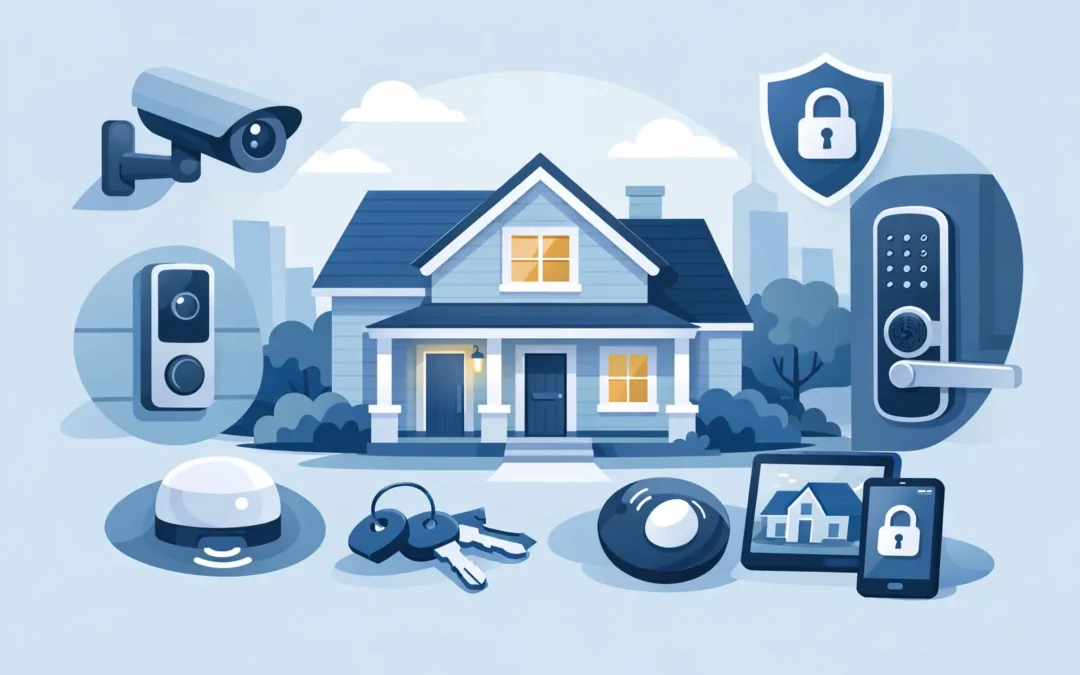
Older homes have a lot going for them – solid construction, distinctive details, and character you cannot fake. They also tend to have a few weak spots that make security harder than it should be. If you are looking for the best security upgrades for older homes, the goal is not to turn a classic property into a fortress. It is to fix the common vulnerabilities in a way that feels practical, reliable, and easy to live with.
The right plan usually starts with the basics. In many older homes, the biggest security risks are not hidden. They are worn door hardware, outdated windows, dark entry points, and systems that were never designed for modern monitoring. A few well-chosen upgrades can make a real difference without forcing a full remodel.
Why older homes need a different security approach
Newer homes are often built with reinforced doors, modern locks, prewired alarms, and layouts that account for visibility around the property. Older homes were built in a different era. They may have original wood doors, single-pane windows, detached garages, basement access points, or porches that create both charm and blind spots.
That does not mean an older home is less secure by default. It means security upgrades need to match the house. A smart lock may be a great fit for one front door and a poor fit for another. A camera system may solve one problem, while better exterior lighting solves another for less money. The best results usually come from layering improvements instead of relying on a single device.
The best security upgrades for older homes start at the doors
If your front, back, or side doors have aging hardware, this is often the first place to spend money. Many break-ins are not high-tech. They happen because a weak strike plate, short screws, or an older deadbolt gives way under force.
A quality deadbolt is one of the most effective upgrades you can make. Just as important, the strike plate should be reinforced with longer screws that anchor into the wall framing, not just the trim. If the door itself is warped, hollow, or loose in the frame, even a good lock will only do so much.
This is also where convenience matters. Smart locks can work well on older homes if the door is in good shape and the fit is consistent. They make it easier to avoid hiding spare keys and let you manage access for family, guests, or service providers. But older doors sometimes shift with weather, and that can affect how well a smart lock performs. In those cases, a high-quality traditional deadbolt may be the better choice.
Do not overlook side and basement doors
Many older homes have secondary doors that get less attention than the front entrance. A side door near a driveway, a basement walkout, or a mudroom entry can be the easier target. These should have the same level of lock quality and door reinforcement as the main entrance.
Upgrade windows without replacing every window
Window security is a common concern in older homes, especially where original windows are part of the home’s appeal. The good news is that better security does not always mean full replacement.
Start by checking whether windows actually latch and stay latched. Loose or painted-shut hardware is common in older properties. Replacing worn latches, adding window pin locks, or installing sash stops can improve security while preserving the original look. For ground-floor windows, security film can also help by making glass harder to shatter quickly.
This is one area where trade-offs matter. Security film improves resistance, but it does not make a window unbreakable. Window sensors add awareness, but they do not physically stop entry. If you have a few especially vulnerable windows – near alleys, fences, or hidden side yards – those are the ones to prioritize first.
Add better exterior lighting where it counts
Lighting is one of the simplest upgrades, and it is often one of the most overlooked. Older homes may have attractive fixtures, but they do not always provide enough visibility around entrances, walkways, garages, or side yards.
Motion-activated lighting can be especially useful around back doors, detached garages, and dark corners of the lot. It does not need to be harsh or overdone. The goal is simple: reduce hiding spots and make movement around the property more visible.
If you want a cleaner look, you can pair decorative fixtures with motion or dusk-to-dawn functionality. That keeps the house looking like itself while improving everyday safety. Good lighting also helps cameras capture clearer footage, so these two upgrades often work better together.
Choose a modern alarm system that fits an older layout
A lot of older homes were never wired for a security system, or they have outdated alarm equipment that is no longer dependable. That is where modern wireless systems make life easier. They can cover doors, windows, interior motion, and environmental alerts without opening up walls in every room.
For many homeowners, this is one of the best security upgrades for older homes because it adds protection without a major construction project. You can start with the most important areas and expand over time. That matters in homes with additions, unusual floor plans, or detached structures.
What matters most is usability. If a system is too complicated, people stop using it correctly. A clear control panel, straightforward mobile alerts, and simple arming options tend to be more valuable than a long list of features you may never touch. Simple Security Solutions is built around that idea – security should be easy to understand and easy to use.
Consider monitored protection if you travel or manage property remotely
Self-monitoring can work well for some households, especially if someone is usually home and responsive to app alerts. Professionally monitored service may be worth it if you travel often, split time between properties, or manage a rental or small commercial space. It adds another layer of response when you cannot handle every alert yourself.
Use cameras to cover access points, not every inch of the property
Cameras are helpful, but more is not always better. On an older home, the smartest approach is usually targeted coverage. Focus on the front entry, back door, driveway, garage, and any side path that gives hidden access to the house.
Video doorbells are often a strong first step because they cover deliveries, visitors, and front-door activity in one place. Exterior cameras can then fill in the areas a doorbell cannot see. If the home has a detached garage or basement entrance, those spots deserve special attention.
Placement matters more than quantity. A poorly placed camera that points into glare or misses the approach path is less useful than one well-positioned camera with a clear view. For older homes with deep porches, large trim details, or unusual rooflines, getting the angle right can take some planning.
Protect the garage and outbuildings too
Older properties often include detached garages, sheds, carriage houses, or workshops. These spaces are easy to forget when you are focused on the main house, but they can be attractive targets. They may store tools, bikes, equipment, or provide another route onto the property.
At a minimum, these buildings should have solid locks and lighting. In many cases, a contact sensor, motion detector, or camera is also worth adding. If the garage is attached, it should be treated as part of the home’s security perimeter, not as a separate issue.
Do a basic visibility check around the property
Not every upgrade comes from a box or installer. Sometimes the best improvement is changing the environment around the house. Overgrown shrubs near windows, tall fencing that blocks sight lines, and stacked items near gates can all make access easier to hide.
A quick property check during the day and again at night can reveal weak points. Are entry doors visible from the street or neighbors? Are there dark paths to the backyard? Are there ladders, tools, or loose items that could help someone gain entry? These are simple questions, but they often lead to the most cost-effective fixes.
Prioritize upgrades by risk, not by trend
It is easy to get pulled toward the newest device, especially with smart home products everywhere. But the best setup depends on the house itself. If your front door barely closes properly, a smart video system will not solve the first problem. If your side yard is completely dark, start there before adding more indoor tech.
A practical order for most older homes is to secure doors first, fix vulnerable windows, improve lighting, then add alarm and camera coverage where it makes sense. That sequence addresses both physical weak points and awareness.
You do not need to do everything at once. The smartest security plan is often built in stages, with each improvement making the next one more effective. Older homes deserve that kind of thoughtful approach – protection that respects the property, fits real life, and makes you feel more confident every time you lock up for the night.