

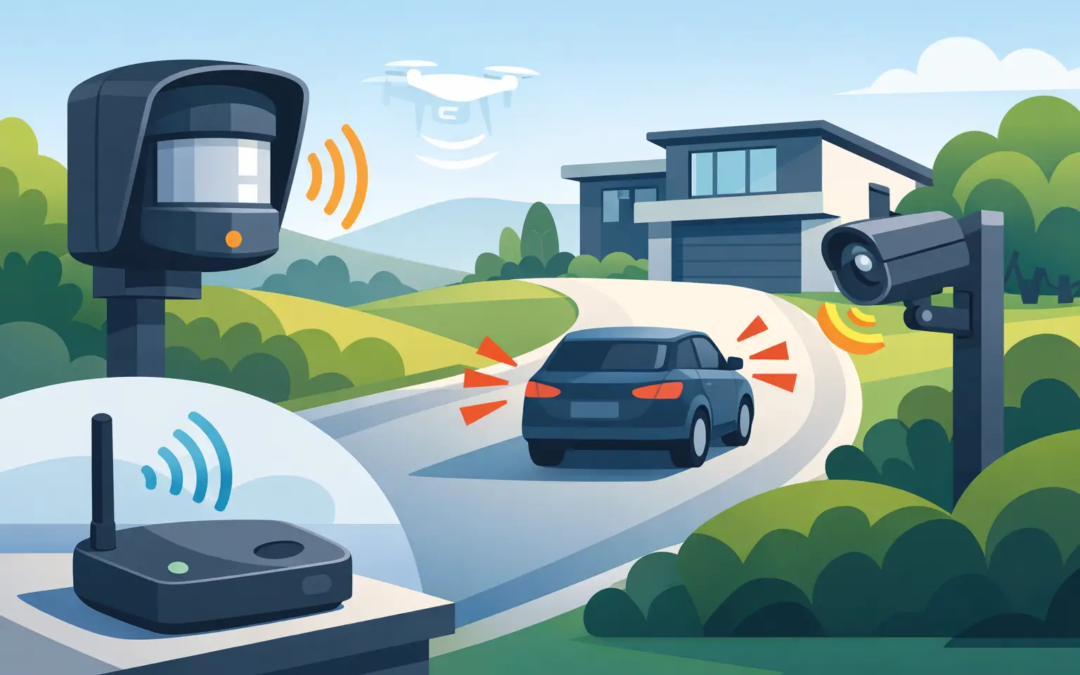
A vehicle turning into the drive, a delivery person approaching the garage, or someone walking toward a side entrance can all be worth knowing about before they reach the door. A good driveway alarm provides that early notice without making you check a camera feed all day. This driveway alarm review focuses on what these systems do well, where they fall short, and how to choose one that fits a home, rental property, or small business.
What a Driveway Alarm Is Really For
A driveway alarm is an early-warning device. It uses a sensor near the drive, gate, parking area, or path and sends an alert to a receiver inside the building, a phone app, or a broader security system when it detects movement.
That sounds simple, and it should be. The practical value is knowing someone or something has entered a part of your property that is usually out of sight. For a homeowner, that may mean knowing a family member arrived safely or being aware of an unfamiliar vehicle near the garage. For a small business, it may mean hearing when a customer, vendor, or after-hours vehicle enters the lot.
A driveway alarm does not replace door locks, cameras, lighting, or a monitored alarm system. It adds awareness. That distinction matters because the best setup depends on what you need to know and what you need to document. An alert tells you to pay attention. A camera can show you why.
Driveway Alarm Review: The Features That Matter
Most buyers do not need a long list of specifications. They need an alarm that detects the right activity, reaches the receiver reliably, and does not become so irritating that it gets turned off. Those three factors should guide the decision.
Sensor type affects what gets detected
Driveway alarms generally use one of three approaches: motion detection, infrared beams, or buried vehicle sensors.
Motion-based sensors are often the easiest to install. They detect movement in a selected area and can work well near a driveway, walkway, gate, or parking space. Their convenience comes with a trade-off: poor placement can lead to alerts from passing pedestrians, animals, moving branches, or traffic near the street.
Infrared beam systems use a transmitter and receiver placed across an entrance. When a person or vehicle breaks the beam, the system sends an alert. This can be a practical choice for a narrow driveway or gate because the detection area is more defined. The equipment needs a clear line between the two points, however, so landscaping, snow buildup, parked vehicles, and misalignment can affect performance.
Buried vehicle sensors detect changes caused by a vehicle passing overhead. They are useful when the goal is to know about cars and trucks rather than people or wildlife. These systems can provide more focused vehicle alerts, but installation is more involved. They may require digging and are less flexible if you later change the driveway layout.
Real-world range matters more than the number on the box
A product may advertise a long wireless range, but open-field testing is not the same as a real property. Brick walls, metal siding, detached garages, large trees, utility equipment, and neighboring wireless devices can reduce signal strength.
Before buying, consider where the sensor will sit and where you want the alert receiver. A sensor at the end of a long drive may need to communicate through exterior walls and across a yard. A property manager may need alerts in an office at the opposite end of a small complex. If the distance is close to the listed maximum, choose a system with extra range or a compatible signal extender.
Also consider where you will hear the alert. A receiver in the kitchen may be useful during the day but not helpful in a workshop, upstairs office, or detached building. Some systems support multiple receivers, which can be more useful than a louder single chime.
Alert options should fit your routine
A basic chime receiver is often enough for a homeowner who is usually nearby. Look for adjustable volume and distinct tones if you plan to use more than one sensor. Different sounds can help you tell whether activity occurred at the driveway, side gate, or rear parking area.
Mobile alerts can be helpful when you are away, but they depend on your home internet connection, app reliability, and notification settings. If your phone is set to silence notifications, a smart alarm may not deliver the warning you expected. App-based systems are best when remote awareness is genuinely useful, not just because the feature is available.
For businesses and properties with existing security equipment, integration can be valuable. A driveway alert paired with a camera can prompt staff to check the right video feed. It can also support better daily operations by letting employees know when a delivery or visitor has arrived. Keep the setup simple enough that everyone who needs it can use it.
False Alerts Are Usually a Placement Problem
A driveway alarm that goes off every time a squirrel crosses the yard will not improve security. It will train you to ignore it. False alerts are one of the most common complaints in driveway alarm reviews, and they often come down to sensor placement rather than a defective device.
Place motion sensors where they cover the intended entry path but avoid pointing them directly toward a busy street, sidewalk, or heavily wooded area. Trim shrubs and branches that move into the detection zone. If the system allows sensitivity adjustments, start in the middle range and test it before turning it up.
Test the alarm during the conditions it will face most often. Walk through the area, drive different vehicles past the sensor, and check performance after dark. Rain, wind, heat, snow, and direct sunlight can all affect some types of sensors. A few minutes of testing can prevent months of unnecessary alerts.
Pets deserve consideration as well. A large dog that uses the driveway or yard may trigger a motion sensor. If pet activity is unavoidable, a vehicle-only sensor or carefully positioned infrared beam may be the better choice.
Battery, Power, and Maintenance Are Part of the Purchase
Wireless driveway alarms are popular because they avoid trenching wires across a yard. The trade-off is battery management. Cold weather can shorten battery life, and a sensor that is difficult to reach is more likely to be neglected.
Choose a location where you can service the sensor safely. Check batteries on a schedule, especially before severe weather seasons or long trips away from the property. If the unit has a low-battery alert, make sure that alert reaches a place you will notice.
Solar-powered options can reduce battery changes, but they need enough direct light to perform well. A solar panel under dense tree cover is not a reliable solution. Hardwired systems can make sense for new construction, gates, or permanent commercial installations, though professional installation may be worth the added cost.
When a Driveway Alarm Is Worth It
A driveway alarm is most useful when your driveway, parking area, or entrance is not visible from the rooms where you spend time. Long rural driveways are an obvious example, but suburban homes with side-entry garages and small businesses with rear delivery access can benefit too.
It may be less useful for a short driveway that is always visible and busy with normal foot traffic. In that case, a doorbell camera, exterior lighting, or a camera focused on the vehicle area may provide better information. The right choice depends on whether you need a simple warning, visual verification, or both.
For rental homes and small commercial properties, think about who receives the alert and what they can do with it. An owner who lives elsewhere may value phone notifications. An on-site manager may prefer a clear chime in the office. A system only helps when the alert reaches someone able to respond appropriately.
A Simple Way to Choose
Start with the activity you want to detect. If you only care about vehicles, look at vehicle-specific sensors. If you want notice of people at a gate or walkway, a motion sensor or beam system may fit better. Then measure the distance to the receiver, identify potential sources of false alerts, and decide whether you need phone alerts or an indoor chime.
Avoid paying for complicated features you will not use. At the same time, do not choose the least expensive option if it cannot reliably reach the building or handle the weather in your area. Dependability is the feature that matters most.
A driveway alarm works best when it gives you a calm, useful heads-up instead of another stream of noise. Choose the system that matches your property layout and daily routine, test it carefully, and let it do the straightforward job it was meant to do: help you know what is happening outside before it becomes a surprise.