

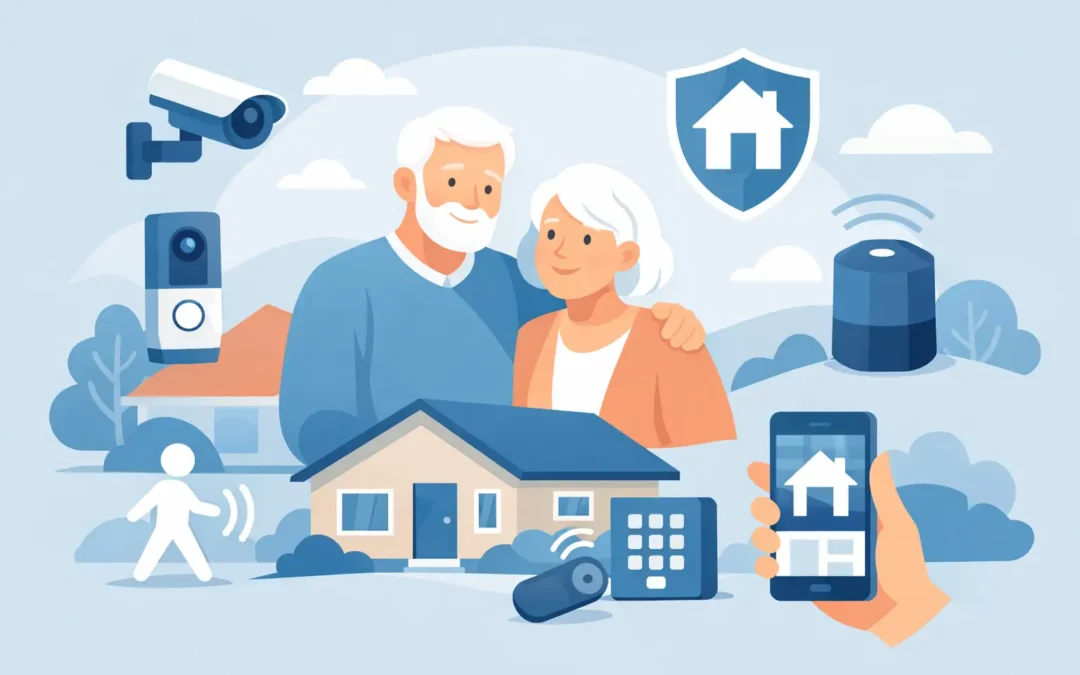
A missed call at night, a package left too long on the porch, a front door that is harder to lock than it used to be – these are the kinds of everyday issues that make home security for seniors worth thinking about early, not after something goes wrong. The right setup does not need to be complicated or expensive. It needs to be easy to use, dependable, and built around real daily routines.
For many older adults, security is not just about stopping break-ins. It is also about feeling confident at home, answering the door safely, moving around the property with fewer risks, and making it easier for family members or caregivers to help when needed. That changes what matters most. The best system is often not the one with the longest feature list. It is the one that gets used consistently.
What home security for seniors should actually solve
A lot of security marketing focuses on equipment. Cameras, sensors, apps, and smart devices all have a place, but most people are not shopping for gadgets. They are trying to solve a few practical problems.
One is knowing who is at the door before opening it. Another is making sure doors and windows are secured without needing to double-check everything all night. Another is getting help quickly if something feels wrong. And in many homes, there is a second layer that matters just as much: reducing confusion. If a system is hard to arm, full of alerts, or buried in app settings, it can create stress instead of peace of mind.
That is why a simple setup often works better than a more advanced one. A doorbell camera, a few entry sensors, good exterior lighting, and clear notifications can cover a lot of risk without creating a learning curve that turns into frustration.
Start with the entry points
Most home security plans should begin with the front door, back door, and first-floor windows. These are the places that need the most consistent attention, and they are also the easiest places to improve without overhauling the whole home.
A solid deadbolt matters. So does a peephole or video doorbell that makes it easy to see who is outside. If the homeowner has arthritis, mobility issues, or trouble hearing knocks, the choice of hardware matters even more. A lock that is secure but difficult to use is not really solving the problem. In some homes, a smart lock with simple keypad access makes daily life easier. In others, a traditional lock with a better strike plate is the better fit. It depends on comfort with technology and who may need access, such as adult children, home health aides, or trusted neighbors.
Window sensors are also useful because they work quietly in the background. They do not ask much from the user, but they provide a clear alert if something is opened when it should not be. That kind of passive protection is often ideal for seniors who want coverage without extra steps.
Keep the system simple enough to use every day
This is where many security setups go off track. A family member means well, installs multiple smart devices, connects everything to an app, and assumes more technology equals better protection. But if the homeowner avoids using it because it feels confusing, the extra features do not help.
A good senior-friendly system should answer a few basic questions clearly. Can it be armed and disarmed in one or two easy steps? Are alerts understandable? Is there a backup plan if the internet goes down or the user forgets a password? Can someone trusted help manage the system without taking away the homeowner’s control?
Large buttons, clear sound, plain-language notifications, and a keypad in an easy-to-reach location can make a real difference. The same goes for reducing false alarms. If a system is too sensitive or too complicated, people start ignoring it. Reliability is part of usability.
Cameras help, but placement matters more than quantity
Security cameras can be very helpful for seniors, especially at the front door, driveway, garage, and back entry. They provide visibility without requiring someone to step outside or open the door. They can also help family members check in if that level of support is wanted.
Still, more cameras are not automatically better. Too many devices can create too many alerts, and too much footage can become one more thing to manage. It is usually smarter to cover the most important areas well than to put cameras everywhere.
For most homes, one doorbell camera and one or two outdoor cameras are enough to improve awareness. Inside cameras are more personal and should be considered carefully. Some families appreciate them for check-ins, while others find them intrusive. Privacy should be part of the conversation from the start.
Lighting is one of the easiest security upgrades
Good lighting does two jobs at once. It helps discourage unwanted activity around the home, and it makes it safer for the homeowner to move around outside.
Motion-activated lights near doors, garages, walkways, and side yards are a practical place to start. They are useful without needing much attention from the homeowner. Timed lighting indoors can also make the house look occupied when someone is out or traveling.
This is one of the most overlooked parts of home security for seniors because it feels basic. But basic is often what works. A well-lit entryway and clear path to the mailbox or driveway improve both security and daily safety.
Emergency response should be part of the plan
For some seniors, home security overlaps with personal safety in a bigger way. A break-in may be a lower risk than a medical issue, a fall, or not being able to get to the phone quickly. That does not mean a security system has to do everything, but it does mean the overall plan should account for emergencies.
Monitored alarm systems can help when someone cannot respond fast enough on their own. Panic buttons, wearable emergency devices, and systems that send alerts to trusted contacts can also make sense, especially for seniors who live alone. The right choice depends on health, mobility, and how much independence the person wants to maintain.
There is no one-size-fits-all answer here. Some households need full monitoring. Others only need a simple alarm and a clear contact plan. What matters is matching the setup to the person, not forcing the person to adapt to the system.
Think about scams and everyday habits too
Physical security is only part of the picture. Many seniors are targeted by scams that start with a phone call, a knock at the door, or someone posing as a service worker. A safer home includes habits, not just hardware.
That can mean using a video doorbell to screen unexpected visitors, keeping doors locked during the day, and setting a rule never to let in someone who was not scheduled and verified. It can also mean making sure alarm company calls, package notices, and bank messages are checked carefully before anyone responds.
Families sometimes focus so much on devices that they skip this part. But routines matter. A consistent habit of checking the door before opening it, turning on the alarm at night, and confirming who has access to the home can prevent more problems than another sensor ever will.
Choosing the right setup without overbuying
It is easy to overspend on security, especially when companies push large bundles full of features that may never be used. A better approach is to start with the risks that matter most in that specific home.
If porch visitors are the main concern, begin with the front entry. If the home has dark side yards or a detached garage, lighting and outdoor cameras may matter more. If memory issues are becoming a factor, systems with simple automation and caregiver support may be worth prioritizing. If budget is tight, start small and build over time.
A practical security provider should be able to explain options in plain terms, recommend only what is useful, and avoid turning a straightforward need into a complicated project. That is the approach Simple Security Solutions is built around, and it is often what seniors and their families want most – clear choices, dependable equipment, and support that makes the system easier to live with.
A safer home should still feel like home
The goal is not to turn a house into a fortress. It is to make daily life feel more secure without making it feel harder. The best systems support independence. They reduce uncertainty. They help seniors stay comfortable in the homes they know.
That usually comes down to a few smart choices made well: secure doors, visible entry points, clear alerts, dependable lighting, and a setup simple enough to use without second-guessing. When security fits naturally into everyday life, it does what it is supposed to do – it gives people confidence, not one more thing to worry about.
A good next step is not buying every device at once. It is walking through the home, noticing where friction or uncertainty shows up, and fixing the parts that matter most first.