

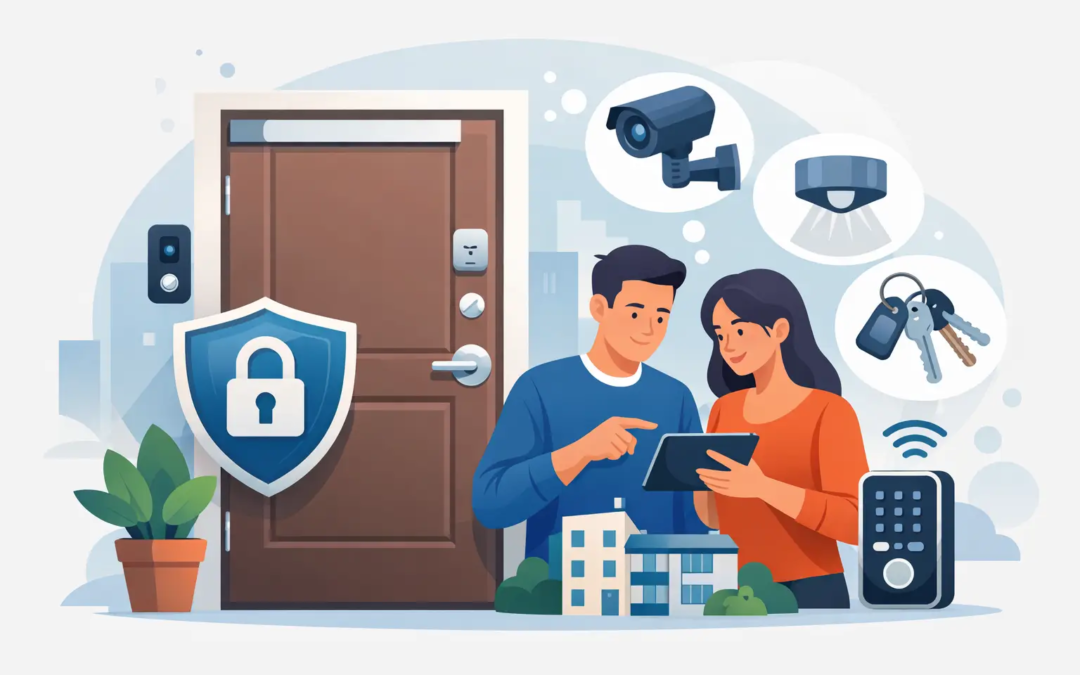
An apartment door is the line between your private space and a shared hallway, stairwell, or parking area. Knowing how to improve apartment door security starts with a simple goal: make unauthorized entry harder, more noticeable, and less likely without violating your lease or damaging the property.
You do not need an expensive smart home setup to make a real difference. A secure lock, a solid door frame, better visibility, and a few consistent habits can address the risks most renters and property managers face. The right approach depends on your building rules, the condition of the door, and whether the property owner is responsible for the upgrade.
Start With the Door, Lock, and Frame
Look at your entry door from the hallway side and the inside. Is the door solid, does it close fully, and does the lock engage without sticking? A lock can be high quality, but it cannot do much if the door frame is loose or the strike plate barely reaches the framing behind it.
Test the deadbolt with the door closed. It should turn smoothly and extend fully into the frame. If the bolt drags, only partially extends, or requires you to lift the door to lock it, report it to your landlord or property manager. That may be a maintenance issue, not something a renter should try to fix alone.
The strike plate deserves special attention. This is the metal plate on the frame where the deadbolt enters. A short plate held in place by small screws can be a weak point. When permitted, a reinforced strike plate installed with longer screws that reach the wall framing provides stronger resistance to forced entry. In many apartments, however, changing this hardware requires written approval because it alters the door frame.
A door security assessment should also include the hinges. If your door swings outward and the hinge pins are exposed in the hallway, ask management whether the hinges have security studs or non-removable pins. An inward-swinging apartment door is less exposed to this concern, but any loose hinge screws should still be repaired promptly.
Confirm Who Controls the Lock
Before buying or installing anything, read your lease and ask a direct question: Can I add or replace door security hardware, and does management need to approve it first? Rules vary by building, city, and lease agreement. Some properties allow tenants to change locks as long as management receives a key. Others require all lock work to be handled by approved maintenance staff.
This step protects you from an awkward situation later, such as being charged for door damage or creating a problem during an emergency. It also gives the property manager a chance to address a legitimate issue that they may be responsible for fixing.
If you have moved in recently, ask whether the locks were rekeyed between tenants. Rekeying changes the key operation of an existing lock, so old keys no longer work. It is a reasonable question, especially if you received keys that look worn, if there are signs of previous lock changes, or if you do not know how many copies may exist.
Do not rely on a chain lock as your primary protection. Chains can provide a small amount of control while speaking to someone at the door, but they are not a substitute for a working deadbolt and secure frame.
Add Renter-Friendly Door Reinforcement
Many useful improvements do not require permanent changes. The best option is one that fits your door, works with your lease, and does not interfere with fire safety or your ability to exit quickly.
A portable door lock can add resistance from inside when you are home. These devices are designed to fit around parts of the existing door hardware without drilling. They can be useful for travel or apartments where a tenant cannot alter the door, but they only work when someone is inside and must be removed before leaving.
A door security bar is another interior option. It braces between the floor and the door handle area to make inward force more difficult. Choose one with a non-slip foot, confirm it fits your door style, and test it carefully while you are home. It should never prevent a fast exit during a fire or other emergency.
Door viewers can improve awareness before you open the door. If your door already has a peephole, make sure it provides a clear view. A wide-angle viewer or a renter-approved video doorbell may be an option, but get permission before mounting a device in a shared hallway. Some buildings have privacy rules, and some video devices need installation methods that could damage the door or surrounding area.
Avoid products that block a deadbolt, wedge the door so tightly that it cannot open, or require you to search for a tool during an emergency. Added security should make the door harder to force open from outside, not make it harder for you to leave.
Improve Visibility Without Creating Risk
Most unwanted encounters at an apartment door are better handled before the door opens. Use the peephole, ask who is there, and keep the deadbolt engaged when you are home. If someone claims to be building staff, delivery personnel, or a utility worker and you were not expecting them, verify their identity through the leasing office or company before opening the door.
Do not depend on the sound of a knock alone. Hallways can be noisy, and people can misidentify a unit. If a visitor will not identify themselves or pressures you to open the door, do not engage further. Contact building management, security, or local law enforcement if you believe there is an immediate threat.
Lighting matters too. If your entry faces a dim corridor, stairwell, or exterior walkway, report burned-out fixtures and poor visibility. Property managers may be able to improve lighting, trim landscaping near ground-floor entrances, or address a broken access door. Those shared-area measures often provide more value than a single door gadget because they help deter problems before someone reaches your apartment.
Build Everyday Habits That Support Security
Door hardware works best when it is used consistently. Make locking the deadbolt part of your routine whenever you leave, even for a quick trip to the mailroom or laundry area. When you are home, lock the door rather than assuming the building’s main entrance is enough protection.
Be careful with keys and access codes. Avoid hiding a key near the unit, under a mat, or in a shared area. If you need someone to access your apartment, use a trusted arrangement through building management when possible. If your building uses electronic access, do not share entry codes casually or leave key fobs with names, unit numbers, or addresses attached.
Package deliveries deserve a plan. A box left outside an apartment door can signal that no one is home, and repeated delivery visits can create opportunities for strangers to move through a building. Use a package room, secure locker, trusted neighbor, or delivery instructions that follow your building’s policies.
It also helps to know your neighbors. You do not need to know everyone on the floor, but a familiar neighbor can recognize unusual activity, collect a package during travel, or alert management to a damaged entry door. Shared awareness is especially useful in smaller buildings without staffed front desks.
Know When to Ask for Professional Help
Some problems call for more than a portable lock or new habit. Contact your landlord or property manager in writing if your door does not latch, the lock is damaged, the frame is split, the strike plate is loose, keys have been lost, or someone has attempted to force entry. Take clear photos and keep a record of the report.
If there has been a break-in or attempted break-in, call law enforcement first when appropriate and avoid disturbing potential evidence. Then notify management right away. Ask about rekeying, repairs, hallway access controls, lighting, and whether nearby residents should be informed.
For property managers and owners, a consistent process is the simplest way to reduce risk: rekey between residents, inspect doors during turnover, repair damaged frames quickly, and respond clearly when tenants report concerns. Security does not need to be complicated to be dependable.
The most effective apartment door security plan is the one you can use every day. Start with the basics, get approval before making permanent changes, and address any damaged lock or frame before adding extra devices. A few practical steps can make your apartment feel more secure without turning your home into a complicated project.