

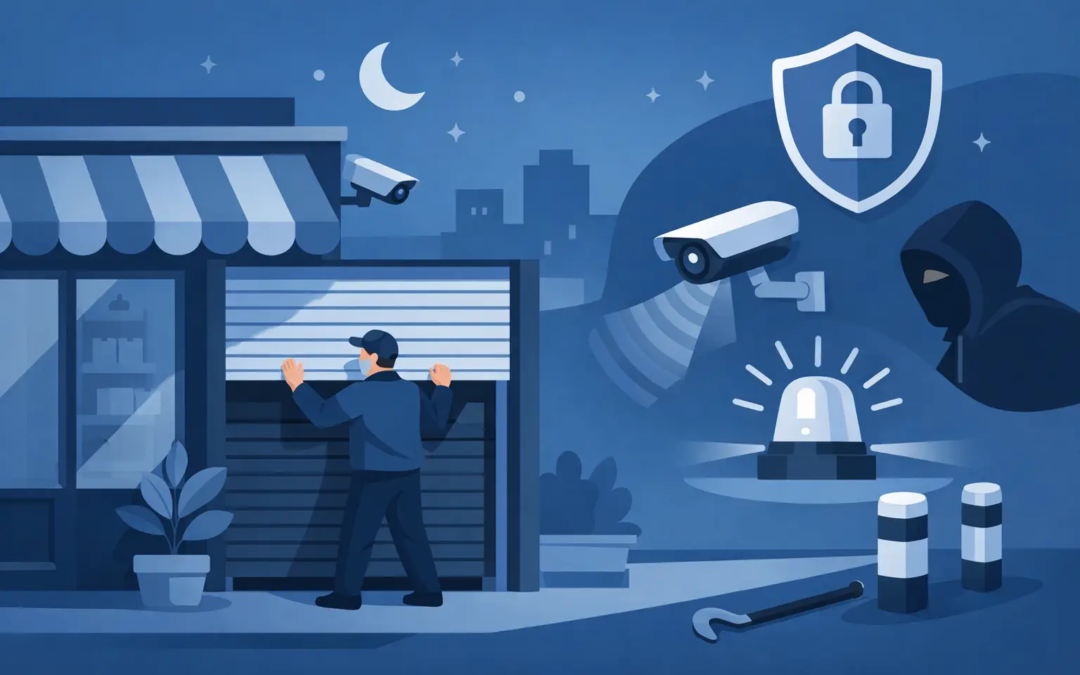
A storefront can look perfectly secure at closing time and still leave a few easy opportunities for trouble overnight. A propped-open back door, a dark side entrance, a key that was never returned, or an alarm that staff assume is set can all create unnecessary risk. Knowing how to protect storefront after hours starts with making the closing process clear, consistent, and easy for everyone to follow.
For small businesses, the goal is not to turn a shop into a fortress. It is to create enough visible deterrence, reliable detection, and fast response that your property is less appealing to target and easier to protect.
Start With the Real Risks at Your Location
Every storefront has different weak points. A retail shop in a busy shopping center may need to focus on rear delivery doors and employee access. A standalone business may have more exposed windows, parking areas, and side entrances. Restaurants, salons, offices, and service businesses may also have valuable equipment or customer information on-site after closing.
Walk around the property after dark and view it as someone unfamiliar with the business would. Look for places where a person could approach unseen, doors that are not easy to monitor, damaged locks, overgrown landscaping, and windows that leave valuable merchandise in plain view. This quick review helps you spend money where it matters instead of adding equipment that does not address the real issue.
It also helps to separate concerns into two categories: preventing entry and knowing quickly when something happens. Strong locks and security film can slow an intruder down. Alarm systems, cameras, and monitoring can help alert the right people when a door opens or glass breaks. Most small businesses need both.
Secure Doors, Windows, and Other Entry Points
Your doors are the first place to focus. Exterior doors should close and latch properly without needing an employee to pull, kick, or force them into place. Check that frames are solid, hinges are protected where needed, and strike plates are secured with long screws that reach the framing behind the door. A good deadbolt or commercial-grade lock is only as useful as the door and frame holding it.
Do not overlook rear doors, employee entrances, storage-room doors, and doors leading from a shared hallway. These areas often get less attention than the front entrance, even though they may be less visible from the street. If a back door is used for deliveries, make sure it is locked immediately after the delivery is complete rather than left accessible through the end of the day.
Windows deserve the same attention. Keep high-value items away from front windows when possible, especially portable electronics, cash drawers, tools, and small inventory that can be grabbed quickly. Security film, window locks, or protective shutters may make sense for a business with repeated concerns or a location that is more exposed. The right choice depends on your lease, building rules, budget, and the type of merchandise you sell.
Use Lighting That Removes Hiding Places
Good exterior lighting is one of the simplest ways to protect a storefront after hours. A well-lit entrance, rear door, sidewalk, and parking area make it harder for someone to approach unnoticed and help cameras capture clearer footage.
Lighting does not need to run at maximum brightness all night. Timers, photocells, and motion-activated fixtures can keep operating costs reasonable while still covering key areas. Motion lighting works especially well near back doors, alleyways, dumpsters, and side access points. For the front of the business, steady lighting can make the property look occupied and cared for.
Check lighting regularly. A burned-out fixture creates a blind spot, and a tree branch or sign can block light without anyone noticing during daytime hours. If neighboring properties share a lot or rear access area, make sure your lighting plan accounts for the spaces between buildings too.
Build an Alarm and Camera Setup Around Daily Use
An alarm system is most effective when it is simple enough for staff to use correctly every day. Door and window contacts can alert you to unauthorized entry, while motion sensors can add coverage inside the business. Glass-break detection may be useful for storefronts with large windows, although placement should be matched to the space and layout.
The system should have a clear arming routine, with only authorized people given codes or app access. Avoid shared codes whenever possible. Individual user codes make it easier to remove access when an employee leaves and to identify which code was used if a problem occurs. Change access promptly after staffing changes, lost keys, or a former contractor completing work.
Security cameras add another layer of awareness. Place them where they can capture faces and activity at entrances, registers, inventory areas, rear doors, and parking or loading areas. A camera pointed at a doorway is more useful than one installed high in a corner with a wide but unclear view. Before relying on any camera, check its nighttime image quality and make sure important areas are not blocked by glare, shelving, or signs.
Cameras are valuable for review, but they should not be your only plan. If no one sees an incident until the next morning, the opportunity to respond may be limited. Professional monitoring or alert notifications can help you act sooner when an alarm event occurs. The best option depends on whether you can reliably respond to alerts yourself and how quickly local support is available.
Make Closing Procedures Easy to Follow
Security systems work best when the people using them are not guessing. Create a short closing procedure and train every employee who is responsible for locking up. Keep it practical enough that it gets done even on busy nights.
A useful end-of-day routine should cover these five actions:
- Check all customer, employee, rear, and delivery doors are closed and locked.
- Confirm windows are secured and valuable items are not left exposed near the front.
- Turn on required exterior and interior lights.
- Arm the alarm system and verify that it has armed successfully.
- Leave with a coworker when possible, especially after dark, and avoid carrying visible cash deposits.
Assign responsibility clearly. If two people assume the other person armed the alarm, it may not get armed at all. A simple closing log, whether on paper or through a staff app, can provide accountability without turning closing into a complicated process.
Cash handling should also be part of the routine. Keep only the cash needed for normal operations in registers, use a safe when appropriate, and vary bank deposit times if your business handles larger amounts. A visible empty cash drawer or a notice stating that limited cash is kept on-site may discourage an opportunistic break-in. Still, do not rely on signs alone. Physical security and detection measures do the real work.
Control Keys, Codes, and Vendor Access
Many after-hours security problems come from access that was once legitimate. A former employee may still have a key. A cleaning crew may have a code that has not changed in years. A contractor may have been given access for one repair and never removed from the list.
Keep an up-to-date record of who has keys, alarm codes, camera access, and access-control credentials. Retrieve keys when employees leave, and change codes immediately when that is not possible. If your business has frequent turnover or multiple vendors, electronic access control can be easier than managing physical keys because access can be updated without changing locks.
Be thoughtful about who needs access and when. The goal is not to make trusted staff feel restricted. It is to limit access to the people who need it, which keeps the process safer and easier to manage.
Plan for What Happens After an Alert
A security plan should answer one basic question: what will you do if an alarm, camera, or neighbor alerts you to a problem? Decide in advance who receives notifications, who contacts law enforcement when needed, and whether anyone should go to the property. In most cases, it is safer not to investigate a possible break-in alone.
Keep emergency contact information current with your security provider, landlord, property manager, and any monitoring service. Make sure the people on the call list know their role. A fast, calm response is much more likely when nobody has to figure out the plan in the middle of the night.
Simple Security Solutions helps small business owners build protection around the everyday realities of their property, not a complicated checklist of features they will never use. The right setup should fit your location, your staff, and your closing routine.
A secure storefront is built one reliable habit at a time. Start with the doors and lighting you already have, tighten up access, and make sure every closing shift ends with the same clear routine. Those practical steps can make tomorrow morning far less uncertain.