

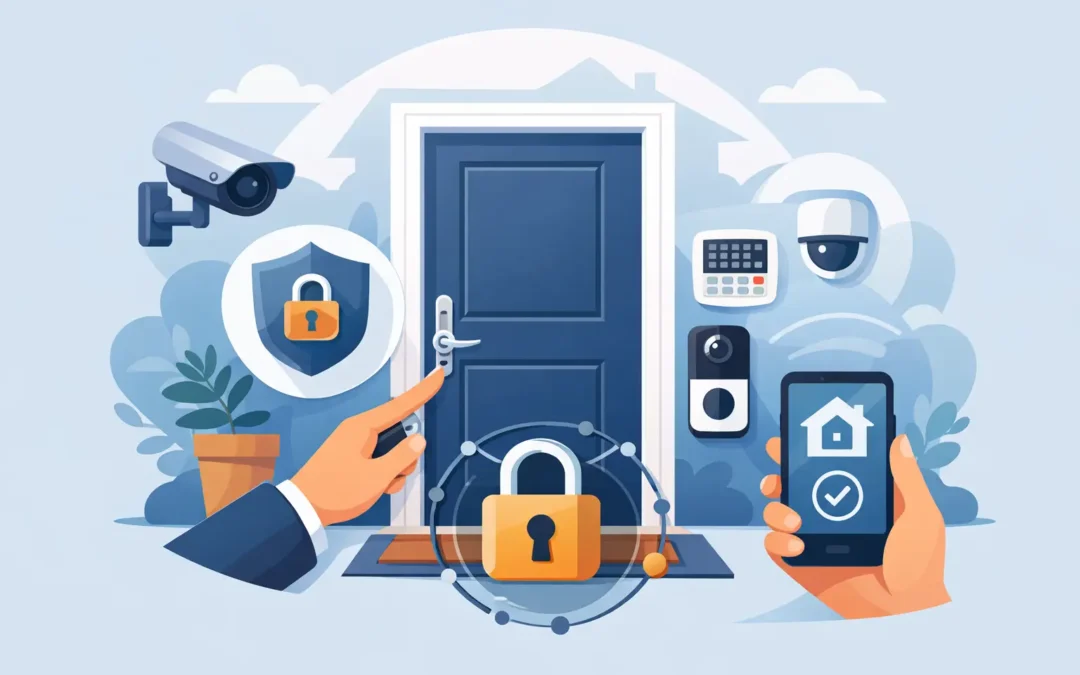
A front door can look solid and still be the weakest point in the building. In many break-ins, the problem is not a high-tech failure. It is a short screw, a weak strike plate, a hollow door, or a lock that gives people more confidence than actual protection. If you want to know how to secure a front door, the best place to start is with the basics that make forced entry harder, slower, and louder.
How to secure a front door starts with the frame
Most people focus on the lock first, but the frame matters just as much. A strong deadbolt does not do much if the strike plate is attached with short screws into weak trim. When someone kicks a door, the frame often fails before the lock does.
Start by checking the strike plate on the door jamb. If it looks small, thin, or loosely attached, upgrade it to a heavy-duty version and use long screws that reach the wall stud behind the frame. This is one of the simplest improvements you can make, and it has a real effect on forced-entry resistance.
Look at the condition of the jamb itself. If the wood is split, soft, or already damaged around the lock area, replacing hardware alone will not solve the issue. Reinforcement kits can help, but in some cases the better move is repairing or replacing the frame so the lock has something solid to hold onto.
Choose the right lock setup
A front door should usually have a quality deadbolt, not just a locking knob. Knob locks and handle-set locks are useful, but they should not be your main line of defense. A single-cylinder deadbolt is a common choice for homes because it locks from the inside with a thumb turn and from the outside with a key.
If you have glass close to the lock, that setup may need a second look. A nearby window can let someone break the glass and reach in to unlock the deadbolt. In that case, you may want to address the glass, add reinforcement, or consider a different layout based on fire safety rules and local code. There is no one-size-fits-all answer here. The safest option has to balance break-in resistance with a fast exit in an emergency.
When replacing a deadbolt, pay attention to grade and build quality. A decent lock should feel solid, fit correctly, and extend fully into the strike plate. A poorly installed good lock can still perform badly, so alignment matters as much as the lock itself.
Smart locks can help, but only if the door is already secure
Smart locks add convenience. They can let you lock up remotely, create codes for family or staff, and avoid the usual spare-key problems. For many homeowners and small business owners, that convenience also improves day-to-day security because the door is less likely to be left unlocked.
But a smart lock is not a substitute for strong hardware. If the frame is weak or the door is flimsy, the technology does not fix that. Think of a smart lock as an upgrade to access control, not a replacement for physical security.
The door itself may need an upgrade
If your front door is hollow-core, damaged, or badly warped, securing it becomes much harder. Exterior doors should be solid wood, metal, fiberglass, or another durable exterior-rated material. A strong lock on a weak door is still a weak setup.
Check the hinges too. If the hinges are loose, rusted, or pulling out of the frame, tighten or replace them. For outward-swinging doors, hinge security becomes even more important because exposed hinge pins can be a vulnerability unless the hinges have non-removable pins or another security feature.
Door viewers and side glass also deserve attention. A peephole helps you identify visitors without opening the door, which is simple but useful. Decorative glass can look great, but glass near the lock can create a security trade-off. If you already have it, adding a security film or changing the entry setup may make sense depending on the layout.
Small hardware fixes make a big difference
Some of the best front door security improvements are not expensive. They are just often overlooked.
A door reinforcement plate around the lock area can reduce splitting if someone tries to force the door. A stronger strike plate improves resistance at the frame. Longer screws in hinges and lock hardware help tie the system into the structure of the wall instead of the decorative trim.
You should also test how the door closes. If it sticks, does not latch cleanly, or has visible gaps, that can affect both security and weather performance. Doors that do not align properly are easier to force and more likely to be left unlocked because they are annoying to use.
Do not ignore sliding chains and basic add-ons
Chain locks and similar add-ons can be useful for partial opening, but they are not serious security devices. They should never be treated as a substitute for a deadbolt and reinforced frame. The same goes for many low-cost gadgets that promise easy protection but do not address the actual weak points of the entry.
When deciding where to spend money, put it into the door, frame, strike area, deadbolt, and lighting first. Those upgrades tend to give you more real protection than novelty hardware.
Lighting and visibility matter more than people think
A secure front door is not only about what happens when someone touches the lock. It is also about reducing the chance that someone targets the entry in the first place.
Good exterior lighting helps. Motion-activated lights near the front entrance improve visibility for you and make unwanted activity more noticeable. Trimmed landscaping matters too. Tall shrubs or deep porch shadows can give someone cover while they work at the lock or test the door.
If you use cameras or a video doorbell, place them where they can clearly capture the approach to the door, not just the top of someone’s head. Visibility works best when it is simple and reliable. You do not need a complicated setup to improve awareness around the entry.
Habits matter as much as hardware
Even the best front door setup depends on daily use. A surprising number of security problems come from doors left unlocked, spare keys hidden in obvious places, or old keys still floating around after a move, breakup, or staff change.
If you just moved in, rekey or replace the locks. If contractors, former tenants, or past employees may still have access, do not assume the old key situation is under control. This is one of the fastest ways to close a major gap.
Make sure everyone who uses the property understands the routine. Lock the deadbolt, not just the handle lock. Do not leave keys under mats or planters. If you use smart access, remove codes that are no longer needed. Security is easier to maintain when the system is simple enough that people actually follow it.
Renters and property managers have options too
If you rent, you may not be able to replace everything yourself, but that does not mean you are stuck. Start by checking what your lease allows and ask the property owner about stronger strike plates, longer screws, better lighting, or lock upgrades. These are practical improvements that often benefit everyone involved.
Property managers should think beyond the individual lock. Consistent hardware standards, key control, rekeying between tenants, and routine inspection of entry doors can prevent common problems before they become urgent. A secure front door is not just a product choice. It is part of a process.
When to bring in help
Some front door issues are easy weekend fixes. Others are not. If the frame is damaged, the door is misaligned, the lock binds, or you are unsure which upgrades make sense for your layout, professional help can save time and prevent expensive mistakes.
A good security provider should make this process easier, not more confusing. At Simple Security Solutions, the goal is to help people make practical choices that fit the property, the budget, and the level of risk they are actually dealing with.
The right front door security setup is usually not flashy. It is a solid door, a reinforced frame, a good deadbolt, clear visibility, and habits that hold up every day. That kind of protection is straightforward, and that is exactly why it works.