

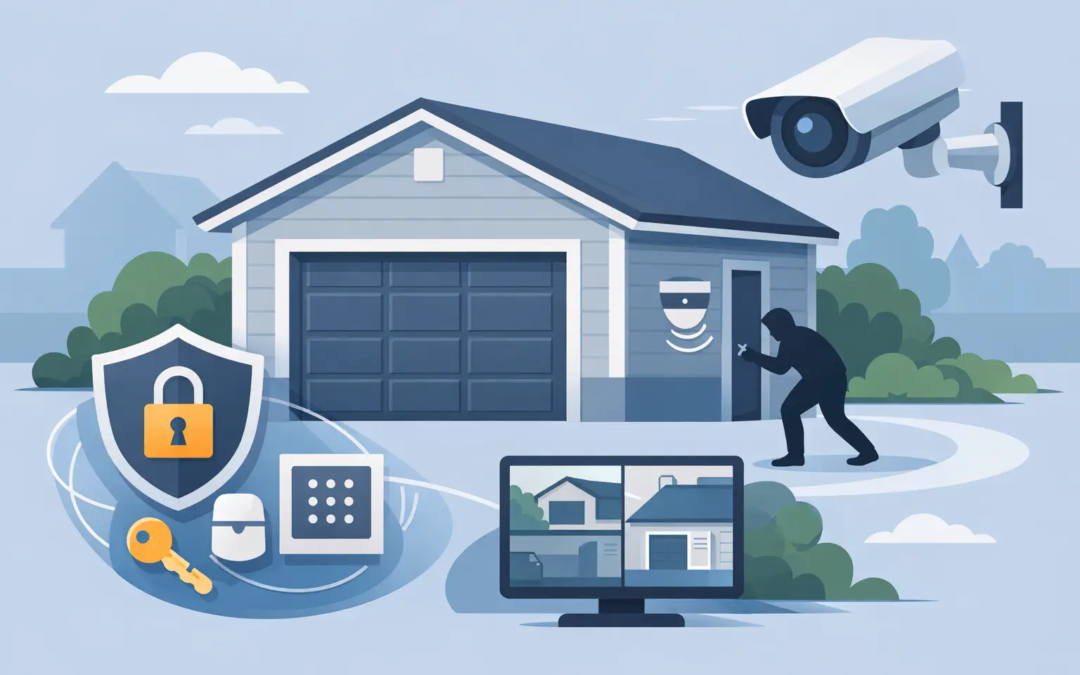
A detached garage can be one of the easiest spots on a property to overlook and one of the easiest for someone else to target. It often sits away from the house, stores expensive tools or equipment, and may not get checked as often as the front door. If you are wondering how to secure detached garage access without turning it into a major project, the good news is that a few practical upgrades can make a real difference.
Why detached garages are more vulnerable
A detached garage has a different risk profile than an attached one. It is usually farther from bedrooms, living areas, and everyday foot traffic, which means suspicious activity is less likely to be noticed right away. If the garage faces an alley, backs up to a fence line, or sits near a side street, it may also offer more cover for someone trying to get in unnoticed.
The contents matter too. Many garages hold power tools, bikes, lawn equipment, seasonal storage, and sometimes a vehicle. For a thief, that can mean a quick grab of high-value items with less chance of interruption. In some cases, the garage also becomes an indirect path to the home if it contains spare keys, access devices, paperwork, or personal information.
That is why securing a detached garage is not just about the structure itself. It is about reducing easy opportunities.
How to secure detached garage entry points
The most effective place to start is with the physical weak spots. Most break-ins happen through the easiest available opening, not the strongest one.
Upgrade the service door
If your detached garage has a side or front walk-in door, treat it like an exterior home door. A hollow-core door is a weak point and should be replaced with a solid-core or steel door if possible. Pair that with a quality deadbolt and a reinforced strike plate secured with longer screws.
This is one of the simplest answers to how to secure detached garage spaces because many garages still have basic locks that are easy to force. A stronger door and better hardware raise the effort required to get in, and that alone can be enough to make someone move on.
If the door has glass near the lock, consider replacing it or adding a security film. Glass close to a latch makes it easier to break, reach in, and unlock the door.
Check the overhead garage door
The main garage door should not be ignored just because it looks heavy. Some older models can be forced open more easily than homeowners realize, especially if the door is worn, poorly aligned, or lacks a secure locking mechanism.
Start by making sure the door closes fully and seals properly. If it hesitates, leaves gaps, or can be lifted with little resistance, it may need adjustment or repair. A manual slide lock can add another layer of protection when the garage is not in use for extended periods, although that is less convenient if you open and close it often.
If you use an automatic opener, make sure it has rolling code technology rather than an older fixed-code system. Older remotes can be more vulnerable to interception or duplication. Also avoid leaving remote controls in unlocked vehicles parked outside.
Secure windows without making the space unusable
Garage windows can be helpful for daylight, but they also show what is inside and where someone might gain entry. In many cases, privacy is more valuable than visibility from the outside.
Frosted film, window coverings, or strategic shelving can limit what passersby can see. If a window is especially accessible, adding a glass break sensor or security film may make sense. Bars are an option in some settings, but they are not always the right fit for appearance, fire safety, or convenience. It depends on the layout and how the space is used.
Lighting matters more than people think
A dark detached garage gives cover to anyone testing doors, checking windows, or lingering near the property. Good lighting will not stop every threat, but it changes the environment in your favor.
Motion-activated lights are usually the best place to start. They are practical, energy-efficient, and noticeable. Install them near the walk-in door, the overhead garage door, and the path between the house and garage if there is one. If the garage sits near a fence or side yard, those areas deserve attention too.
Consistency matters here. A burned-out bulb or a motion light aimed in the wrong direction leaves blind spots. Lighting only works when it actually covers the approach someone would use.
Use alarms and sensors where they count
A detached garage does not always need the same setup as a house, but some level of monitored awareness is worth considering. Door contacts, motion sensors, and glass break detection can all help depending on the structure.
For many property owners, a door sensor on the main entry door and the overhead door is a strong starting point. If the garage holds expensive equipment or inventory, adding an indoor motion sensor may be a smart next step. If pets use the space or the environment changes often, that may affect sensor choice and placement.
Security cameras can also help, especially when they cover the approach to the garage rather than just the inside. A camera that captures who walked up, which vehicle pulled in, or how long someone stayed is often more useful than one pointed only at stored items. Placement matters. A camera mounted too high, too low, or into direct glare may miss the details you actually need.
For homeowners and small property owners who want a practical setup without a lot of guesswork, Simple Security Solutions focuses on keeping that process clear and manageable.
Do not make the garage look worth the risk
A big part of garage security is reducing temptation. If valuable items are visible through windows or when the door opens, you are doing some of the advertising for the thief.
Store expensive tools, bikes, and equipment out of plain sight. Lock high-value items in cabinets or use anchors and chains where appropriate. This is especially important for things that are easy to resell, like power tools and outdoor equipment.
It also helps to keep packaging out of view. If you buy a new generator, mower, or tool set, do not leave the box leaning by the trash where everyone can see it. That kind of detail tells people exactly what may be sitting in the garage.
Pay attention to the area around the garage
Security does not stop at the walls. The surrounding space often affects how easy the garage is to approach unnoticed.
Trim shrubs and overgrowth near doors and windows. If fences or gates lead to the garage, make sure they latch properly and are not sagging or easy to bypass. Gravel paths can be helpful in some cases because they create noise, while solid privacy fencing can work either for you or against you depending on whether it blocks your own visibility.
That is one of the trade-offs people miss. More privacy can make a property feel more secure, but it can also give an intruder more cover once inside the yard. The right balance depends on your lot, neighborhood, and sightlines from the house.
Build simple habits that support security
Even a strong setup can be undercut by routine habits. Detached garages are often left open during yard work, unlocked overnight by mistake, or used as storage for things that should stay elsewhere.
Keep the overhead door closed when you are not actively using it. Do not leave spare keys, gate codes, vehicle titles, or personal documents in the garage. If your opener has an emergency release, consider a garage shield or other protective measure if that release is reachable from outside.
If you manage a rental or small commercial property with a detached garage, key control matters even more. Make sure old access devices are collected, codes are changed when needed, and responsibility for locking up is clear.
When to go beyond the basics
Some detached garages need more than locks and lights. If the space is used as a workshop, stores business tools, contains expensive recreational equipment, or sits well away from the home, the added risk may justify a more complete security setup.
That can include monitored intrusion protection, additional cameras, stronger perimeter lighting, or layered access control. The goal is not to overcomplicate it. The goal is to match the level of protection to what is actually at stake.
If you are deciding how to secure detached garage areas on your property, start with the basics that remove the easiest opportunities. Strong doors, reliable locks, better lighting, and a few smart habits go a long way. Security works best when it feels manageable enough to keep using every day.