

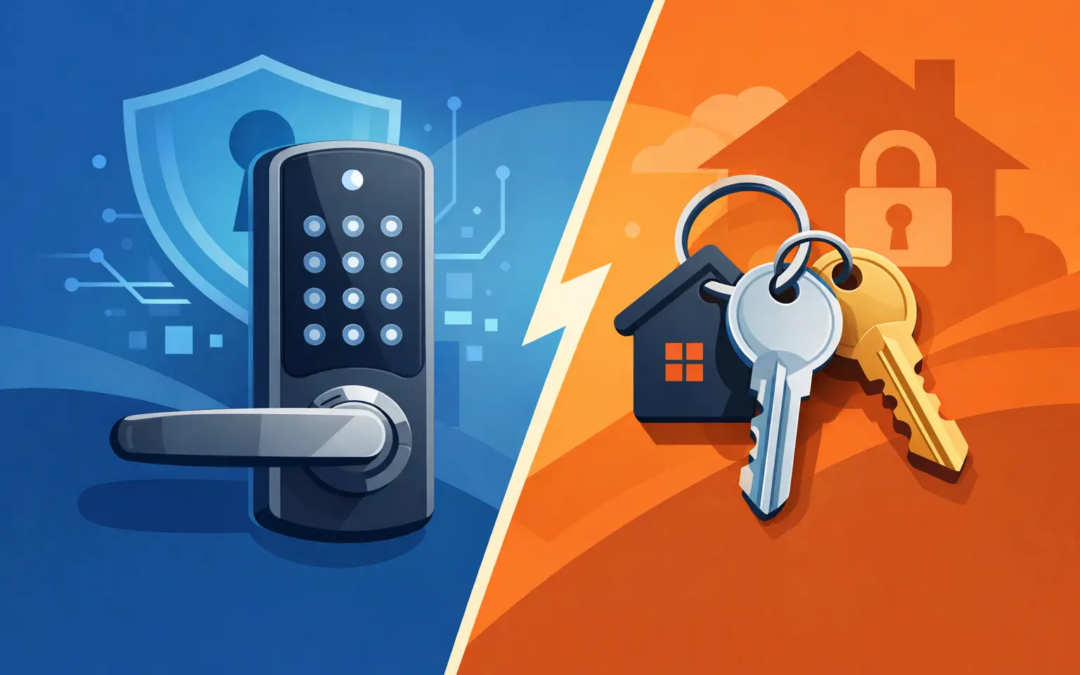
A missing house key at 7:30 a.m., a former employee who may still have a copy, or a child arriving home before you do can turn a basic door lock into a daily concern. When weighing keypad locks versus metal keys, the better choice is not always the newest option. It is the one that gives your household or business dependable access without creating new problems to manage.
For many properties, a keypad lock solves a real convenience issue. For others, a traditional keyed lock remains the simplest and most reliable answer. The right decision depends on who needs access, how often that access changes, what happens during a power or battery issue, and how much control you want over the door.
Keypad Locks Versus Metal Keys: The Practical Difference
A metal key works through a physical cylinder. Put the right key in the lock, turn it, and the door opens. It is familiar, inexpensive, and does not need a code, app, signal, or battery to operate.
A keypad lock uses a PIN code to release the locking mechanism. Many models run on batteries and may also offer temporary codes, multiple user codes, automatic locking, or app-based management. Some include a backup keyway, while others are entirely keyless.
The biggest difference is control. A metal key can be handed over, copied, lost, or left with a previous tenant or contractor. A keypad code can usually be changed in minutes. That makes keypad locks especially useful where access needs to be managed regularly.
Still, convenience is only one part of security. The lock’s construction, the strength of the door and frame, correct installation, and good habits all matter. A keypad on a weak door does not create strong protection. A high-quality deadbolt installed properly can be effective whether it is operated by a key or a code.
Where Keypad Locks Make Sense
Keypad locks are often a strong fit for busy homes. Parents do not have to worry as much about children losing keys. Dog walkers, house cleaners, and visiting relatives can receive their own code instead of a spare key hidden under a planter. If access is no longer needed, the code can be removed or changed.
For rental owners and property managers, that flexibility can save time. Changing a traditional lock after every turnover may require rekeying or replacing hardware. With a keypad lock, a new resident can receive a new code while old codes are deleted. That is a clearer process and reduces concern over unreturned keys.
Small businesses can also benefit when several employees need entry. Rather than issuing keys to every staff member, an owner can assign separate codes where the lock supports them. If an employee leaves, the owner can disable that code without collecting a key first. This is particularly helpful for offices, salons, small retail spaces, storage areas, and service businesses with changing schedules.
A keypad lock can also reduce the chance of accidental lockouts. You may forget your code, but you do not have to carry it in a pocket or purse. That small benefit matters when hands are full, employees arrive at different times, or people regularly enter through a side or back door.
The limits of keypad convenience
A keypad lock is not maintenance-free. Battery-operated locks need fresh batteries, and most will warn you before power is low. Those alerts only help if someone pays attention to them. Make battery checks part of a regular property maintenance routine, especially before travel or a long holiday closure.
Codes also require basic discipline. Avoid easy choices such as a street number, birthday, or 1234. Do not write the code where visitors or delivery drivers can see it. For businesses, remove old employee codes promptly and avoid having one shared code for everyone if the lock allows individual codes.
Weather is another consideration. Exterior locks should be rated for the environment where they will be installed. Direct rain, extreme heat, freezing temperatures, and heavy sun exposure can affect any electronic device over time. A protected entry and a quality lock suited to outdoor use will generally give better service.
Why Metal Keys Still Have a Place
Traditional metal keys are not outdated just because keypad locks exist. They remain a solid choice for doors with low traffic, properties where only one or two trusted people need access, or locations where the owner wants the fewest possible components to maintain.
A conventional keyed deadbolt has a straightforward advantage: it does not rely on batteries. If the power goes out or a battery is neglected, the key still works. This can be reassuring for a remote shed, a rarely used side entrance, or an owner who prefers hardware with no electronic features.
The upfront cost may also be lower. Standard locksets are widely available, and many homeowners already understand how they work. If a key is lost, rekeying can be less expensive than replacing the entire lock, depending on the hardware and service needed.
The trade-off is key control. You may not know how many copies exist once a key has been shared. A copied key can look no different from the original, and there is no simple way to deactivate one specific copy. When a tenant, employee, vendor, or former household member no longer needs access, rekeying is the cleanest way to restore control.
Good key habits matter
If you choose metal keys, treat key management as part of your security plan. Keep a clear record of who has keys, collect them when access ends, and rekey promptly after a move, employee departure, or lost key. Avoid hiding spare keys outside near the door. Burglars know the common hiding places.
For a small business, consider limiting access to a small number of keyholders instead of distributing keys freely. For a home, a trusted neighbor may be a better backup plan than a hidden spare. These steps cost little and address many of the risks associated with physical keys.
Security Depends on More Than the Entry Method
It is easy to focus on the keypad or key, but the lock cylinder is only one part of the door’s protection. A forced entry often targets weak strike plates, short screws, flimsy door frames, or doors that do not close and latch properly.
Whether you choose a keypad lock or metal key, look for a quality deadbolt and have it installed correctly. The strike plate should be secured into the door frame with long screws that reach solid framing. Exterior doors should fit squarely in the frame so the bolt extends fully when locked. A door that sticks or has a loose frame deserves attention before a new lock is installed.
For small commercial properties, consider how the door is used throughout the day. A rear employee entrance may need code management and automatic locking. A public-facing front door may need commercial-grade hardware that meets local fire and occupancy requirements. Security should support safe, normal use of the space rather than make it harder for employees or customers to move through it.
Cost, Reliability, and the Hybrid Option
The initial price of a keypad lock is usually higher than a basic keyed lock. Over time, however, it may reduce rekeying costs and the inconvenience of replacing lost keys. That value is strongest when access changes often.
A traditional key lock can be the more economical choice when access is stable and the door is used by only a few people. It is also a good fit for owners who are unlikely to keep up with battery replacement or code management.
For many homes, the most practical answer is a keypad deadbolt with a backup keyway. Daily entry is handled with a code, while a physical key is stored securely as a backup. This approach gives you flexibility without depending entirely on electronics. It is not necessary for every property, but it can be a sensible middle ground for a primary entrance.
Before buying, think through the real routine at the door. Who enters? How often do people change? Is there someone who can maintain batteries and manage codes? Do you need a backup method for a family member who is less comfortable with technology? Clear answers will point you toward the right hardware faster than a long list of features.
Choosing the Right Lock for Your Door
Choose a keypad lock when you want to control access without collecting keys, especially for a rental, a busy family entrance, or a small business with multiple authorized users. Choose metal keys when simplicity, low upfront cost, and battery-free operation are your top priorities.
If your property has different needs at different doors, you do not have to make one choice everywhere. A keypad lock may be useful at the main entrance, while a quality keyed deadbolt makes sense on a low-use storage door. The goal is not to add technology for its own sake. It is to make everyday security easier to manage and easier to trust.
A good door lock should fade into the background of your day: reliable when you leave, dependable when you return, and simple enough that everyone who needs access knows exactly what to do.