

A vacant rental can go from income-producing to expensive fast. One broken window, one forced door, or one missed alert can turn into repair costs, lost rent, and a stressed-out tenant relationship. That is why choosing the right security system for rental house properties matters more than many owners expect.
Rental security is a little different from owner-occupied home security. You are not just protecting a building. You are also protecting turnover schedules, lease value, liability exposure, and tenant confidence. The right setup needs to be effective, easy to manage, and realistic for a property that may change occupants over time.
What makes a security system for rental house properties different
A primary residence usually gets built around one family’s habits. A rental house does not. Tenants move in and out, property managers may need access, and equipment has to work without creating confusion at every lease change.
That changes the decision in a few important ways. First, simplicity matters. A complicated setup with too many user codes, hard-to-explain controls, or equipment that is difficult to reset can create more work than protection. Second, flexibility matters. You may need to add or remove access, transfer app control, or adjust monitoring responsibilities without replacing the whole system.
There is also the question of who the system is really for. In some rentals, the landlord owns and manages the security setup. In others, the tenant wants their own system for personal peace of mind. In higher-turnover or short-term rental situations, the property owner may want more oversight of exterior access points while keeping interior privacy intact. The right answer depends on the type of rental, local rules, and the lease structure.
Start with the real risks, not the longest feature list
It is easy to get sold on cameras everywhere, smart automation, and add-ons that sound useful but do not match the property. A better starting point is the risk profile of the house.
Look at the basics first. Is the property vacant between tenants for long periods? Is there a garage, basement, back gate, or side entrance that is less visible from the street? Is the home in an area where package theft, break-ins, or vandalism are more common? Does the property sit far from the owner or manager, making quick in-person checks difficult?
A small single-family rental in a quiet neighborhood may only need strong entry protection, exterior cameras, and remote alerts. A larger property with detached access points or frequent service visits may need smarter access control and better visibility around the perimeter. More equipment is not always better. Better coverage of actual weak points is what counts.
The core features worth prioritizing
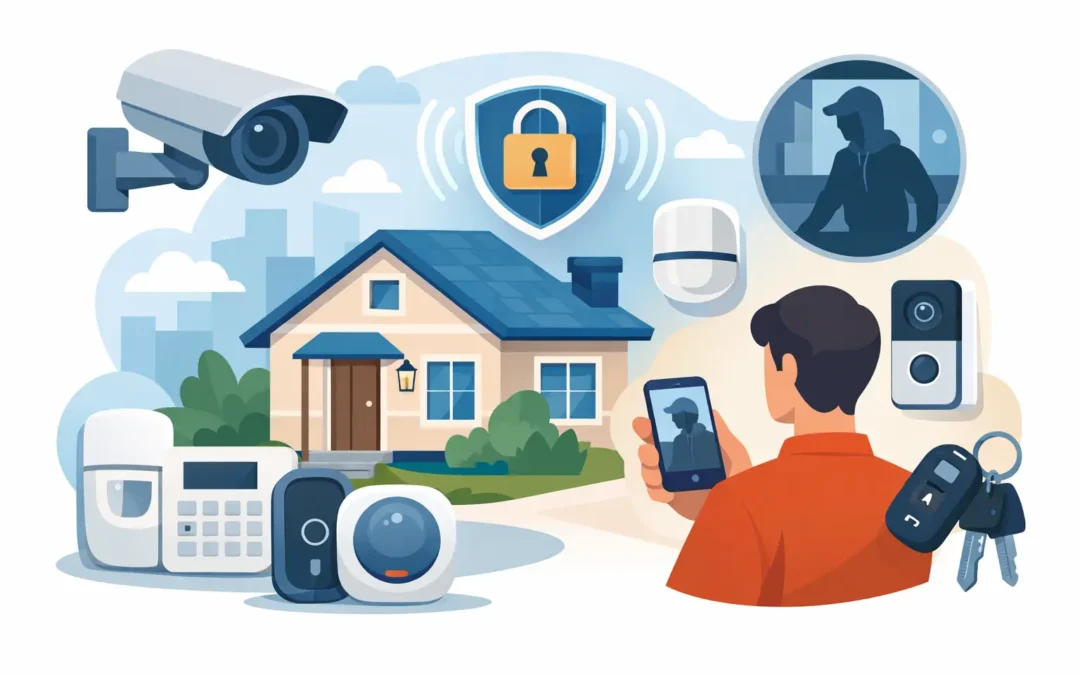
For most rental houses, a practical system starts with door and window sensors, a control panel or app-based hub, motion detection in key common areas, and exterior cameras at main entry points. Those features handle the most common risks without turning the house into a complicated tech project.
Smart locks can also make a lot of sense, especially if you manage turnovers, maintenance visits, or self-showings. They reduce the need for physical key handoffs and make it easier to change access after a tenant leaves. But they should be dependable first and convenient second. A smart lock that creates lockout issues is not an upgrade.
Video doorbells are useful for front-entry visibility, but they are not a complete security plan on their own. They help with package theft and visitor records, yet they do not cover side doors, backyard access, or first-floor windows. Think of them as one piece of the system, not the system itself.
Professional monitoring is another feature worth weighing carefully. For some landlords, app alerts are enough. For others, especially those who live far away or manage multiple properties, professional monitoring adds a useful layer of response. It depends on how quickly someone can act when an alert comes in and how much you want that responsibility on your own shoulders.
Wireless usually fits rentals better than hardwired
In most cases, wireless systems are the easier fit for rental properties. Installation is faster, expansion is simpler, and changes between tenants are less disruptive. If you need to add a sensor, move a device, or reconfigure the layout, wireless equipment usually makes that manageable.
Hardwired systems can be very reliable, and they may make sense in some houses during renovation or new construction. But for existing rentals, they often mean more labor, more wall work, and less flexibility later. If the goal is practical protection with minimal hassle, wireless is often the better path.
The one trade-off is battery maintenance. Wireless devices need periodic attention, and ignored batteries can leave gaps in coverage. That is not a reason to avoid them. It just means the system should be easy to monitor and maintain.
Think through tenant use before you install anything
A system can look great on paper and still fail in real life if tenants do not understand it or feel uncomfortable using it. That is why the day-to-day experience matters.
If the tenant will operate the system, it should be simple to arm and disarm, easy to explain in a few minutes, and clear about what each device does. False alarms frustrate everyone. So do apps that are hard to navigate or devices that send too many low-value notifications.
Privacy is also a major issue. Exterior cameras are common and often expected. Interior cameras are a different matter and can create legal and trust problems quickly. In a standard long-term rental, interior surveillance is generally a bad idea unless there is a very specific, lawful reason and full transparency. Even then, caution is the better approach. Security should help tenants feel safe, not watched.
A good security system for rental house turnover should be easy to reset
Turnover is where rental security setups either prove their value or become a headache. Every move-out creates a checklist: recover keys, change codes, update app users, confirm equipment is working, and make sure the next tenant starts clean.
That is why reset and transfer processes matter so much. Can user access be removed quickly? Can a smart lock code be changed in minutes? Can the new resident get access without a technician visit? If the answer is no, the system may be too cumbersome for a rental environment.
This is also where centralized management helps. If you manage more than one property, the ability to monitor status, review alerts, and control user permissions from one place can save real time. A basic but well-organized setup often works better than a feature-heavy one spread across multiple apps and accounts.
Landlord-owned vs tenant-owned systems
There is no single model that works for every rental house. Some property owners install and maintain the system as part of the property. That creates consistency and control, especially for exterior protection and vacant periods. It can also make the property more appealing to tenants who want security without setting it up themselves.
Other landlords prefer to leave security choices to the tenant, especially in long-term rentals. That reduces owner involvement and avoids some access and privacy concerns. The downside is inconsistency. One tenant may install quality protection, while the next has nothing at all.
A middle-ground approach often works well. The owner handles exterior security, entry protection, and vacant-property monitoring, while tenants can add their own approved devices inside if allowed by the lease. That balance gives the property a baseline level of protection without overcomplicating responsibilities.
Cost matters, but so does the cost of a bad fit
Budget matters for every rental property decision. But the cheapest option is not always the lowest-cost choice over time. If a system is unreliable, difficult to manage, or frequently triggers service calls, the savings disappear fast.
A better way to think about cost is in terms of usable value. Does the system reduce risk in the areas that matter most? Does it make turnover easier? Does it help protect vacancy periods? Does it support tenant confidence without adding management friction? Those are better questions than whether a package includes the most devices.
For many owners and managers, simple and dependable is the right investment. That is where a provider with a practical approach, like Simple Security Solutions, can make a real difference. Clear recommendations usually outperform flashy packages.
How to make the right choice without overthinking it
If you are choosing security for a rental house, keep the decision grounded. Start with the entry points, the vacancy risk, and how the property is managed. Decide who needs access, who will respond to alerts, and how often the setup may need to change. Then choose equipment that solves those specific problems without creating new ones.
The best system is not the one with the most features. It is the one that protects the property, fits the rental setup, and stays easy to use after the installation is done. When security feels manageable, it is much more likely to stay active, maintained, and effective.
A rental house already asks you to juggle enough. Your security setup should take problems off your plate, not add new ones.