

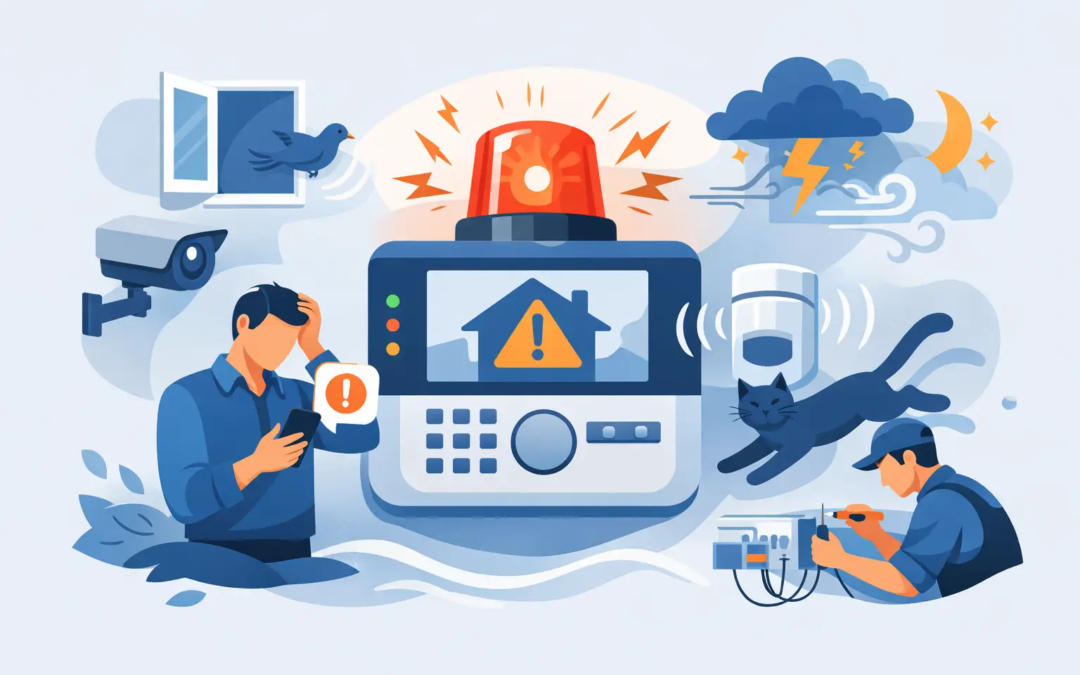
A 2 a.m. alarm that turns out to be nothing is more than annoying. It can wake your family, frustrate your employees, worry your neighbors, and make you less confident in the system you rely on. If you have ever wondered what causes alarm system false alerts, the answer is usually much simpler than people expect.
Most false alerts come down to a small group of issues: user mistakes, equipment placement, maintenance problems, or environmental changes. The good news is that most of them are preventable once you know what to look for.
What causes alarm system false alerts most often?
In homes and small businesses, false alerts usually happen because the system is reacting exactly as it was designed to react – just not to a real threat. A sensor detects movement, a door contact sees an unexpected change, or a monitoring setup receives a signal that appears urgent. The problem is not always that the system is faulty. Often, it is responding to bad input.
That distinction matters. If you assume every false alert means your alarm system is unreliable, you may miss the real issue, which could be as simple as a loose sensor, a weak battery, or someone entering the wrong code too many times.
User error is still the biggest cause
For many properties, the most common source of false alerts is everyday human error. Someone forgets the system is armed and opens a door. A family member comes home early without a code. An employee opens the shop before disarming the panel. A cleaning crew enters after hours and triggers a motion detector.
These situations are common because alarm systems work on routines. When people fall outside those routines, alerts happen.
This is especially true in households with children, guests, dog walkers, house sitters, or service providers. In small businesses, turnover can make the problem worse. If access instructions are unclear or outdated, even a good system can produce repeated false alerts.
The fix is usually not more complexity. It is better communication, simpler access management, and making sure everyone who uses the property understands how to arm and disarm the system correctly.
Poor sensor placement creates avoidable problems
A well-designed alarm system depends heavily on where sensors are installed. If motion detectors are aimed at high-traffic areas without considering pets, HVAC airflow, windows, or reflective surfaces, you can end up with alerts that have nothing to do with an intruder.
For example, a motion sensor placed where direct sunlight hits it during part of the day may react differently as room temperatures shift. A detector positioned too close to vents can be affected by moving air. Door and window contacts that are slightly misaligned may trigger when a frame expands, shifts, or closes unevenly.
Placement issues do not always show up right away. A sensor may seem fine during installation and only start causing trouble as weather changes or as the property settles. That is one reason false alerts can appear suddenly even when nothing obvious has changed.
Low batteries and aging equipment are easy to overlook
Alarm systems need regular attention, even when they seem to be working fine. Low batteries in sensors, keypads, or backup units can create erratic behavior. Sometimes the system gives a warning first. Sometimes it escalates into trouble signals or false alerts if the battery weakens enough.
Older devices can also become less reliable over time. Adhesives loosen. Contacts shift. Wiring degrades. Wireless components lose signal strength. None of this means an entire system needs to be replaced right away, but it does mean small maintenance issues should not be ignored.
This is one of the most preventable causes of false alerts. A simple maintenance schedule can catch many of these issues before they turn into middle-of-the-night disruptions.
Environmental factors can trigger the system
Not every false alert starts with a person or a device failure. Sometimes the environment is the cause. Wind rattling a poorly secured door, heavy rain affecting an exterior component, insects getting inside a sensor housing, or power fluctuations can all create conditions that look like a security event.
In residential settings, pets are another frequent factor. Pet-friendly motion sensors help, but they are not magic. A large dog jumping on furniture, multiple pets moving at once, or a sensor mounted at the wrong height can still cause alerts.
In small commercial spaces, changing interior conditions matter too. Balloons moving from air circulation, stacked inventory shifting into a sensor’s field, or seasonal decorations blocking equipment can all lead to unexpected trips. What seems minor to a person can be significant to a detector.
Doors, windows, and hardware issues play a role
Sometimes the alarm system is fine, but the door or window itself is the problem. A loose frame, worn latch, or warped door can cause a protected opening to move just enough to trigger a contact sensor. This tends to happen more often in older properties or buildings exposed to strong temperature swings.
If a false alert keeps happening at the same opening, it is smart to look beyond the alarm hardware. The issue may be structural rather than electronic. A sticking door, an uneven close, or vibration from nearby activity can all create repeat alerts.
This is a good example of why alarm troubleshooting should be practical. You are not just checking software settings. You are checking how the property actually behaves day to day.
Communication and monitoring issues can create confusion
Some false alerts are not sensor trips in the usual sense. They happen when a system has trouble communicating with the monitoring center or when signals are interrupted and misread. Power outages, weak cellular backup, internet instability, or panel configuration problems can all contribute.
That does not mean monitored systems are a problem. In fact, professional monitoring adds important protection. But like any service, it works best when the equipment, signal path, and account information are current.
If contact lists are outdated or verification steps are unclear, a manageable issue can become a bigger disruption. Keeping your monitoring profile accurate is a small task that makes a real difference.
How to reduce false alerts without making security harder
The best way to reduce false alerts is to keep the system simple, current, and easy for people to use. Start with the basics. Make sure everyone who needs access knows how to arm and disarm the system. Update user codes when household members, employees, or vendors change. Test the system on a regular schedule, and pay attention to low-battery or trouble warnings instead of putting them off.
It also helps to review whether your current setup still matches how the space is used. A motion detector that made sense a year ago may now be pointed at a busier area. A storage room may now have more inventory movement. A back entrance may be used more often than before. Small changes in routine can create repeated false alerts if the system was never adjusted.
If pets are involved, confirm that your sensors are actually rated for pet immunity and installed correctly for that purpose. If the problem keeps happening at one device or one location, do not assume it will resolve on its own. Repeated false alerts usually point to a specific issue that needs attention.
For many property owners, this is where working with a straightforward provider helps. A company like Simple Security Solutions focuses on making the system practical to use, not harder to understand. That matters because the best alarm system is one people can use confidently every day.
When false alerts become a bigger problem
An occasional false alert is common. Frequent false alerts are different. They can lead to alarm fatigue, where people start ignoring signals or rushing through disarming steps. In some areas, repeated false alarms can also result in fines or reduced urgency from responders.
More importantly, too many false alerts weaken trust. If your system cries wolf often enough, you may hesitate when a real event happens. That is why reducing false alerts is not just about convenience. It is part of making your security system dependable.
If the same alert keeps returning, treat it as useful information. It means something in the system, the property, or the daily routine needs to be corrected. Once you find that cause, alarm systems tend to become much easier to live with.
A reliable alarm system should give you peace of mind, not extra guesswork. When false alerts show up, the right response is usually simple: look at how the system is being used, how it is maintained, and how the space behaves in real life.