

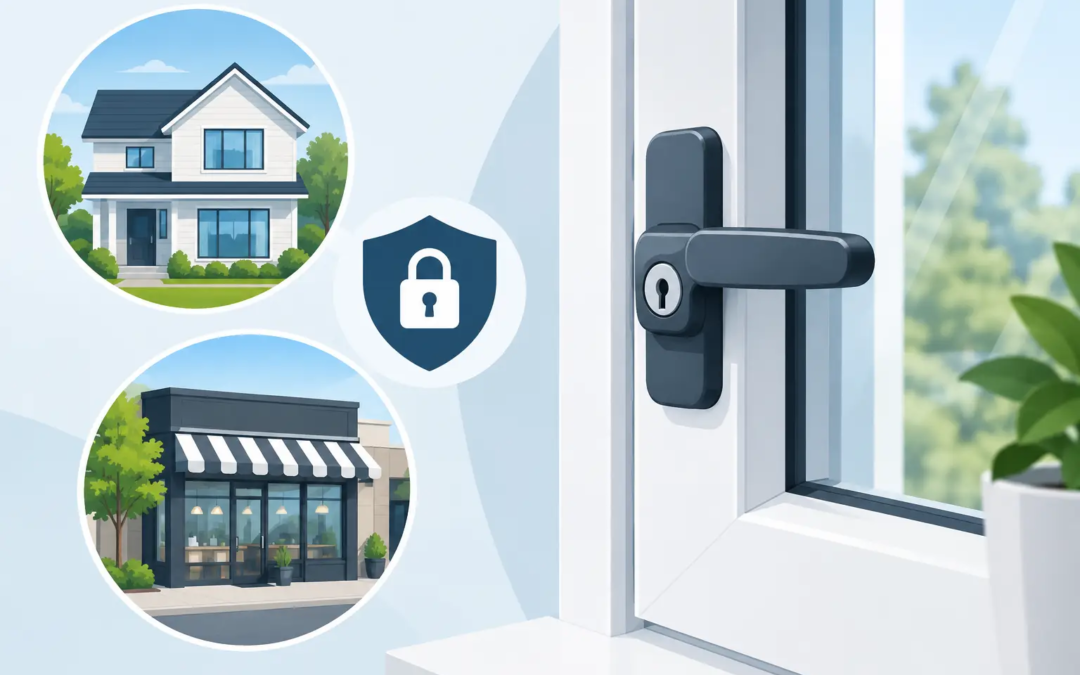
A closed window can still be an easy entry point if it does not lock firmly. Window locks are a simple, affordable way to reduce that risk, whether you are protecting a family home, rental unit, office, storefront, or storage area. The right lock should make the window harder to open from outside without making daily use or emergency escape more difficult.
For most properties, the goal is not to turn every window into a complicated project. It is to identify the windows that need more protection, choose hardware that fits, and make sure everyone who uses the space knows how it works.
Why Window Locks Matter
Windows are often overlooked because they are less visible than exterior doors. Yet a ground-floor bedroom window, basement window, rear office window, or window near a fence may offer a more private approach than the front entrance. A basic factory latch may keep a window closed in normal conditions, but it is not always enough to prevent forced opening or lifting.
Additional locks can help in several ways. They can limit how far a window opens, stop a sash from being lifted, reinforce a worn factory latch, and add a visible sign that the property is cared for. They are especially useful on older windows, windows that do not close tightly, and windows in areas with limited visibility from the street.
Still, locks are one part of property security. Good exterior lighting, clear sightlines, working door locks, monitored alarms where appropriate, and consistent daily habits all matter. A strong lock on an open or damaged window will not solve the problem.
Types of Window Locks and When They Fit
The best choice depends on the style and condition of the window. Before buying anything, check how the window opens, whether it has a frame strong enough for mounting hardware, and whether the window is needed as an emergency exit.
Sash Locks for Double-Hung Windows
Double-hung windows have two vertical panels, called sashes. A standard sash lock sits where the two sashes meet and pulls them together. Many windows already have one, but an upgraded or additional sash lock can improve the hold if the existing latch is loose, worn, or light-duty.
This option is straightforward and works well for windows that are usually kept closed. It is less helpful if the frame is warped or the window no longer aligns properly. In that case, repair or adjustment should come first. A lock cannot compensate for a window that does not meet squarely.
Pin Locks and Sliding Window Locks
Pin locks use a metal pin to secure a moving window panel to its frame. They are common on sliding windows and can also work with certain double-hung models. Some require a small hole to be drilled, while others attach with screws or clamp onto a track.
These locks can provide a solid physical barrier, but proper placement matters. A poorly positioned pin may interfere with the window track or fail to hold the panel securely. For renters, drilling is not always allowed, so check the lease and ask the property owner before making permanent changes.
Keyed Locks
Keyed window locks add control because the window cannot be opened without the key. They can make sense for windows in a vacant office, a storage room, a ground-level commercial space, or a home where children need extra supervision around windows.
The trade-off is simple: keys can be misplaced, and keyed locks can create a safety concern if installed on an emergency exit window. If a keyed lock is used where people may need to exit quickly, keep the key immediately accessible to adults who use the space. Never store it across the room, in a drawer, or somewhere that requires searching during an emergency.
Window Stops and Restrictors
A stop or restrictor allows the window to open only a set distance. This can be useful for ventilation while reducing the chance that someone can climb through the opening. It can also help protect young children from falls.
Restrictors are a practical choice for upper-floor windows, rentals, and business areas that need fresh air without leaving a wide opening. However, a restrictor should not prevent a required escape window from opening fully when needed. Choose a product with a quick-release feature when the window is part of an emergency exit route, and make sure everyone in the household or workplace knows how to release it.
Choose Locks Based on Real Risk
Start with the windows an intruder could reach without much effort. Ground-level windows, basement windows, windows behind gates or shrubs, and windows near air conditioning units, dumpsters, or low roofs deserve close attention. A window that is hidden from neighbors or employees can be more vulnerable than one facing a busy street.
Next, think about how each window is used. A rarely opened utility-room window may be a good candidate for a more permanent lock. A bedroom window used for emergency exit needs hardware that is easy to release from inside. A storefront window may need a different approach than a second-story office window.
For small businesses, access routines matter as much as hardware. Decide who checks windows at closing, who has keys if keyed locks are installed, and who is responsible for reporting loose latches or damaged frames. A simple closing checklist can prevent the common problem of assuming someone else secured the building.
Installation Should Not Create New Problems
Many window locks are simple to install, but simple does not mean automatic. Measure carefully, follow the manufacturer instructions, and test the window after installation. The lock should engage fully without forcing the sash, bending the frame, or leaving a gap around the window.
Avoid installing hardware into cracked vinyl, rotted wood, or loose aluminum frames. The lock may appear secure at first but pull free under pressure. If the frame is damaged, address that issue before relying on added security hardware.
After installation, test the lock from inside with the window closed. Then check that the window still opens as intended when the lock is released. If the window is an emergency exit, practice the release process with the people who may need to use it. Children should understand basic window safety, but adults should decide whether a child can operate a release based on age and ability.
Do Not Forget Window Condition
A good lock works best on a window that is in good repair. Loose screws, damaged tracks, cracked glass, worn balances, and frames that do not close evenly can all weaken security. If a window rattles when shut or opens with very little pressure, the underlying issue may be alignment rather than the lock itself.
Keep tracks clean, tighten loose hardware, and replace worn weatherstripping when needed. These small maintenance steps help windows close properly and can also improve comfort and energy efficiency. For sliding windows, clear dirt and debris from the track so the panel sits in the correct position before locking.
It is also worth checking locks seasonally. Temperature changes can cause wood frames to swell or shrink, and regular use can loosen screws over time. A lock that worked well last year may need a quick adjustment before it provides the same protection this year.
A Sensible Approach for Renters and Property Managers
Renters may not be able to drill into window frames or replace existing hardware. Non-permanent track locks and removable window stops can be useful options, but they should still fit tightly and allow safe exit when required. Document any security concerns, such as broken latches or windows that will not close, and notify the property owner promptly.
Property managers should treat damaged window locks as a maintenance priority, not a cosmetic issue. Clear expectations about who handles repairs, key control, and tenant requests help avoid delays. Consistent hardware across similar units can also make maintenance easier and reduce confusion for residents.
The best window security is usually the kind people can use correctly every day. Choose locks that fit the window, match the level of risk, and keep safe exit routes usable. A few minutes spent checking your windows now can turn a weak point into one less thing to worry about when you close up for the night.