

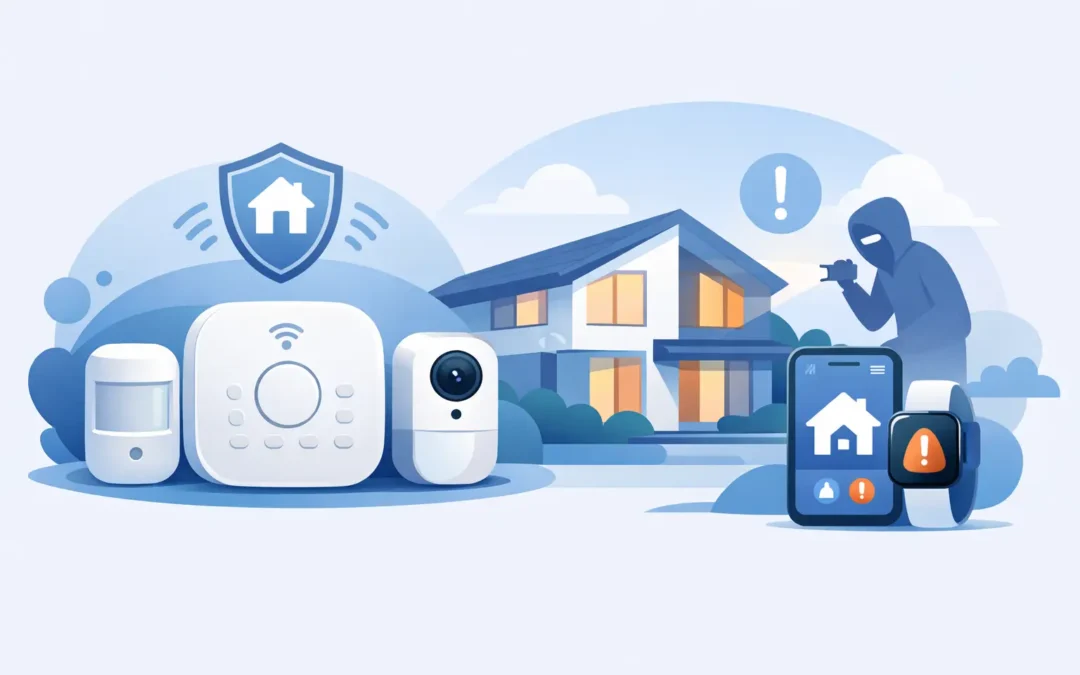
A low monthly price can look great until the app is clunky, the alerts are late, or the system nags you with false alarms. That is where a good wireless home alarm review should help. The real question is not whether a system has a long feature list. It is whether it protects your home or business in a way that feels simple, reliable, and worth paying for.
Wireless alarm systems have become the default choice for many homeowners, renters, and small business owners because they are easier to install and easier to expand than older hardwired setups. But easier does not always mean better. Some systems are genuinely user-friendly. Others are just lightly packaged complexity.
Wireless home alarm review: the features that actually matter
If you are comparing systems, start with the basics. A wireless alarm system needs dependable sensors, a clear mobile app, and alerts that show up when they should. If any one of those pieces is weak, the whole setup feels less useful.
Door and window sensors are the starting point. They should respond quickly and stay connected without constant troubleshooting. Motion detectors matter too, especially in entry paths, hallways, and common areas. If you have pets, check whether the motion sensors are designed to reduce false alarms from animals moving around the house.
The control method also matters more than many buyers expect. Some people want a keypad by the front door. Others prefer to arm and disarm everything from an app. Either option can work well, but the system should make everyday use easy. If arming the alarm feels annoying, people stop using it consistently.
Battery backup is another feature worth paying attention to. A wireless system still needs power for the base station, router, and internet connection to work smoothly. If the power goes out, you want enough backup to keep core functions running. Cellular backup is also a strong plus, especially if your internet drops or someone tampers with your connection.
Where wireless systems do well and where they fall short
The biggest advantage of wireless alarms is flexibility. Installation is usually faster, and adding sensors later is much easier. That makes wireless a strong fit for renters, growing families, small storefronts, and property managers who may need to adjust coverage over time.
Wireless systems also tend to be less disruptive to install. You do not need walls opened up for wiring, and many setups can be in place in an afternoon. For many buyers, that convenience is a major reason to choose wireless in the first place.
Still, there are trade-offs. Wireless sensors rely on battery life and stable communication. If maintenance gets ignored, performance can suffer. Signal range can also be an issue in larger homes, detached garages, metal-heavy buildings, or properties with thick walls. A system may look great on paper but struggle in a real building layout.
There is also the question of long-term simplicity. Some systems are marketed as easy but become harder to manage once you start adding cameras, smart locks, extra users, and automation rules. If your goal is straightforward protection, be careful not to buy a setup that turns into a part-time hobby.
A practical wireless home alarm review should look at monitoring
Professional monitoring is one of the biggest decision points. Some people are comfortable self-monitoring through app alerts. Others want a monitoring center that can contact emergency services if an alarm goes off.
Self-monitoring can save money and may be enough for lower-risk situations, second properties, or users who are almost always near their phones. But it depends on you seeing the alert, understanding it, and acting quickly. That may be fine during the day. It is less reassuring when you are asleep, traveling, or in a meeting.
Professional monitoring adds another layer of response, but quality varies. Ask how quickly alarms are handled, what happens if they cannot reach you, and whether there are extra fees for permits, video verification, or cellular backup. A low advertised rate does not always reflect the real monthly cost.
For small businesses, monitored service is often more appealing because after-hours incidents can happen when no one is on site. For homes, it usually comes down to budget, schedule, and how much hands-on involvement you want.
The app experience can make or break the system
People often focus on hardware and forget how much they will use the app. In reality, the app becomes the daily control center. It should be easy to arm, disarm, check sensor status, review alerts, and manage user permissions.
A good app gives clear notifications without flooding you with noise. If every minor event triggers a confusing alert, you stop paying attention. If the app buries important controls behind multiple menus, simple tasks take too long.
Look for practical details. Can you tell which door opened? Can you create separate access for a family member, employee, cleaner, or property manager? Can you see low battery warnings before a sensor fails? Those details matter more than flashy graphics.
If cameras are part of the package, the app should let you check live footage quickly. Delay matters. During a real incident, no one wants to fight a slow-loading screen.
What to watch for in pricing
Alarm pricing is rarely as simple as the first number you see. Equipment cost, installation, monitoring, cloud storage, warranties, and cancellation terms all affect value.
Some wireless systems have a low starting cost but require paid subscriptions for basic features such as video history, cellular backup, or real-time notifications. Others cost more up front but give you more control without locking key functions behind a monthly plan.
That does not mean one model is always better. It depends on how long you expect to use the system and what level of support you want. A renter may prefer low commitment and portability. A homeowner planning to stay put may get better value from a more complete setup.
Be cautious with contracts. A long agreement is not automatically bad if the service is solid and the pricing is fair. But the terms should be easy to understand. If you need a sales rep to decode every line, that is a warning sign.
Which type of buyer benefits most from wireless alarms
Wireless alarms fit many properties, but not every buyer has the same priorities. Homeowners usually care most about family safety, daily convenience, and room to expand over time. Renters often need a system that installs cleanly, moves easily, and does not require major alterations. Property managers may want simple remote oversight across multiple units or entry points. Small business owners often focus on after-hours protection, access control, and dependable notifications.
That is why a one-size-fits-all review is not very useful. The better approach is to match the system to the property and routine. A compact apartment does not need the same setup as a two-story house with a backyard gate and detached garage. A retail shop with employee turnover needs different controls than a single-family home.
At Simple Security Solutions, that practical match matters more than chasing the longest feature sheet. The best system is the one people understand, use consistently, and trust when something feels off.
Signs a wireless system is worth buying
A strong system usually gets the simple things right. It is reliable day to day. Setup is clear. Alerts make sense. Expanding coverage does not feel like solving a puzzle. Support is available when needed, and the pricing is easy to follow.
Customer reviews can help, but read them with some judgment. A few setup complaints may reflect user error. Repeated complaints about dropped sensors, late alerts, billing confusion, or poor support are more meaningful. Patterns matter.
It is also smart to think ahead. If you may want indoor cameras, smart locks, panic buttons, smoke detection, or environmental sensors later, make sure the system can grow without becoming overly expensive or hard to manage.
A wireless home alarm review is most useful when it cuts through marketing and focuses on real use. You want a system that helps protect your space without adding stress, confusion, or extra work. If the setup feels clear, the alerts are dependable, and the monthly cost makes sense for your situation, you are probably looking in the right direction. Security should feel manageable from day one and dependable when it counts.