

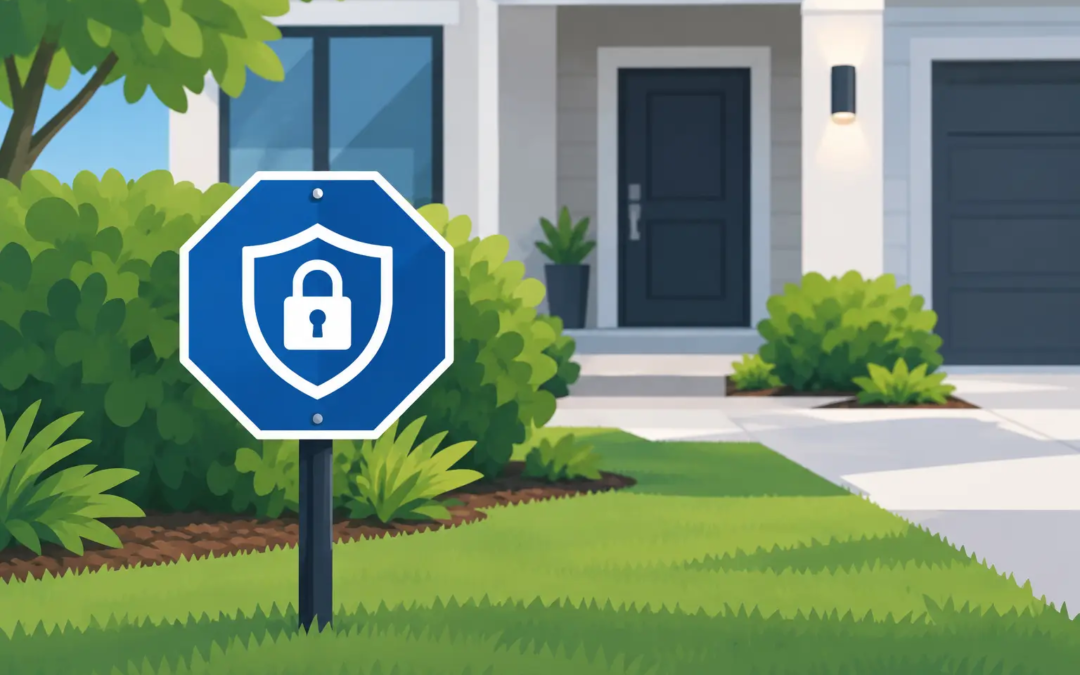
A person looking for an easy target usually makes a quick decision. A visible security yard sign can add doubt at exactly that moment. But are security yard signs effective on their own? Sometimes they help, especially against opportunistic trespassers or burglars. They are not a replacement for a working security system, good lighting, secure locks, or attention to the property.
For homeowners, renters, property managers, and small business owners, the useful question is not whether a sign is magic. It is whether it makes your property look less appealing to someone looking for an easy opportunity. Used honestly and as part of a basic security plan, it often can.
How security yard signs influence behavior
Most property crime is not a highly planned operation. Someone may notice an open gate, a dark entryway, a package sitting in plain view, or a business that appears empty after hours. Visible signs of security can change that first impression.
A professionally displayed yard sign suggests that an alarm, cameras, monitoring, or another response measure may be present. It introduces uncertainty. The person considering trespassing does not know whether they will trigger an alarm, be recorded, or draw attention from a homeowner, neighbor, employee, or security provider.
That uncertainty matters most for people who want a low-risk, quick opportunity. They may simply move on to another property that appears easier to access.
The effect is less certain with a determined offender. Someone who has specifically targeted a property, understands the layout, or believes valuable items are inside may not be stopped by a sign alone. That is why a yard sign should be viewed as one visible layer of protection, not the whole plan.
Are security yard signs effective when no system is installed?
A sign without a security system may still cause some people to hesitate, but it comes with obvious limits. If someone tests a door, looks through a window, or spends time around the property, they may realize there is no alarm panel, camera, sensor, or other evidence of protection.
There is also a trust issue. A sign is more credible when it reflects real protection. If an incident occurs, a sign cannot alert you, record what happened, contact emergency services, or provide evidence. It only creates the appearance of a possible consequence.
For that reason, it is better to use signage that matches the protection you actually have. Even a straightforward system with door and window sensors, a camera at a main entrance, and appropriate monitoring gives the sign real support. The goal is simple: make the warning visible, then make sure there is something behind it.
What makes a yard sign more convincing
Placement and condition affect whether a sign does its job. A faded sign behind shrubs is easy to miss. A clean, visible sign near the usual approach to the property is more likely to be noticed before someone reaches a door or window.
For a home, that often means placing a sign near the front walkway, driveway, or another clear point of entry. If there is a side gate or rear access point that is visible from a public area, a second sign may make sense. Window decals can reinforce the message, particularly near ground-level windows or glass doors.
For a small business, think about the route a person would use after closing. A sign near a front entrance, rear service door, or parking area can signal that the site is not unprotected after employees leave. Keep the message clear and avoid cluttering windows or entrances with too many decals.
A few practical details make the message stronger:
- Keep signs visible from likely approach routes, without blocking sightlines around doors and windows.
- Replace damaged, outdated, or sun-faded signs so the property does not look neglected.
- Use signs that accurately represent your current alarm, camera, or monitoring service.
- Pair signs with visible basics, such as working exterior lights, locked gates, and maintained landscaping.
The point is not to make a property look intimidating. It is to show that someone has taken reasonable steps to protect it.
The security layers that matter more than the sign
Yard signs work best when they support measures that can actually detect, delay, or document unwanted activity. The right setup depends on the property, but most homes and small businesses benefit from a few practical layers.
Start with entry points. Exterior doors should have solid hardware and working locks. Windows, sliding doors, gates, and garage doors deserve the same attention, since they can become easy access points when they are overlooked. A monitored intrusion alarm can provide an alert when a protected door or window is opened.
Next, address visibility. Motion-activated lighting can make it harder for someone to approach unseen. Trim shrubs and trees that create hiding places near windows, doors, or equipment. For businesses, make sure exterior lighting covers employee entrances, delivery areas, and parking areas after hours.
Cameras can add another useful layer. A camera does not physically stop a break-in, but it may discourage someone who sees it and can provide a record of activity. Place cameras where they can capture faces and access points, rather than mounting them too high or pointing only at a wide area with little detail.
Finally, make response simple. Know who receives alerts, who can check the property, and how to contact local law enforcement when there is an emergency. For property managers and business owners, employees or tenants should understand basic procedures without needing a complicated manual.
Avoid giving a false sense of security
A yard sign can be reassuring, but reassurance should come from a plan that works in real life. Test alarm equipment, replace batteries when needed, and make sure contact information is current. If you have cameras, review their coverage after installation and occasionally check that they are recording properly.
It also helps to avoid predictable weak spots. Do not leave spare keys in obvious places. Do not let packages sit outside for days. Ask a trusted neighbor, friend, or property contact to watch the property during extended travel. Small habits often support the same goal as a security system: reducing opportunity.
For renters, security improvements may need to be portable or approved by the property owner. Door and window sensors, indoor cameras pointed at entryways, and renter-friendly lighting options can be practical choices. Ask before making permanent changes, and focus first on the entry points you control.
Choosing a sign as part of a practical plan
If you already have a professionally installed or monitored system, displaying the associated yard sign and window decals is a sensible step. It makes a real security measure visible before someone gets close enough to test it.
If you do not have a system yet, a sign should not be your first and only purchase. Put the budget toward the basics first: secure locks, adequate lighting, and protection for the doors and windows that matter most. Then use signage to make those efforts more apparent.
Simple Security Solutions approaches property protection this way: clear, dependable layers that fit the real risks of a home or small business. You do not need an overly complicated setup to improve security. You do need measures that are properly selected, working, and easy to use every day.
A security yard sign is a small signal, but it can be a useful one. When it truthfully represents a maintained alarm, cameras, lighting, and thoughtful habits, it tells a would-be trespasser something worth hearing: this property is not the easy option.