

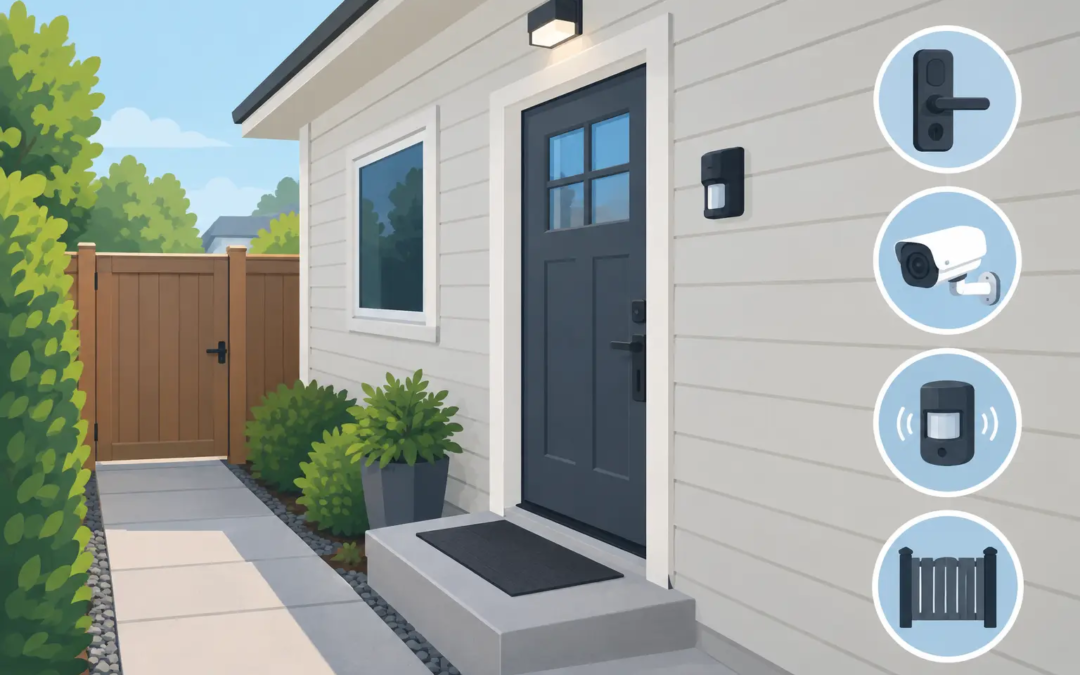
A side door is often the entrance you use most for groceries, pets, employees, or deliveries. It can also be the door that receives the least attention. The best ways to secure side entrances start with treating this access point as seriously as the front door: use solid hardware, remove hiding places, and make activity around the door easier to see.
For homeowners, renters, property managers, and small business owners, the goal is not to turn a side entrance into a complicated project. It is to close common gaps with a few practical improvements that work together.
Start With the Door and Frame
A strong lock cannot fully protect a weak door or loose frame. Begin by checking the condition of the door itself. Exterior side doors should be solid wood, metal, or fiberglass in good repair. Hollow-core interior doors do not belong on an exterior opening, even if they appear to close securely.
Look closely at the frame, hinges, and strike plate. Cracks in the jamb, soft or rotted wood, loose screws, and a door that shifts when pushed are all signs that the opening needs attention. A door should close cleanly without needing to be lifted, shoved, or slammed. Gaps around the edges can make the door easier to pry and can also signal that the frame is out of alignment.
The strike plate deserves special attention. This is the metal plate on the frame that receives the deadbolt or latch. Replace thin, short strike plate screws with 3-inch screws that reach the wall framing. A reinforced strike plate can add another level of protection, particularly on older doors or doors that see frequent use.
If the door swings outward, inspect the hinges as well. Standard removable hinge pins can create a weak point when they are exposed outside. Security hinges or non-removable hinge pins help prevent the door from being lifted off its hinges.
Choose a Lock That Fits How You Use the Door
For most side entrances, a quality deadbolt is the basic starting point. A deadbolt extends farther into the frame than a spring latch, making forced entry more difficult. Choose a lock from a known manufacturer and have it installed correctly. Even a good lock performs poorly if the bolt does not line up with the strike plate.
A keypad or smart lock can be useful when several people need access. Homeowners can avoid hiding spare keys, while small businesses can give employees individual codes instead of passing around a physical key. Many models let you remove a code when a tenant moves out or an employee leaves, which is more convenient than rekeying every time.
That convenience comes with a responsibility: use unique codes, change default settings, and make sure everyone who has access understands how to lock the door behind them. For a business, avoid using one shared code for every employee. For a rental property, reset codes and rekey locks between occupants when appropriate.
If a side entrance includes a glass panel near the lock, consider the layout carefully. A deadbolt that can be turned from the inside without a key is safer for emergency exit, but glass close to the lock may give an intruder a chance to reach in after breaking it. Security film, reinforced glass, or a different lock and door configuration may make sense. The right choice depends on local fire-safety requirements and how the door is used.
Make the Area Visible After Dark
Side yards, service alleys, and narrow spaces between buildings can give someone cover from neighbors and passersby. Good lighting changes that without making life difficult for the people who belong there.
Install a motion-activated light that covers the approach to the door, not just the doorstep. Test it at night to make sure the sensor activates before someone reaches the entrance. Aim the fixture carefully so it does not shine directly into a neighbor’s home or create glare that makes a camera image harder to see.
Trim shrubs, vines, and low tree branches around the door and nearby windows. Landscaping should not provide a hidden waiting spot or block a clear view from the house, street, or parking area. At a small business, keep trash bins, pallets, ladders, and other stored materials away from the entrance. Besides creating cover, those items can sometimes be used to reach windows or defeat fencing.
Visible lighting and a maintained entry also send a simple message: the property is occupied, cared for, and regularly checked.
Add a Camera or Alarm Where It Solves a Real Problem
A camera near a side entrance can help you see who approaches, verify deliveries, and review activity if something goes wrong. Place it high enough to reduce tampering but low enough to capture a useful view of faces and the door area. A camera pointed only at the top of a person’s head or the back of a vehicle offers limited value.
For homes, a doorbell camera or exterior camera may be enough for a commonly used side door. For small businesses, a camera that covers both the door and the path leading to it can be more useful, especially where staff arrive early or leave after dark. Make sure the camera has a reliable power source or battery-maintenance plan, stable connectivity, and settings that alert you to meaningful activity rather than every passing car or swaying branch.
An alarm contact on the side door adds another layer. It can alert you when the door opens unexpectedly or when it is left open after hours. This is particularly helpful for offices, workshops, storage areas, and rental properties where more than one person may come and go.
A camera does not replace a secure lock, and an alarm does not repair a damaged frame. Physical security should come first. Monitoring works best as confirmation and early warning after the door has been properly reinforced.
Control Keys, Codes, and Everyday Habits
Many side-entry problems are not caused by a broken lock. They happen because a door was left unlocked, propped open, or accessible to people who no longer need entry.
Keep spare keys out of obvious hiding places such as under mats, flowerpots, fake rocks, or the top of the door frame. Give a trusted neighbor or family member a spare key if needed, or use a secure keypad lock. For businesses, keep a clear record of who has keys and collect them when employment ends. If keys are lost or not returned, rekeying is usually a sensible step.
Check that everyone in the household or workplace knows the routine. Lock the door when leaving. Do not prop it open for convenience. Close it fully after taking out trash or unloading supplies. These habits take seconds and support every upgrade you make.
For property managers, include side-door expectations in move-in materials and maintenance checks. A tenant may not notice that a latch is loose or a light has burned out, but those small issues are easier to fix before they become security concerns.
Secure Nearby Windows and Access Points
A side entrance rarely stands alone. Nearby windows, gates, garages, and basement doors can affect how secure the whole area feels. If someone can easily open a gate, move through an unlit yard, or climb onto stored equipment, a well-locked side door has less of an advantage.
Check windows within reach of the entrance. They should lock properly, and window coverings can limit the view of valuable items inside. Do not leave tools, bicycles, or boxes near the door if they could help someone climb, break glass, or hide while working at the lock.
A locking side gate can guide visitors toward the main entrance and limit casual access to the side yard. It is not a substitute for securing the door, but it adds time and visibility. For commercial properties, make sure rear and side access procedures are clear for staff, vendors, and delivery drivers so security does not interfere with normal operations.
Prioritize the Upgrades That Matter Most
If you are working with a limited budget, start with the basics: repair the door and frame, install or improve a deadbolt, reinforce the strike plate, and add exterior lighting. Those changes address the most common weaknesses without requiring a full security system.
Next, consider a camera, door sensor, keypad lock, or monitored alarm based on your property and daily routine. A quiet side entrance at a home may benefit most from lighting and a camera. A small business with employee turnover may get more value from managed access codes and door-open alerts. Renters may need portable or landlord-approved options, so it is worth discussing changes before drilling into a door or frame.
Simple Security Solutions approaches protection the same way: start with the real risks at your property, then choose equipment and habits that are easy to use every day. A secure side entrance is not about buying every available device. It is about making the door harder to defeat, easier to monitor, and less likely to be overlooked when it matters.