

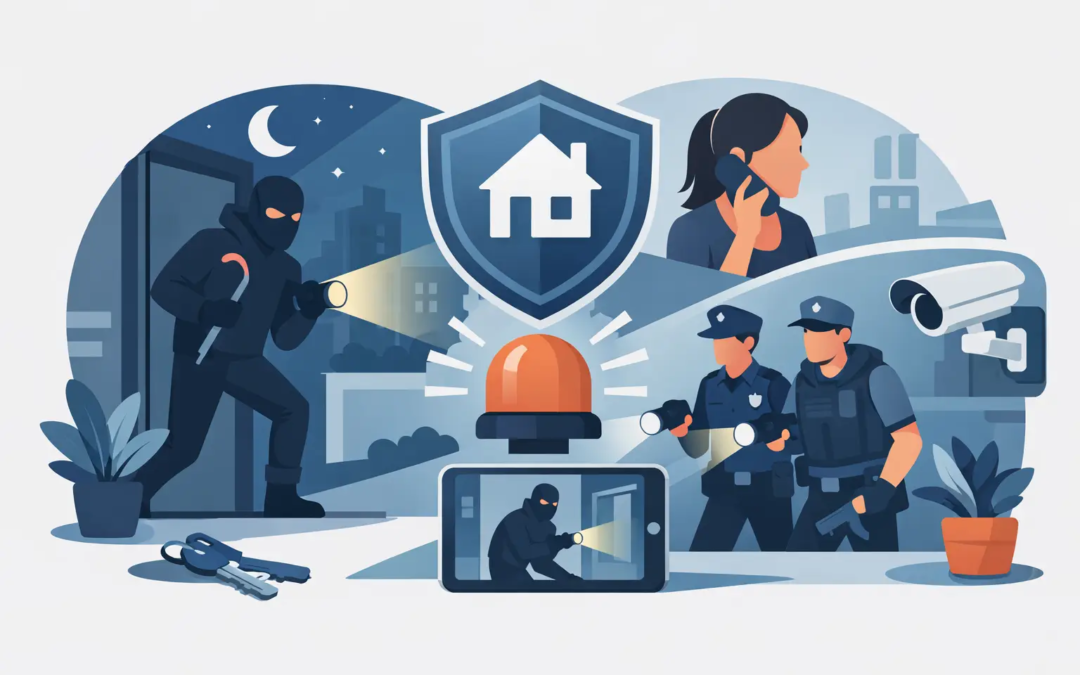
A broken lock, an open window, or an alarm alert can make it tempting to rush inside and see what happened. Don’t. Effective burglary response procedures begin with one priority: keeping people safe. Property can be replaced. A confrontation with someone still on the premises can turn a property crime into a serious emergency.
For homeowners, renters, property managers, and small business owners, the best response is calm, simple, and planned before it is ever needed. Knowing who to call, what not to touch, and how to secure the property afterward removes a lot of uncertainty from a stressful situation.
If You Suspect a Burglary Is Happening Now
If you see signs that someone may still be inside – a forced door, unfamiliar vehicle, movement, noises, or a recent alarm notification – move to a safe location away from the building. Call 911 and give the dispatcher your address, what you observed, and whether anyone may be inside.
Do not enter the property to investigate. Do not confront a person leaving the property, block their vehicle, or try to follow them. Even if the situation appears minor, you do not know whether the person is armed, frightened, or acting alone.
If you are with family members, employees, or tenants, get everyone to a safe place first. A neighbor’s home, a well-lit business nearby, or your locked vehicle may be appropriate depending on the situation. Stay available for responding officers, but keep a safe distance from the property.
An alarm system can provide an early warning, but it does not mean you should check the building yourself. If your monitoring provider calls, answer if you can safely do so and give clear information. If you cannot confirm that the property is safe, let law enforcement handle the response.
Burglary Response Procedures After You Arrive
When you discover a break-in after the fact, call local law enforcement before going inside. Tell the dispatcher whether there are obvious signs of forced entry and whether anyone may have access to the property. Wait for instructions.
Once officers have checked the property and say it is safe to enter, avoid touching or moving anything that may help with an investigation. That includes damaged locks, broken glass, drawers, doors, tools left behind, and items that appear out of place. Even well-meaning cleanup can remove useful evidence.
Take photos or video of visible damage from several angles after police have cleared the scene. Document entry points, damaged equipment, missing property, and any areas that were disturbed. Save camera footage promptly. Many systems overwrite recordings after a set period, so preserving video early matters.
Ask for the police report number and find out how to provide additional information later. You may remember a missing item, locate a serial number, or find footage from a nearby camera after officers leave. Keep the report number with your photos, receipts, and insurance paperwork.
Make a careful inventory
Create a written list of what appears to be missing or damaged. Include the item description, brand, model, serial number, approximate value, purchase date, and any proof of ownership you have. Receipts, old photos, credit card statements, and product registration emails can all help support an insurance claim.
Do not assume a quick walk-through tells the whole story. Burglars may take small items that are easy to overlook, including spare keys, documents, checks, medication, laptops, or business equipment. Check closets, storage areas, desk drawers, and cabinets when you are calm enough to do so.
For a business, compare the scene with inventory records, register activity, key logs, and employee access records. If cash, customer information, payment devices, or sensitive files may be involved, contact the right financial institution or service provider promptly. The response may need to go beyond replacing a lock.
Protect accounts and personal information
A burglary can create risks that continue after the physical event. If keys, mail, identification, checkbooks, credit cards, computers, or phones were taken, take action quickly. Cancel affected cards, change passwords from a secure device, and consider placing a fraud alert or credit freeze if personal identifying information was stolen.
Change exterior locks or rekey them if keys may be missing. This is especially important for property managers and businesses where a stolen key could give someone future access. If garage remotes, gate fobs, alarm codes, or smart-home credentials were taken, disable them and issue new access credentials.
Secure the Property Without Creating New Problems
After officers release the scene, secure broken doors, windows, and other entry points as soon as practical. A temporary board-up or emergency repair may be necessary until a permanent fix can be completed. Keep invoices and photos of emergency work in case your insurer requests them.
Avoid making rushed upgrades that do not match the actual risk. A single damaged rear door may call for better door hardware, improved lighting, or a camera covering that approach. A small retail business with repeated after-hours incidents may need monitored intrusion protection, stronger access control, and a clearer closing routine. The right solution depends on how the entry occurred and what made the property an easy target.
Walk around the property with fresh eyes. Look for dark approaches, overgrown landscaping, weak door frames, hidden side entrances, and places where packages, tools, or ladders are left accessible. Simple changes can make a meaningful difference when they are applied to the areas that need them most.
Communicate Clearly With the People Affected
A burglary affects more than the person who finds it. Tell household members, tenants, employees, or managers what happened without spreading unconfirmed details. Let them know what access has changed, whether keys or codes are being replaced, and when the property is safe to use again.
For small businesses, designate one person to communicate with police, the insurer, and security providers. This helps prevent mixed messages and makes documentation easier to find. Employees should know not to discuss details with customers or post security footage online while an investigation is active.
Property managers should notify affected residents promptly when a shared entry, parking area, storage space, or building security feature is involved. Be clear about the steps being taken, but do not promise a completion date you cannot meet. Direct communication builds trust during an unsettling situation.
Build a Response Plan Before the Next Alarm
The most useful burglary response plan fits on one page and is easy to follow under pressure. Keep emergency contacts current, including local police, a trusted repair professional, your insurance carrier, and the person responsible for alarm accounts or camera access.
At home, make sure adults know where to go if an alarm sounds and how to contact one another. For a business, establish who can authorize police response, who has access to camera footage, and who can secure the building after an incident. Review the plan when staff changes or when you update locks, codes, or security equipment.
A security system is most helpful when people understand what it does and what they should do next. Test alarms and notifications according to the manufacturer’s guidance. Confirm that emergency contacts are current. Make sure cameras have a clear view of likely entry points rather than only wide shots of a parking lot or yard.
Simple Security Solutions believes protection should be understandable, not complicated. A clear response plan, reliable equipment, and a few practical improvements can help you handle a break-in with less confusion and regain control of the property sooner.
No one can eliminate every risk, but you can decide in advance that people come first, evidence stays protected, and repairs address the weak points that matter most. That is a practical place to start.