

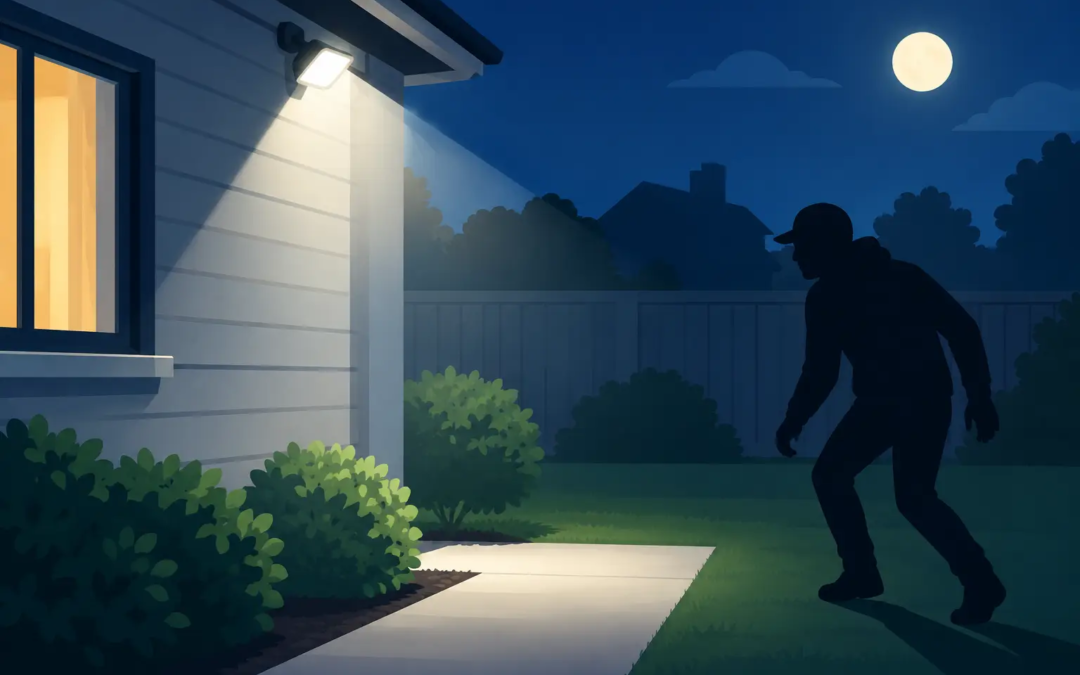
A dark side yard, rear entrance, or empty parking area can make a property feel easier to approach unnoticed. So, can lights deter nighttime trespassing? Often, yes. Well-placed exterior lighting can make a home or small business less appealing to someone who wants privacy or a quick opportunity. But lights work best as one practical part of a larger security plan, not as a stand-alone promise.
For most property owners, the goal is simple: make it harder to approach, easier to see what is happening, and more likely that unusual activity will be noticed. Exterior lighting can help with all three.
Why Exterior Lighting Can Discourage Trespassers
Most nighttime trespassers are looking for convenience. They may want to cut through a yard, check an unlocked door, approach a vehicle, or test whether a building appears occupied. Darkness gives them cover. Lighting removes some of that cover by increasing the chance that a neighbor, passerby, resident, employee, or camera will see them.
A well-lit entryway also sends a basic message: this property is maintained and someone is paying attention. That does not mean every lighted property is protected from trespassing or theft. Some people will ignore visible deterrents. Still, security is often about reducing opportunity rather than relying on one perfect barrier.
Lighting is particularly useful around places where someone could enter or linger without being easily seen, such as back doors, gates, garages, driveways, dumpsters, storage areas, and side passages between buildings. A bright front porch light alone may not help much if the rear of the property remains completely dark.
Motion Lights vs. Lights That Stay On
Both motion-activated lights and dusk-to-dawn lights can be useful. The right choice depends on the area you are trying to protect and how the property is used.
Motion lights can be an effective attention-getter. When a light suddenly turns on near a gate or back entrance, it may surprise a person who expected to remain unnoticed. It can also alert someone inside the home or business that movement is occurring outside. For areas that should be quiet after hours, that change in lighting can be especially noticeable.
The trade-off is that motion lights can activate for pets, wildlife, wind-blown branches, or passing cars if they are aimed poorly. Frequent false activations may cause people to stop paying attention. Placement and sensitivity settings matter.
Dusk-to-dawn lighting provides steady visibility from evening through morning. It is often a practical choice for walkways, parking areas, main entrances, and driveways. Consistent lighting helps cameras capture clearer footage and makes it easier for residents or employees to move around safely after dark.
The drawback is that always-on lights may become part of the background. Someone approaching the property knows the area is already illuminated, so there is no sudden signal that draws attention. In many cases, a combination works well: steady lighting for commonly used areas and motion lighting for side yards, rear doors, or less-traveled parts of the property.
Where Lights Make the Biggest Difference
Start by walking around the property after dark. You do not need a technical inspection to spot the obvious issues. Look for entrances, paths, and corners where a person could stand without being seen from inside or from the street.
Focus your lighting on access points rather than trying to make every inch of the property bright. Front and back doors, garage doors, ground-level windows, gates, and parking areas are usually higher priorities. Small businesses should also consider receiving doors, employee entrances, outdoor equipment, and areas near trash enclosures or storage sheds.
Aim lights downward and toward the area you want to monitor. A fixture that shines into a neighbor’s window or creates a harsh glare can cause problems without improving security. Glare can actually make it harder for cameras and people to see beyond the brightest spot.
Keep landscaping in mind. Overgrown shrubs, tall fencing, or low tree branches can block light and create hiding places. Trimming vegetation around entrances and windows is a simple way to help exterior lighting do its job.
Can Lights Deter Nighttime Trespassing on Their Own?
Not reliably. Lights can discourage opportunistic trespassing, but they do not lock a door, notify you automatically, or provide clear evidence after an incident. A determined person may still enter a well-lit property, especially if they believe no one is watching.
That is why lighting should support other basic protections. A locked gate, solid door hardware, visible security cameras, and an alarm system all address different parts of the risk. Lighting helps people and cameras see. Locks delay entry. Cameras document activity and allow monitoring. Alarms can create immediate attention when a protected door, window, or area is breached.
For a renter, the practical options may be simpler: request working exterior lighting from the property owner, use approved motion lighting where permitted, keep doors and windows locked, and use portable or renter-friendly security devices. For homeowners and small business owners, a more permanent lighting and monitoring setup may make sense.
Make Lighting Work Better With Cameras and Alarms
Exterior lighting is especially valuable when it supports a camera system. Cameras need enough usable light to show faces, clothing, vehicles, and movement clearly. A camera pointed toward a dark driveway may still detect motion, but the recording may not provide much detail.
Avoid placing a camera directly toward a bright fixture. The light can wash out the image or create a silhouette, leaving the person harder to identify. Instead, position the light to illuminate the approach and place the camera where it can capture the person from the front or side.
Motion alerts can also be more useful when paired with lighting. If a camera sends an alert at 2:00 a.m. and a nearby motion light turns on, you have a better chance of seeing what caused the alert. For a business, that can help an owner or manager decide whether the activity is a delivery, an employee, wildlife, or a possible security concern.
An alarm system adds another layer for protected entry points. Exterior lights may cause someone to think twice before approaching. An alarm can help ensure that an actual break-in does not go unnoticed.
Avoid the Common Lighting Mistakes
More brightness is not always better. A single oversized floodlight can create deep shadows around the edges of the property, disturb nearby homes, and make outdoor spaces unpleasant to use. The goal is even, useful coverage where people enter, walk, park, or could hide.
Do not install lights so high that they only illuminate the ground directly below. A person approaching a door or gate should be visible at face level, not just as a pair of shoes in a bright circle. At the same time, fixtures should be installed safely and protected from weather.
Maintenance matters, too. Replace burned-out bulbs promptly, clean dirty lenses, and test motion sensors periodically. A light that fails when you need it is not much of a deterrent. If a fixture repeatedly turns on for no clear reason, adjust its sensitivity or direction instead of simply ignoring it.
Finally, consider your local rules and your neighbors. Some communities have outdoor lighting requirements, and excessive light can create legitimate complaints. Effective security should make your property safer without creating a new problem for the people around you.
A Simple Plan for a Safer Property After Dark
If you are unsure where to begin, start with the areas that offer the easiest access: exterior doors, garage doors, gates, and ground-floor windows. Add dependable lighting there first, then address darker side yards, driveways, and rear areas. After that, consider whether cameras or alarms would fill the remaining gaps.
Simple Security Solutions helps homeowners and small businesses think through these layers without turning security into a complicated project. The best setup is not necessarily the one with the most equipment. It is the one that fits your property, helps you notice problems sooner, and is easy to use every day.
A light turning on at the right moment may be enough to make a casual trespasser move along. Combined with secure entry points and reliable monitoring, it can also help you feel more confident about what is happening outside after dark.