

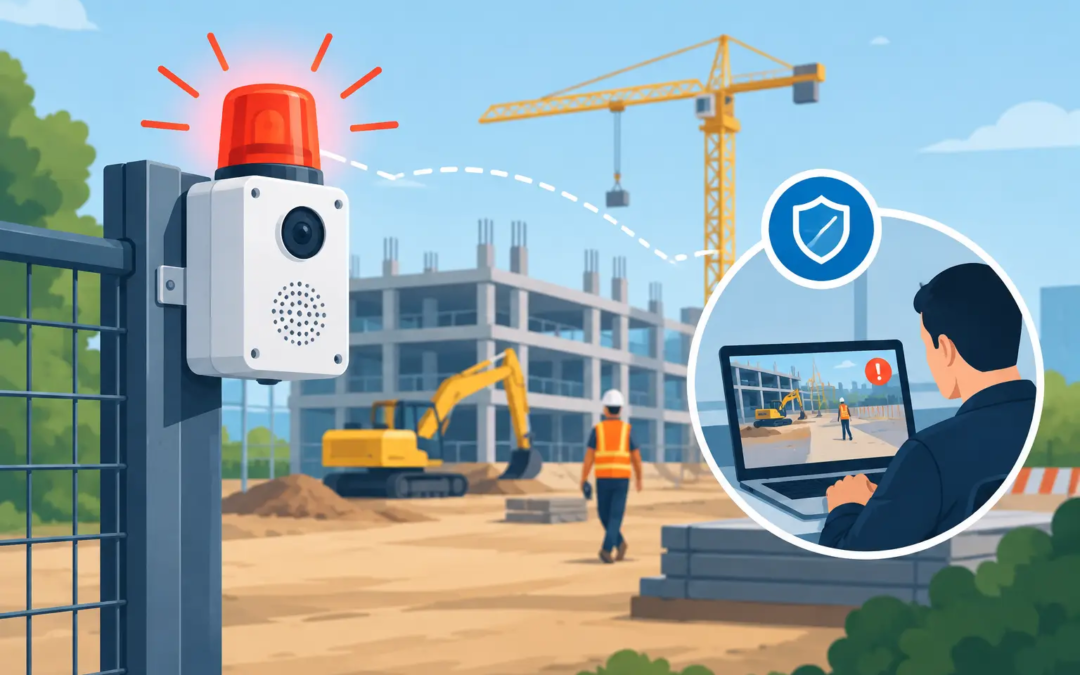
A construction crew arrived Monday morning to find a storage container forced open. Several high-value tools were gone, a generator had been damaged, and the project schedule immediately became harder to manage. This construction site alarm case study shows why a simple, well-planned alarm setup can protect more than equipment. It can help protect deadlines, budgets, and the confidence of everyone working on the property.
This is an illustrative scenario based on common jobsite risks, not a claim about one specific customer. The details matter because construction sites create a different security challenge than a finished home or business. The layout changes, materials move, workers come and go, and the most vulnerable hours often begin when the workday ends.
The jobsite problem was bigger than one break-in
The project involved a small commercial build with an open perimeter, a temporary office trailer, two storage containers, and equipment staged outside. The site was active during the day but largely empty overnight and on weekends. Fencing was in place, yet the fence alone did not stop someone determined to enter.
After the break-in, the contractor initially considered adding more locks and replacing damaged doors. Those steps were necessary, but they did not address the main issue: nobody would know when an unauthorized person entered the site. By the time workers discovered the damage, the person responsible was long gone.
The contractor needed an approach that was practical for a changing site. A complex system with extensive wiring and difficult controls would add cost and create headaches as the project moved forward. The goal was clear: detect entry quickly, make the site less attractive to intruders, and give the responsible person a clear alert when something happened.
Construction site alarm case study: building a simple plan
The first step was not choosing equipment. It was identifying the areas that created the most risk. On this site, the office trailer held paperwork, keys, and small electronics. The storage containers held portable tools. The generator and a few pieces of equipment sat outdoors where they could be approached from the street side of the property.
A practical plan focused on those points rather than trying to cover every square foot at once. The system included door and container contact sensors, motion detection in the trailer, a loud local alarm, and remote alerts sent to designated contacts. Exterior lighting was also adjusted around the containers and the entry path.
That combination created layers without making daily operation difficult. If a container door opened after hours, the system could trigger an alert and sound an alarm. If someone entered the trailer, interior motion detection provided another signal. Lighting made it harder for a person to move unseen and helped make an alert easier to verify from a safe distance.
The contractor assigned two people as primary contacts and one as a backup. Their instructions were simple: do not confront anyone at the site. Review the alert information, contact law enforcement when there is an active threat or clear evidence of a break-in, and notify the project manager. A security plan works better when people know their role before an alarm occurs.
Why the setup matched the site
Construction jobsites are temporary by nature. A solution that works well for a finished office may not make sense when walls, access points, and equipment locations change every few weeks. Wireless components can be especially useful where running permanent cable is not practical, though the right choice depends on site conditions, power availability, and the size of the area being protected.
The crew also needed a system that would not slow down the workday. Workers were trained to disarm the alarm when opening the trailer, confirm that container doors were secured before leaving, and report any damaged sensor or loose mounting point. The process took only a few minutes at the beginning and end of each day.
Simple procedures matter as much as the alarm itself. An expensive system cannot help much if it is left disarmed, blocked by stacked materials, or ignored after repeated false alerts.
What changed after the alarm was installed
Within the first few weeks, the biggest change was visibility. The contractor no longer had to wait until morning to learn that a door had opened after hours. Alerts created an opportunity to respond promptly and document what happened.
The presence of visible alarm components and improved lighting also changed the site’s appearance. No security measure guarantees that a person will not attempt theft or vandalism. Still, most opportunistic intruders prefer easy targets with low risk of being noticed. A site that clearly signals detection and response is less appealing than one that appears empty and unmonitored.
The project team also became more disciplined about securing equipment. Tools were returned to containers at the end of the day, key control improved, and the crew began checking gates, doors, and alarm status as part of the closing routine. The alarm supported good habits rather than replacing them.
That distinction is worth keeping in mind. An alarm is one part of site security. It works best alongside secure storage, lighting, perimeter controls, inventory records, and a clear response plan.
The trade-offs the contractor had to consider
A construction alarm system should fit the project, not create a new problem. The contractor had to balance coverage, cost, and convenience.
More sensors could cover additional doors, equipment areas, and temporary structures, but each device needed proper placement and occasional attention as the site evolved. Outdoor detection can add value, yet it may require more careful setup to avoid alerts caused by weather, moving materials, wildlife, or normal after-hours activity nearby.
Professional monitoring may offer added reassurance for sites with valuable assets or frequent overnight exposure. For a smaller project, direct alerts to responsible contacts may be a reasonable starting point. The right answer depends on the property’s risk level, local response expectations, budget, and whether someone can reliably act on notifications.
There is also a practical question of duration. A two-week renovation has different needs than a 12-month build. For a shorter project, portable and easy-to-remove equipment may be the priority. For a longer project, it may make sense to expand coverage as the building becomes enclosed and valuable finishes are installed.
Lessons for homeowners and small business owners
The same thinking applies beyond a large jobsite. A homeowner renovating a property, a landlord managing a vacant unit, or a small business owner storing equipment during a remodel may face similar gaps in protection. Construction creates temporary access points, shifting schedules, and areas where normal security measures are not yet in place.
Start by asking straightforward questions. What is most valuable on the property? Where would someone most likely enter? When is the site empty? Who needs to receive an alert? Those answers will point to the areas that deserve attention first.
It also helps to keep the system easy enough for the people using it. If several contractors, tenants, or employees need access, establish clear rules for codes, keys, and arming procedures. Remove access promptly when a worker leaves the project. Test the system after major layout changes, power work, or relocation of trailers and containers.
Simple Security Solutions approaches protection with this same practical mindset: focus on the real risks, explain the options clearly, and avoid adding complexity that does not serve the property.
A construction site does not need to be perfect to be better protected. Start with the doors, containers, and equipment that matter most, make the end-of-day routine consistent, and make sure someone will know when the site needs attention. That is often the difference between discovering a problem too late and having a chance to respond when it counts.