

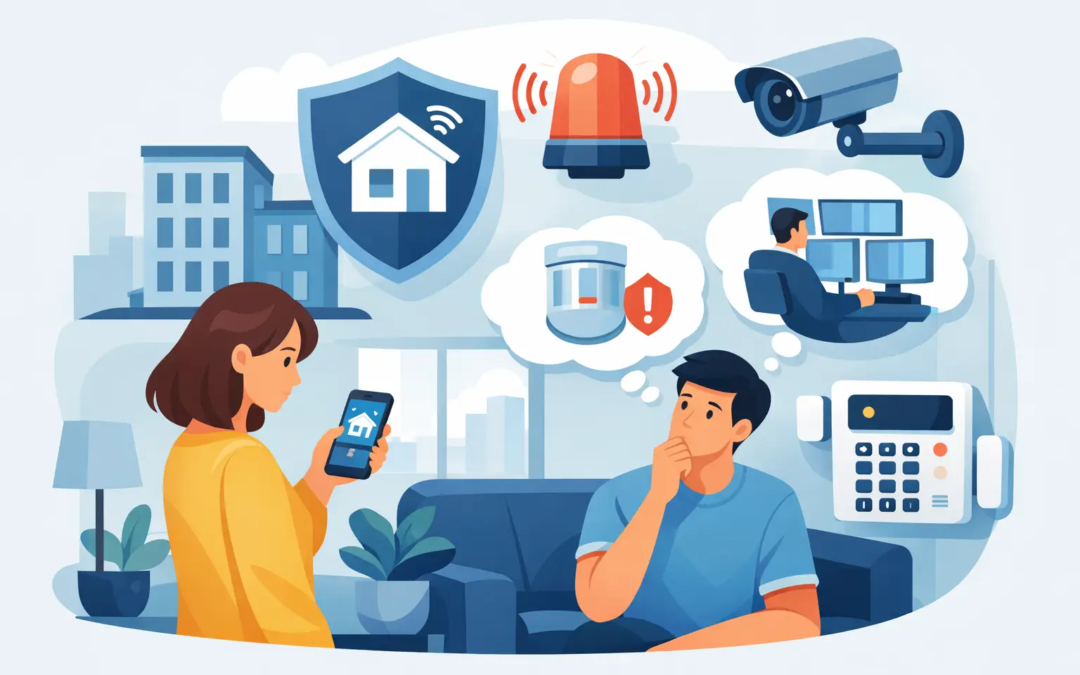
A ground-floor apartment, a rental home left empty during a weekend trip, or a unit with a back door that cannot be seen from the street can all raise the same question: do renters need alarm monitoring? Not every renter does. But for many, professional monitoring is a practical layer of protection that does more than make noise when a door opens.
The right choice comes down to your property, your routine, your budget, and what your lease allows. A simple security setup can give renters real peace of mind without requiring major changes to the home or a complicated long-term commitment.
What Alarm Monitoring Actually Does
An alarm system can alert you when a door, window, motion sensor, smoke detector, or other device is triggered. If it is self-monitored, the alert goes to your phone. You decide whether to call a neighbor, contact the property manager, or call 911.
Professional alarm monitoring adds a trained response center. When the system sends an alarm signal, monitoring staff follow the response plan on your account. Depending on the type of alert and the plan you choose, they may try to contact you, notify emergency services, or both.
That distinction matters when you are unavailable. Your phone may be on silent during a meeting, out of service while traveling, or simply missed overnight. A monitored system is designed to keep the alarm from depending on one person seeing one notification at the right moment.
Monitoring does not guarantee that police, fire, or medical responders will arrive within a specific time. Local policies, alarm verification requirements, and emergency call volume all affect response. Still, it provides a clear process when something happens and you cannot respond yourself.
Do Renters Need Alarm Monitoring in Every Situation?
No. A renter in a controlled-access building with an attentive onsite manager, few valuables at home, and a predictable schedule may decide that strong locks, a doorbell camera, and self-monitoring are enough. A monitored system is not automatically necessary just because you rent.
It makes more sense when the consequences of missing an alert are higher. For example, monitoring may be worth considering if you live on the first floor, have a private entrance, travel often, work long or irregular hours, or keep valuable equipment, collectibles, or work materials at home. It can also be useful for renters with pets, since smoke, carbon monoxide, or water alerts may need attention when no one is home.
The same thinking applies to rental houses. A single-family rental may have more entry points, detached garages, sliding doors, and less nearby activity than an apartment. Those factors do not mean a break-in will happen. They simply mean there may be more to watch.
A good question is not, “Is this neighborhood perfectly safe?” Few places are. Ask instead: “If an alarm goes off while I cannot answer, what is my backup plan?” If the answer is unclear, monitoring may fill a real gap.
The Benefits That Matter Most for Renters
For renters, the best security solution is usually one that protects the home without creating a maintenance headache or a dispute with the landlord. Alarm monitoring can help in several practical ways.
First, it provides coverage beyond your personal availability. Whether you are commuting, sleeping, at a movie, or on vacation, an alarm event has a defined next step.
Second, monitored systems can cover more than intrusion. Many renters focus on doors and windows, but environmental devices can be just as useful. Smoke, carbon monoxide, and water sensors can help identify problems early. In a multi-unit building, a water leak or fire can affect more than one apartment, so faster awareness can matter.
Third, visible security devices and alarm signage may discourage opportunistic entry. No device can promise prevention, but people looking for an easy target often prefer a property that appears harder to enter without being noticed.
Finally, monitoring can simplify communication in a stressful moment. Rather than trying to decide what to do after an alert, you already have emergency contacts, instructions, and the monitoring process in place.
Start With Your Lease and Landlord
Renters should not install equipment before checking the lease. Some landlords allow security systems but restrict drilling, exterior cameras, wiring, or changes to door hardware. Others require written approval for anything attached to the property.
Fortunately, many modern systems are renter-friendly. Wireless sensors can often attach with removable adhesive, and control panels can sit on a counter or mount without permanent changes. Battery-powered cameras and smart locks may also work for some rentals, although exterior placement, shared hallways, and common areas require extra care.
Ask the landlord or property manager direct questions: Are wireless sensors allowed? Can a camera face your private entry? Are there rules for common spaces? What must be removed or repaired when you move out? Getting answers in writing can prevent problems later.
If you live in an apartment or condo building, privacy rules matter as well. A camera pointed into a shared hallway, toward a neighbor’s door, or at an area where people expect privacy may violate building policies or local rules. Keep the focus on your own entry and your own rented space.
Choose a Setup You Can Take With You
Renters usually benefit from flexible equipment rather than a hardwired system designed for a permanent installation. Look for devices that are easy to move, simple to reinstall, and clear about whether they work during an internet or power outage.
Before choosing a plan, understand how the system communicates. Some systems use Wi-Fi, while others use cellular service as a primary connection or backup. Wi-Fi can be convenient, but a system that relies only on your home internet may be less useful if the router loses power or service goes down. A cellular backup can add reliability, though it may raise the monthly cost.
Also ask about contract length, cancellation terms, equipment ownership, and moving policies. A low monthly price can look appealing until you find a long agreement or a large early cancellation fee. The simplest choice is often a system with clear pricing and equipment you can take to your next address.
Monitoring Versus Self-Monitoring
Self-monitoring is often the lower-cost option, and it can work well for renters who are usually reachable and want basic awareness. You receive app alerts and stay in control of the next step. For a small apartment with one main entry and a limited budget, that may be enough.
Professional monitoring costs more, but it offers support when you cannot be the person watching your phone. It is especially useful for frequent travelers, households where everyone is away during the day, and renters who want fire or carbon monoxide events handled through a defined emergency plan.
There is also a middle ground. Some providers offer month-to-month monitoring or let you turn service on during travel. That can be a sensible option if your risk changes throughout the year. The goal is not to buy the most equipment. It is to choose coverage that matches how you actually live.
Build a Simple, Effective Renter Security Plan
Alarm monitoring works best as part of basic home security, not as a substitute for it. Start by making sure exterior doors close and lock properly. Report loose locks, broken window latches, poor lighting, and damaged frames to the property manager promptly. Those repairs are often the landlord’s responsibility, and they should not wait.
Then focus on the most likely entry points. In many rentals, that means the front door, patio or sliding door, accessible windows, and an attached garage door. A few well-placed sensors are usually more useful than filling every room with devices you do not need.
Keep your emergency contacts current, including your landlord or maintenance line if appropriate. If you use professional monitoring, review the response instructions after you move, change phone numbers, add a roommate, or adopt a pet. A security plan is only as helpful as the information behind it.
Renting should not mean settling for uncertainty. Whether you choose self-monitoring or professional monitoring, a clear, portable setup can help you protect the place you call home without making security harder than it needs to be.