

A renter’s front door can be the same door they come home to for five years or five months. Either way, it holds the things that matter: personal belongings, private information, pets, and the sense that home is a place to relax. So, do renters need security systems? Many do, but the right answer depends on the property, the neighborhood, the lease, and the kind of protection that will actually make daily life easier.
Security does not have to mean drilling into walls, signing up for a complicated package, or turning a rental into a high-tech project. For many renters, a simple system with a few well-chosen devices can provide useful awareness without creating a headache when it is time to move.
Do Renters Need Security Systems?
Renters do not automatically need a full security system just because they rent. Apartment buildings with controlled access, attentive property management, good exterior lighting, and a low-crime setting may already reduce some common risks. A renter on the top floor of a well-maintained building has different concerns than someone in a ground-floor unit with a private entrance.
Still, renting does not remove the possibility of break-ins, package theft, unauthorized entry, or safety concerns while a unit is empty. It also does not mean a landlord’s security measures protect the inside of each home. Building cameras may cover a lobby or parking lot, but they generally cannot tell you if someone opened your apartment door or if a window was left unsecured.
A renter-friendly system is often most valuable when it solves a specific concern. That might be getting an alert when a door opens, checking on a pet while at work, knowing when a package arrives, or having a visible deterrent near a vulnerable entry point. The goal is not to buy every available device. It is to close the gaps that matter at your rental.
Start With Your Actual Risk, Not Fear
Before choosing equipment, take an honest look at the property and your routine. A small studio with one entry door needs a different approach than a rented townhome with a garage, patio door, and several ground-level windows.
Think about where someone could enter, how often the home is vacant, and whether there have been concerns in the immediate area. If you regularly travel, work overnight shifts, or leave valuable equipment at home, monitoring and alerts may be more useful to you. If package theft is common in your complex, a doorbell camera or entry camera may be the first priority.
Your lifestyle matters too. People who live alone may value the reassurance of a panic button, audible alarm, or professional monitoring. Families may want door and window alerts so they know when a child gets home. Renters with roommates may want clear control over who can access the system and who receives notifications.
It is also fair to decide that a security system is not your first need. Strong locks, window coverings, renters insurance, good communication with neighbors, and careful key management are all part of practical property protection. A system works best as one layer of a sensible plan, not as a replacement for basic precautions.
What Makes a Security System Renter-Friendly?
The best option for a renter is usually portable, simple to install, and easy to remove without damage. Wireless devices can often be placed with removable adhesive or set on a shelf, rather than permanently attached to the property. When you move, you should be able to take your investment with you.
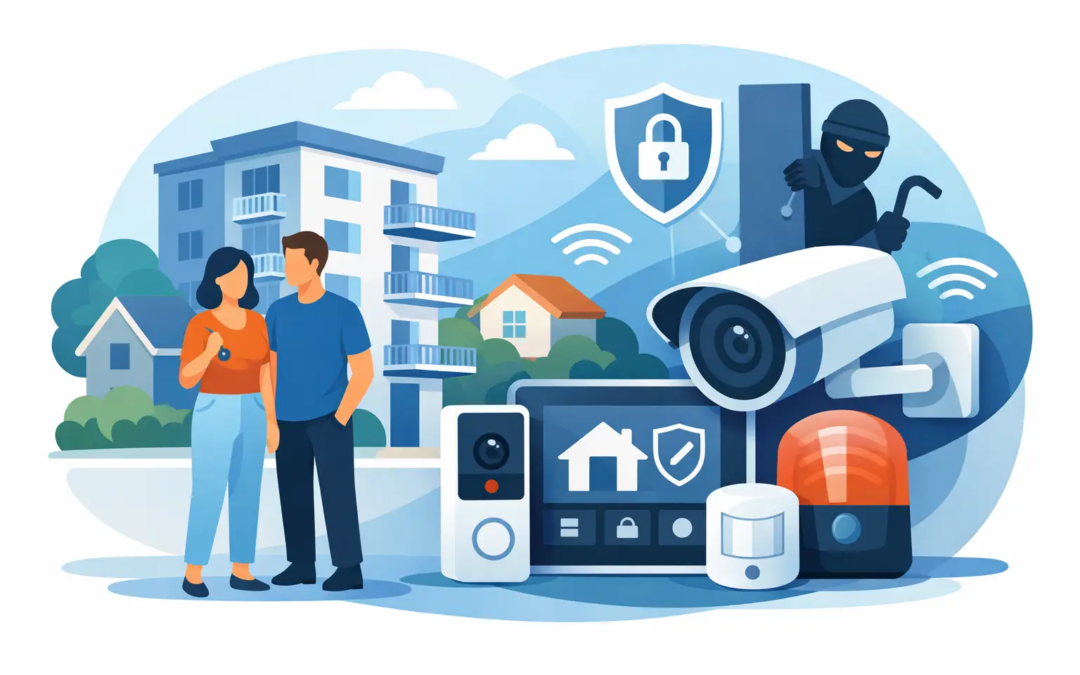
A basic setup may include a central hub or keypad, contact sensors for exterior doors and accessible windows, and one or two cameras where they provide a clear benefit. Many renters also choose a video doorbell, but installation can require landlord approval depending on the door, wiring, and property rules.
Look for equipment that gives you control without demanding constant attention. Mobile alerts can be useful, but too many notifications quickly become noise. Choose settings that allow you to focus on meaningful events, such as an entry door opening while you are away.
Battery-powered equipment is especially convenient in rentals, though batteries need routine attention. Set a calendar reminder to test sensors, check camera views, and replace batteries before they run low. A security system only helps when it is working properly.
Check the Lease Before Installing Anything
A lease may limit changes to doors, locks, exterior surfaces, or electrical wiring. Even when a device seems minor, it is worth reviewing the agreement before installing it. This protects you from disputes over damage, unauthorized alterations, or property rules.
If you want to add a camera, ask the landlord or property manager what is allowed and where it can be placed. Exterior cameras can raise privacy concerns, particularly in shared hallways, common areas, or properties where a camera might record a neighbor’s doorway or windows. The same applies to doorbell cameras in apartment buildings.
Keep the conversation simple and specific. Explain that you are considering a removable, wireless device and ask whether the proposed location is approved. If permission is given, save the response in writing. This is particularly helpful if management changes before your lease ends.
Avoid changing locks unless your lease and local rules allow it. If a lock change is permitted, the landlord may still require a copy of the key or notice of the change for maintenance and emergency access. Smart locks can also be useful, but they are not always the easiest choice for a rental because they may require hardware changes and clear coordination with management.
Monitoring or Self-Monitoring: Choose What Fits Your Routine
One of the biggest decisions is whether you want professional monitoring or prefer to handle alerts yourself. Neither choice is right for everyone.
Self-monitoring generally means an app notifies you when a sensor, camera, or alarm detects activity. It can be a practical, lower-cost option for renters who are often able to check their phones and respond quickly. But it depends on you being available. If you are in a meeting, on a flight, asleep, or without service, an alert may sit unnoticed.
Professional monitoring adds another layer. When a qualifying alarm event occurs, a monitoring center can follow the response procedures for your plan, which may include contacting you and requesting emergency assistance when appropriate. This can offer more reassurance for frequent travelers, people with unpredictable schedules, or renters who simply do not want to carry the full burden of responding.
Before signing up, understand the monthly cost, contract terms, cancellation policy, equipment ownership, and what events are monitored. Straight answers matter more than a long list of features. A system should fit your budget and be clear enough that you know exactly what will happen when an alarm goes off.
Place Devices Where They Can Do Their Job
More devices do not always create better security. Good placement matters more. Start with the main entry door and any easily accessible exterior doors or windows. In a house or first-floor apartment, a patio door is often a priority because it can be less visible than the front entrance.
Cameras work best when they have a clear view of an entry point and enough light to capture useful footage. Do not point them into shared spaces unnecessarily. Indoor cameras can help check on pets or document activity inside a vacant unit, but they should be used thoughtfully, especially with roommates, guests, cleaners, or maintenance workers. Everyone in the home should understand where cameras are located and when they are active.
Do not overlook life-safety devices. Smoke alarms and carbon monoxide detectors are often the landlord’s responsibility, but renters should test them regularly and report problems immediately. Depending on the property and your needs, a monitored smoke or water sensor may add protection beyond intrusion detection.
Make Security Part of Moving In and Moving Out
Move-in day is a good time to document the condition of doors, windows, locks, and any existing security features. Take clear photos and notify the property manager if a lock is loose, a window does not latch, or exterior lighting is not working. These are maintenance issues, but they also affect your safety.
When you move out, remove your portable devices carefully, erase saved video or personal data from equipment you are leaving behind, and update your address in any monitoring account. If you have shared access with roommates, remove their permissions once everyone has moved. A simple checklist helps ensure your old apartment is not still sending alerts to your phone months later.
The best renter security system is not the biggest one. It is the one that respects your lease, fits your home, and gives you a clearer view of what is happening when you cannot be there. A few practical choices can make a rental feel less temporary and a lot more secure.