

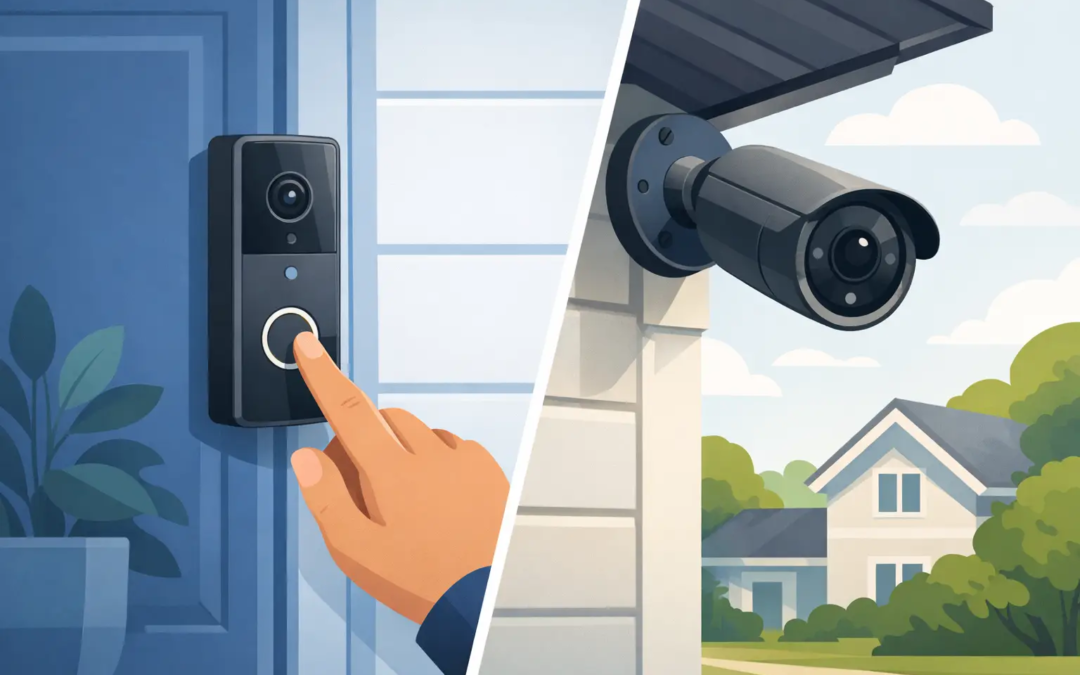
A package disappears from the front step. A vehicle pulls into the driveway after dark. An employee arrives at a side entrance before opening. These are different moments, and they call for different camera coverage. When comparing a doorbell camera versus outdoor camera, the right choice comes down to what you need to see, where activity happens, and how much of the property you want to cover.
Both devices can add useful visibility without turning security into a complicated project. But they are not interchangeable. A doorbell camera is built around the front door and visitor interaction. An outdoor camera is built to watch a wider area, such as a driveway, yard, parking area, or secondary entrance.
Doorbell Camera Versus Outdoor Camera: The Basic Difference
A doorbell camera replaces or sits alongside a standard doorbell. Its job is straightforward: show you who is at the door, alert you when someone approaches, and let you speak with a visitor through a mobile app or compatible indoor device. It is especially useful for deliveries, expected guests, service providers, and unexpected doorstep activity.
An outdoor camera is mounted where you need broader property coverage. Depending on placement, it can watch a driveway, front walk, backyard gate, detached garage, loading area, or small business entrance. Many outdoor cameras offer a wider view than doorbell cameras and can be positioned higher to capture movement across a larger space.
The difference is not simply one camera being better than the other. It is about whether your main concern is the person standing at the door or the activity happening around the property.
Choose a Doorbell Camera When the Front Door Is the Priority
For many homes, the front door is the most active entry point. Packages are delivered there, guests arrive there, and someone checking whether a house is occupied often starts there. A doorbell camera gives you a clear view of that important space without requiring a separate camera installation elsewhere.
The two-way audio feature is often the deciding benefit. You can tell a delivery driver where to leave a package, speak to a visitor when you are away, or ask an unfamiliar person what they need without opening the door. For renters, this can be a practical option when exterior camera placement is limited by a lease or property rules.
Doorbell cameras also work well for small offices or storefronts with one primary public entrance. They allow staff to see and speak with visitors before opening the door, which can be useful during quieter hours or when employees are working in the back of the building.
Still, a doorbell camera has a narrow purpose. It may not see a person approaching from the side, a car entering the driveway, or activity near a back gate. Its location is fixed at the door, so its view is limited by the layout of the entryway.
What a Doorbell Camera Does Best
A doorbell camera is usually the better fit if you want to verify visitors, monitor package deliveries, and receive alerts for activity right outside the main entrance. It is a focused solution for a focused area.
Its limitations matter, though. If your front door sits far from the street, has a deep porch, or faces an area with frequent foot traffic, motion alerts may need careful adjustment. You also should not expect a doorbell camera to replace coverage of the entire front yard or driveway.
Choose an Outdoor Camera for Wider Coverage
An outdoor camera makes more sense when the concern is not limited to the doorstep. It can be positioned to watch the areas that a doorbell camera cannot reach well, including driveways, side yards, rear doors, sheds, gates, and parking spaces.
For homeowners, an outdoor camera can help answer practical questions: Did a vehicle enter the driveway? Did someone open the side gate? Is there movement near the garage? For small business owners, it can provide visibility around employee entrances, exterior storage, dumpsters, parking areas, and back doors.
Placement is one of its biggest advantages. Mounted high enough to reduce tampering and angled toward the area that matters, an outdoor camera can capture a much broader view. It is often the better choice for identifying where a person came from and where they went after leaving the front door.
Outdoor cameras have their own trade-offs. They generally do not offer the natural visitor experience of a doorbell camera because they are not placed at eye level near the doorbell. Depending on the model and location, two-way audio may be less useful. A camera aimed at a driveway can help you see activity, but it is not always the best way to have a conversation with someone at the front door.
What an Outdoor Camera Does Best
Outdoor cameras are well suited for monitoring larger exterior zones and secondary access points. They can help close common visibility gaps, especially on properties with multiple entrances or areas where valuable equipment, vehicles, or inventory are kept.
They also require thoughtful installation. A camera pointed directly toward the sun may produce poor images at certain times of day. Trees, busy streets, reflective surfaces, and passing vehicles can create unwanted alerts. The goal is not to record everything. It is to capture useful activity around the areas you need to protect.
When One Camera Is Enough
A single doorbell camera may be enough for an apartment, condo, or smaller home where the front door is the main point of access and package deliveries are the main concern. It can provide a meaningful improvement in awareness with a simple, visible setup.
One outdoor camera may be enough for a detached garage, a backyard with a gate, or a small business that needs to watch a single rear entrance. In these situations, broad-area coverage matters more than visitor communication.
Before choosing, walk around the property and think about the real situations you want to address. If an incident happened, where would it likely begin? Where would a person park, walk, enter, or leave? That simple exercise often makes the answer clearer than a long list of camera features.
When Using Both Makes Sense
For many properties, a doorbell camera and an outdoor camera work better together. The doorbell camera handles visitor verification and deliveries at the front door. The outdoor camera provides context by covering the driveway, walkway, side yard, or another entry point.
This combination is especially helpful when the front entrance is partly hidden from the street, when there is a long driveway, or when a property has both front and rear access. A small business may use a doorbell camera at the customer entrance and an outdoor camera at the employee door or parking area.
Using both does not mean placing cameras everywhere. It means covering the places where a camera can make a real difference. Start with the main entry point, then add coverage where blind spots or higher-risk areas remain.
Features That Matter More Than Marketing Claims
Camera shopping can get confusing fast. Rather than focusing only on technical terms, look for features that affect day-to-day use. Clear video in low light, reliable motion alerts, a usable mobile app, weather-resistant construction, and a power option that fits the installation location all matter.
You should also consider how footage is stored and reviewed. A camera is more useful when you can quickly find an event and see what happened. Check whether the system uses local storage, cloud storage, or both, and understand any ongoing costs before you buy.
Privacy deserves attention as well. Aim cameras at your own doors, walkways, parking spaces, and property boundaries. Avoid pointing them into neighbors’ private spaces. If you manage a business, let employees know where cameras are used and keep coverage focused on legitimate security needs.
Make the Choice Based on Your Property
The best choice is rarely about buying the camera with the longest feature list. A doorbell camera is the practical answer for front-door activity and conversations with visitors. An outdoor camera is the practical answer for wider monitoring around the property. If both areas matter, combining them can give you a clearer picture without overcomplicating your security setup.
Start with the spot that would give you the most peace of mind if you could see it right now. From there, the right camera choice becomes much easier.