

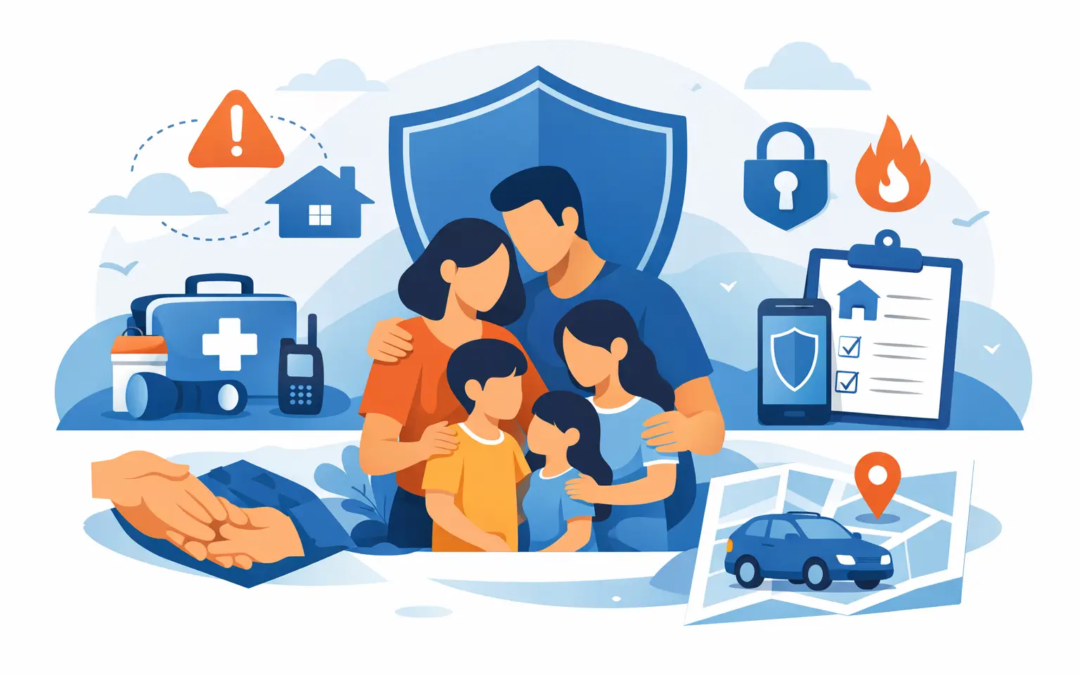
A good family safety plan should still work when someone is tired, scared, away from home, or unable to use a phone. That is why the best family safety planning tips focus less on creating a perfect binder and more on making a few clear decisions before an emergency puts everyone under pressure.
For most households, the goal is simple: know how to get out safely, how to contact one another, where to meet, and when to ask for help. The details will vary by home, family size, neighborhood, health needs, and whether you rent or own. What matters is that everyone understands the plan well enough to act on it.
Family Safety Planning Tips for a Clearer Plan
1. Start with the risks that are most likely for your household
You do not need to plan for every possible disaster at once. Begin with the situations most likely to affect your family: a house fire, severe weather, a break-in, a power outage, a medical emergency, or a child arriving home to an empty house.
Your location matters. A family in a tornado-prone area needs a reliable shelter location. A household near wildfire risk may need to prepare for quick evacuation. Apartment residents may need to account for stairwells, shared entrances, and building management procedures. Small business owners who work from home may also need a plan for securing equipment and customer information during an evacuation.
Pick two or three priorities first. A simple plan people remember is safer than a detailed plan that stays in a drawer.
2. Choose two meeting places
Families often assume everyone will return home after an emergency. That is not always possible. Traffic, road closures, a fire, or a police response can make the home unsafe or inaccessible.
Choose one meeting place close to home, such as a neighbor’s driveway, a mailbox across the street, or a specific tree at the end of the block. Then choose a second location outside the immediate neighborhood, such as a library, community center, or trusted relative’s home. Make sure children know the names and addresses, not just what the locations look like.
Avoid choosing a meeting point that could be locked, closed after hours, or unsafe during bad weather. The best option is easy to find and easy to describe.
3. Build a communication plan that does not rely on one phone
Phones are helpful, but batteries run down, networks get busy, and younger children may not have their own device. Write down essential numbers and place copies in a wallet, backpack, vehicle, and emergency kit. Include close relatives, neighbors, schools, medical providers, and an out-of-area contact.
An out-of-area contact can be especially useful during a regional emergency. Family members may have trouble reaching one another locally but may be able to send a text to someone farther away. Agree that everyone will check in with that person if separated.
Teach children how and when to call 911. Explain that 911 is for immediate danger, serious injury, fire, or a crime in progress. They should know their home address and be able to say what happened, where they are, and whether anyone is hurt.
4. Give every family member a role
A safety plan works better when each person knows what to do without waiting for instructions. Keep roles realistic. An adult might grab medications or help a young child. An older child might take the pet leash or check that a sibling is heading toward the exit. Someone who uses a mobility aid may need a designated helper and a backup helper.
Do not make one person responsible for everything. If that person is away, injured, or overwhelmed, the plan can fall apart. Share key information, including alarm codes, medication locations, emergency contacts, and where important documents are stored.
Pets need a role in the plan too. Keep carriers, leashes, food, and vaccination records in a known location. During an evacuation, a frightened pet may hide, so it helps to practice getting them into a carrier before there is a reason to rush.
5. Practice home fire safety first
A fire can spread quickly, and smoke can make a familiar home hard to navigate. Every level of the home should have working smoke alarms, and sleeping areas should have a clear way out. If a window is an emergency exit, make sure it can actually be opened and that family members know how to use it safely.
Walk through two exit routes from each room when possible. Keep hallways, doors, and windows clear of furniture or storage. If a child sleeps upstairs, practice the route with them rather than assuming they will remember it in the dark.
The rule is straightforward: get out, stay out, and call 911 from a safe location. Do not go back inside for pets, phones, documents, or belongings. Those items can be replaced.
6. Make everyday home security part of the routine
Family safety is not only about major emergencies. Many problems are prevented through consistent daily habits. Lock doors and accessible windows when leaving and before bed. Keep spare keys out of obvious hiding places. Teach children not to open the door to unexpected visitors, even if the person seems friendly or says they need help.
A monitored security system, doorbell camera, exterior lighting, or basic alarm can add useful layers of awareness, but technology should support good habits rather than replace them. The right setup depends on the property. A renter may need portable options and permission for certain installations, while a homeowner may want broader exterior coverage.
Keep security instructions simple. Everyone who is authorized to use the system should know how to arm it, disarm it, and respond to an alert. Review access codes when a household member moves out, a contractor has finished work, or a code may have been shared too widely.
7. Prepare for power outages and severe weather
Store flashlights, extra batteries, a battery-powered radio, basic first-aid supplies, water, shelf-stable food, blankets, and phone charging options in a location everyone can reach. Avoid relying on candles during a power outage, especially around children or pets.
For severe weather, decide where you will shelter. The safest place may be an interior room on the lowest floor, away from windows, but local guidance should always shape your decision. Keep shoes, weather-appropriate clothing, and medications easy to grab. If anyone relies on powered medical equipment, plan ahead for backup power and discuss options with their medical provider.
You do not need an expensive stockpile. Start with enough supplies to get through a short disruption, then add items over time.
8. Protect the information that helps you recover
Safety planning includes what happens after the immediate danger has passed. Keep copies of identification, insurance information, medical details, prescriptions, emergency contacts, and property records in a protected location. A waterproof folder is useful, and secure digital copies can provide a backup if the originals are lost.
Families should also discuss basic online safety. Use strong, unique passwords for accounts that control home security, banking, email, and smart devices. Turn on multi-factor authentication where available. A stolen phone or compromised password can create problems at exactly the wrong time.
9. Practice the plan in short, low-stress drills
One calm practice run is worth more than a long discussion. Test a fire escape route, walk to the meeting place, or practice sending a check-in text. Keep drills brief and age-appropriate so children learn confidence rather than fear.
Try different conditions occasionally. Practice when a parent is not home. Ask what happens if the usual exit is blocked. Have children point out where they would go during severe weather. These small changes reveal gaps without turning safety planning into something frightening.
Review the plan at least twice a year and after major changes, such as moving, remodeling, adding a pet, changing schools, or welcoming a new household member.
10. Keep the plan visible and easy to use
A plan is only useful if people can find it. Post a short version in a practical location, such as inside a pantry door or near the family calendar. Keep it focused on the information people need quickly: emergency contacts, meeting places, exit routes, allergies or medications, and key instructions.
For younger children, use pictures or simple labels. For teens, include expectations for checking in, answering emergency calls, and what to do if they feel unsafe when home alone. For older adults or family members with disabilities, make sure the plan accounts for mobility, hearing, vision, language, and medical needs rather than treating those needs as an afterthought.
The most reassuring safety plan is not the most complicated one. It is the one your family has talked through, practiced, and can follow on an ordinary day. Set aside 20 minutes this week to choose a meeting place, write down contacts, and test one route out of your home. That small step can make a difficult moment much more manageable.