

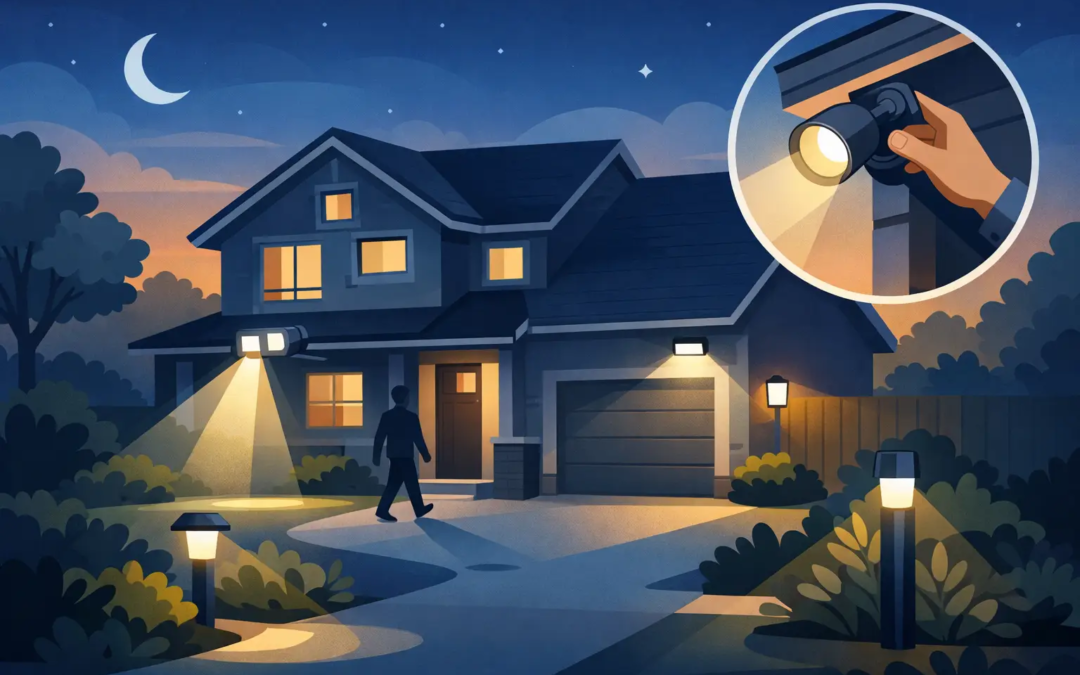
A dark side entrance, detached garage, or back parking area creates an easy problem to fix: people cannot see what is happening there. When you install security lighting outdoors, the goal is not to flood every corner of your property with harsh light. It is to make key areas visible, discourage unwanted activity, and help family members, visitors, employees, or tenants move around safely.
Good outdoor lighting works with the rest of your security plan. It supports cameras by improving nighttime visibility, makes doors and walkways easier to use, and removes the hidden spots that can make a property feel vulnerable. The right setup is usually simple, but placement and installation details matter.
Start With the Areas That Need Light Most
Walk around the property after dark before buying a fixture. Look for entrances, pathways, gates, driveways, garages, sheds, dumpsters, and parking areas that are difficult to see. Also notice where someone could approach a door without being visible from the street or inside the building.
For most homes, the first priorities are front and back doors, the garage, and a side yard or gate. Small businesses may need lighting at customer entrances, employee doors, delivery areas, rear exits, and parking spaces. A bright fixture mounted in the wrong place can leave the real problem untouched, so begin with the areas people actually use and the places someone could hide.
Think about what each light needs to accomplish. An entry light should help people identify visitors and use locks safely. A driveway or parking-area light should provide broad, even coverage. A motion-activated floodlight near a gate or rear door can draw attention to unexpected movement without running all night.
Choose a Fixture That Fits the Job
LED fixtures are usually the practical choice for outdoor security lighting. They use less energy than older bulb types, last longer, and provide strong light quickly in cold or warm conditions. Look for fixtures rated for outdoor use and designed to handle rain, temperature changes, and dust.
Brightness is measured in lumens. A small door area may only need a modest fixture, while a driveway, yard, or parking space may need a brighter floodlight. More lumens are not always better. Excessively bright lights can create glare, annoy neighbors, wash out camera images, and leave darker areas just beyond the beam.
Color temperature affects how the light looks. Around 3000K gives a warmer appearance that works well near homes and walkways. A neutral white in the 4000K range can make details easier to see around garages, commercial entrances, and work areas. The best choice depends on the setting, nearby homes, and whether cameras will be recording the area.
You will also need to choose how the light turns on. Dusk-to-dawn fixtures run automatically from evening to morning. Motion-sensor fixtures activate when they detect movement. Some fixtures combine both options, staying at a low level overnight and brightening when motion occurs. That can be useful near busy entrances, but it is not necessary for every location.
Plan Placement Before You Install Security Lighting Outdoors
Mounting height and aiming make a major difference. A light installed too low can be easy to tamper with and may shine directly into a person’s eyes. One installed too high may illuminate a wide area without providing useful detail near doors, gates, or vehicles.
For a typical exterior door, mounting a fixture near the entry or above it can provide clear, usable light. For floodlights, a higher mounting point on a wall, eave, or garage can cover more ground. Aim the fixture downward and toward the area you want to protect, not outward toward the street or a neighboring property.
If you use a motion sensor, test its detection zone before permanently setting the angle. Sensors generally detect motion across their field of view better than motion moving directly toward them. A person walking across a driveway may trigger the light sooner than someone approaching from straight ahead. Trim shrubs, tree branches, or tall grass that may move in the wind and cause false activations.
Avoid placing a motion light where it will constantly see traffic, pets, flags, or an active sidewalk. Frequent triggers can make the light less useful and may lead people to ignore it. If the only available location faces a busy area, a dusk-to-dawn setting may be the better choice.
Check Power, Wiring, and Local Rules
The easiest replacement is a new outdoor fixture installed on an existing exterior electrical box. If the box is in good condition, properly grounded, and connected to a working circuit, replacing the fixture may be a reasonable project for someone comfortable with basic electrical work.
Adding a new light where no wiring exists is more involved. It may require running cable through walls, attics, crawl spaces, or conduit, adding a switch, and connecting to a properly protected circuit. Outdoor electrical work needs weather-rated components, sealed connections, and the right type of wiring for the location.
Before starting, turn off power at the breaker and confirm the circuit is off with a voltage tester. Do not rely only on a wall switch. Use a weatherproof exterior box and cover, secure all wiring connections inside an approved box, and follow the fixture manufacturer’s instructions exactly.
Many outdoor circuits require ground-fault circuit interrupter protection, often called GFCI protection. Local building codes and permit requirements can also apply, particularly when adding a new circuit or changing wiring. If there is any uncertainty about the existing wiring, grounding, circuit capacity, or code requirements, hire a licensed electrician. This is one place where a quick shortcut can create a shock, fire, or water-damage risk.
Renters should not alter exterior wiring without written approval from the property owner or manager. Battery-powered or solar motion lights can be useful temporary options, but they are not always as reliable as hardwired lighting. Solar fixtures depend on adequate daily sun, while battery models need regular checks and battery replacement.
Install the Fixture With Weather Protection in Mind
Once power is off and the mounting location is ready, attach the fixture bracket to the electrical box as directed. Feed wires carefully into the box, connect the fixture wires to the matching supply wires, and secure the ground connection. Keep wire connections tucked inside the box without pinching them.
Install the gasket, canopy, or backplate so it sits flat against the mounting surface. Use exterior-rated caulk only where the manufacturer recommends it, usually around the top and sides of the fixture base. Leave the bottom unsealed when instructed so trapped moisture can drain rather than collect behind the fixture.
After restoring power, test the light during the day if the fixture has a test mode. Adjust the heads so light falls on the ground and the protected area, not into windows. Then set the sensor range, sensitivity, and how long the light stays on. Start with moderate settings. A light that stays on for one to three minutes after motion is often enough for an entry or side yard.
Make Outdoor Lighting Work With Cameras and Daily Routines
Security lighting is most effective when it supports visibility without becoming background noise. If you have outdoor cameras, make sure the fixture does not point directly into the camera lens. That can cause glare and reduce the useful image. Position light sources slightly above or beside the camera’s view so faces, doors, and vehicles are illuminated from the front or side.
Check the setup several times after installation. Walk the driveway, approach each door, open the gate, and review camera footage at night if cameras are in place. You may find that a small adjustment to a floodlight head or sensor angle solves a blind spot.
Maintenance is simple but worth doing. Wipe dirt and spiderwebs from lenses and sensors, clear vegetation that blocks the beam, and replace damaged gaskets or cracked covers. Test motion sensors seasonally because changing sun angles, weather, and landscaping can affect performance.
A well-lit property does not need to look like a stadium. A few carefully placed, reliable fixtures can make the routes people use feel safer and make unusual activity much harder to miss. If you are unsure where to begin, focus first on the doors, paths, and access points you depend on after dark.