

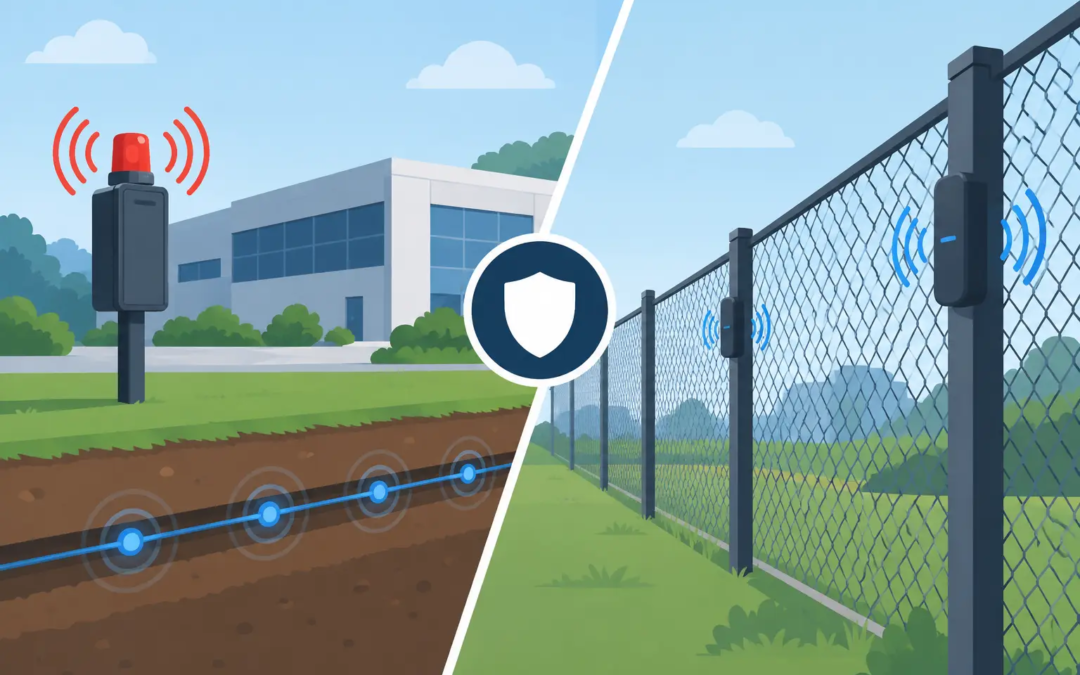
A gate left unlatched, a person crossing a side yard, or someone approaching a storage area can become a problem long before they reach a door or window. That is the value behind perimeter alarms versus fence sensors: both can provide earlier awareness of activity around your property, but they do it in different ways and fit different layouts.
The simplest distinction is this: a perimeter alarm is a broad category of security systems designed to detect someone entering a defined outdoor boundary. A fence sensor is one specific way to protect that boundary by detecting contact with, movement on, or attempts to cut or climb a fence. The better choice depends on the property, the risks you are trying to address, and how much maintenance you are willing to take on.
Perimeter Alarms Versus Fence Sensors: The Basic Difference
A perimeter alarm can use several technologies. It may rely on outdoor motion detectors, infrared beams, driveway sensors, buried detection cables, gate contacts, or sensors placed along a fence. The goal is to create an early warning zone outside the building itself.
Fence sensors are installed directly on or near an existing fence. Depending on the system, they may detect vibration, cutting, climbing, lifting, or physical disturbance. They are designed to answer a very specific question: has someone tried to get through this fence?
That distinction matters because not every property has a fence, and not every fence provides a useful security boundary. A homeowner with an open front yard may get better results from beam sensors or strategically placed outdoor motion detection. A small business with a secured rear lot, equipment yard, or storage area may benefit from monitoring the fence line itself.
Neither option replaces a good door and window security setup. Instead, they can give you more time to react before someone reaches the building.
When a Perimeter Alarm Makes More Sense
A general perimeter alarm is often the more flexible choice for homes and small commercial properties. It can cover the areas that matter most without requiring protection around every foot of the property line.
For example, a driveway sensor can notify you when a vehicle enters a long drive. Infrared beams can protect a narrow side passage where people should not be walking. Outdoor motion sensors can watch the approach to a detached garage, shed, loading area, or back entrance. These tools create focused detection zones based on how people actually move around your property.
This approach is especially helpful when the property has multiple access points or an irregular layout. You can protect the route to valuable equipment, a back door, or a private outdoor area without installing equipment across the entire boundary.
Perimeter alarms can also be a practical choice for renters or property managers who need a solution that is easier to adjust as tenants, landscaping, parking patterns, or site use changes. Some systems can be expanded over time, which may help keep the initial investment manageable.
The trade-off is coverage. If an intruder enters through an unprotected part of the yard, the system may not alert you until they reach a monitored zone. Careful placement is what makes a perimeter alarm effective. A sensor pointed at the wrong area can create frequent alerts while missing the path someone would actually use.
When Fence Sensors Are the Better Fit
Fence sensors are most useful when the fence is the clear first line of protection. This is common for small businesses with outdoor inventory, construction materials, tools, service vehicles, dumpsters, or equipment that cannot simply be brought inside each night. It can also make sense for residential properties with a well-defined fenced yard and recurring concerns about unauthorized entry.
A fence sensor can alert you at the moment someone attempts to climb, cut, lift, or force the fence. That gives you an earlier warning than a motion sensor placed closer to the building. For a property with a long, exposed fence line, that extra distance can be valuable.
Fence-based detection can also help narrow down where the activity occurred. If the system identifies a disturbance on the rear fence rather than simply reporting outdoor motion, you have more useful information when deciding whether to check cameras, contact a monitoring provider, or call for help.
Still, fence sensors are not automatically the stronger solution. They depend on the condition of the fence and the environment around it. A loose or aging fence can move in the wind. Branches rubbing against it, nearby traffic vibration, animals, and shifting soil can all affect performance. The system needs to be selected and adjusted for the site, not installed as a one-size-fits-all product.
False Alarms Are a Real Decision Factor
Outdoor security has to account for weather, wildlife, landscaping, and daily activity. A system that sends constant unnecessary alerts can quickly become one that people ignore.
Perimeter alarms using outdoor motion sensors may need careful settings to avoid being triggered by pets, passing cars, sprinklers, moving shadows, or tree branches. Good placement matters as much as the sensor itself. A sensor covering a busy sidewalk or shared driveway may create more frustration than protection.
Fence sensors face a different set of challenges. They can react to high winds, poorly secured fence panels, vegetation, or routine use of a gate. A fence that rattles every time a delivery truck passes is not an ideal foundation for vibration-based detection without proper evaluation and calibration.
This does not mean outdoor detection is unreliable. It means the best systems are planned around normal activity. Before installation, think through who belongs on the property, when they arrive, where vehicles travel, where pets roam, and which outdoor areas need protection after hours. Clear expectations lead to fewer unwanted alerts.
Consider What You Need to Protect
Start with the risk, not the technology. If your main concern is someone walking up to a back door, a focused perimeter alarm may be all you need. If valuable property sits behind a fence and theft could occur before anyone reaches the building, fence detection may deserve a closer look.
For many homeowners, the priority is awareness around entry routes: the driveway, side gate, garage, and rear door. In that case, broad fence coverage may be more than necessary. Cameras, exterior lighting, door contacts, and well-placed outdoor sensors can work together to cover the areas that matter most.
For a small business, consider whether the property is occupied overnight, whether inventory is stored outdoors, and whether the fence line has hidden areas that are difficult to see from the building. A fenced contractor yard, auto service lot, or storage compound has different needs than a small office with a front parking lot.
The level of response also matters. An alert sent only to a phone may be enough for some properties. Others may benefit from professional monitoring or a system that works with cameras so you can verify what caused the alarm. The goal is not to add every available device. It is to create a response you can realistically use.
Installation and Ongoing Care
General perimeter alarms can range from relatively simple wireless devices to professionally installed systems with multiple detection zones. Wireless options may be easier to add around a home, while wired systems can be appropriate for larger properties or permanent commercial locations.
Fence sensors usually require more site-specific installation. The installer may need to assess fence material, tension, gate placement, corners, vegetation, and the length of the line being protected. A chain-link fence, wood privacy fence, and metal security fence do not behave the same way, so the same sensor approach will not work equally well on all of them.
Both systems require occasional attention. Trim vegetation away from protected areas, test alerts regularly, replace batteries when needed, and update contact information for notifications or monitoring. If you renovate the yard, replace a fence, add a dog run, or change how employees access the property, review the system settings afterward.
A Practical Way to Choose
Choose a perimeter alarm when you need flexible coverage of specific approaches to the building, driveway, gate, or outdoor assets. It is often the more adaptable and cost-conscious path for properties that do not have a strong, continuous fence boundary.
Choose fence sensors when the fence itself is the main barrier protecting valuable outdoor space and you need notice of an attempted breach at that boundary. They can be particularly useful where an intruder could enter, take property, and leave without ever approaching a door.
In some cases, the right answer is both. A fence sensor can provide the first alert at the property line, while a motion detector or camera watches the route toward the building. That layered approach is not necessary for every property, but it can make sense when outdoor assets or repeated access concerns raise the stakes.
The most useful security system is one that fits how your property works on an ordinary day. Walk the outside of your home or business after dark, look for the paths a stranger could use, and identify the areas where an early alert would give you time to make a better decision.