

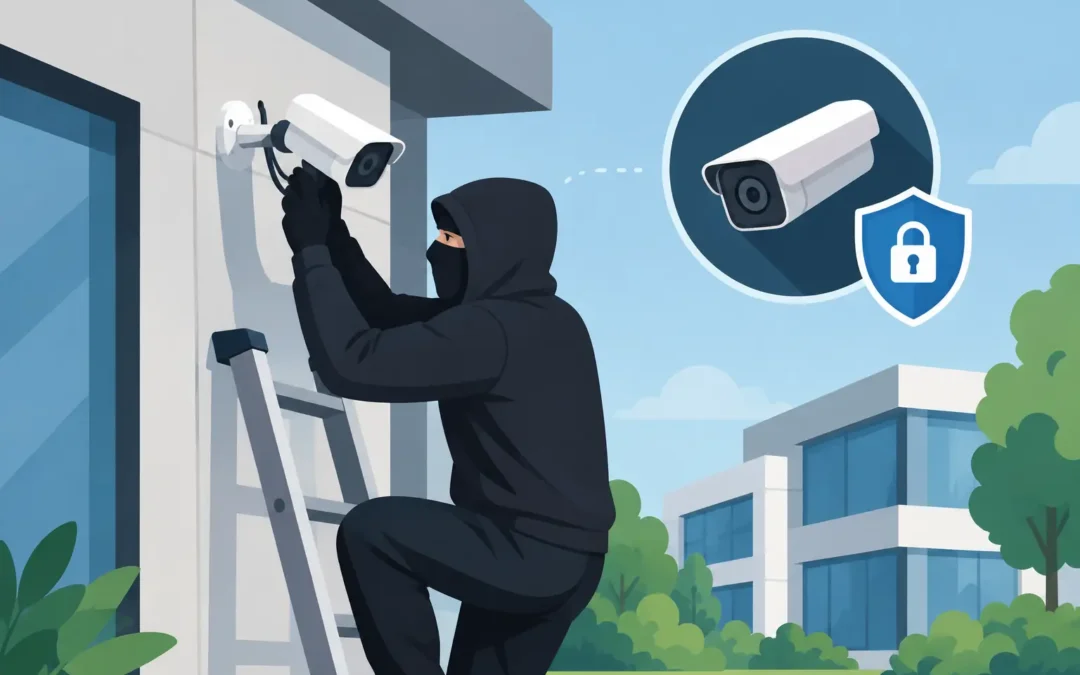
A security camera theft example can feel frustratingly simple: a person notices a camera, pulls it down, and leaves with it. But a stolen camera does not have to mean lost evidence or a failed security plan. The outcome depends on what the camera recorded before it was taken, where that footage was stored, and whether the rest of the property was covered.
For homeowners and small business owners, the lesson is not that cameras are pointless. It is that a camera should be part of a practical plan built to keep working when someone tries to defeat it.
A Security Camera Theft Example: What Can Happen
Picture a small retail shop with a camera mounted above the front entrance. One evening, someone forces the door open, notices the camera, and tears it from its bracket before leaving. The camera is gone, but it has already captured the person approaching, damaging the door, and entering the store.
If the system saved video only to a memory card inside that camera, the owner may lose much of the footage along with the device. If it sent clips to a recorder in a locked back office or to secure cloud storage, the owner can still review and share the recording with police and their insurance company.
There is another part of this example that matters. A single entrance camera may show a face, but it may not show a vehicle, a second person waiting nearby, or the direction the person traveled after leaving. A second camera covering the parking area or sidewalk can fill in those gaps. Good coverage is not about placing cameras everywhere. It is about covering the moments and routes that matter most.
Why Someone Would Steal or Damage a Camera
A camera can be targeted for several reasons. Someone may want to avoid being recorded during a break-in, remove a device that could identify them, or take an easy-to-resell item mounted within reach. In some cases, damage is simply opportunistic vandalism.
Outdoor cameras are most exposed when they are mounted low, attached with standard visible screws, or installed near an accessible porch rail, fence, or awning. Wireless cameras can be convenient, especially for renters or smaller properties, but the device itself may be easier to remove if it is not secured properly. Wired cameras often require more installation planning, yet they can be a better fit for locations where continuous recording and a more permanent mount are priorities.
The right choice depends on the property. A homeowner may value a simple battery-powered doorbell camera at the front door. A shop with inventory, cash drawers, and regular customer traffic may need professionally mounted cameras with a recorder stored out of sight. Neither approach needs to be complicated, but both need to account for the real risk of tampering.
Build a System That Keeps the Evidence
The most useful protection against camera theft is not making a camera impossible to remove. Almost any device can be damaged with enough time and effort. The goal is to make removal harder, more noticeable, and less effective.
Start with video storage. When possible, choose a system that records outside the camera itself. Cloud recording can preserve clips even when the camera is stolen or destroyed, as long as it had an internet connection before the event. A local network video recorder can also protect footage when it is kept in a secured interior location. Some systems use both local and cloud storage, which offers added protection but may involve a monthly fee.
Check what your system actually saves. Some cameras record only when motion is detected, while others can record continuously. Motion recording can reduce storage needs, but poor settings may miss the start of an event or create too many alerts from passing cars, pets, or tree branches. Continuous recording can provide more context, but it requires more storage and may cost more. For a busy storefront or an exposed entry point, the additional context is often worth considering.
Secure mounting matters just as much. Outdoor cameras should be installed on solid surfaces, not loose trim or thin siding that can be pulled away. Use mounts designed for the camera, weather-resistant hardware, and tamper-resistant screws where appropriate. Run cables through protected channels or walls rather than leaving them exposed. If a wire is easy to cut from the ground, it is a weak point.
Height is a balance. A camera mounted too low may capture clear facial detail but be easy to grab. A camera mounted too high is harder to reach but may only record hats, hoodies, and the tops of heads. For many exterior locations, a placement high enough to discourage tampering while still angled toward faces works best. Test the view during both daylight and nighttime before treating the job as finished.
Cover the Camera, Not Just the Door
One of the simplest ways to protect a camera is to have another camera that can see it. This does not mean every device needs a dedicated guard camera. It means your coverage should overlap at key areas.
For example, a front door camera can capture visitors at close range, while a wider camera under the eave can cover the walkway, driveway, and anyone approaching the door. At a small business, one camera can watch the main entrance and another can cover the register area, rear door, or parking lot. If someone tampers with one device, another may record the action.
Overlapping views also help establish a clearer timeline. A close camera may capture clothing and facial features. A wider view may show whether the person arrived on foot, in a vehicle, or with others. That information can be more useful than a single isolated clip.
Avoid pointing cameras into neighbors’ private spaces or areas where people reasonably expect privacy, such as bathrooms or changing areas. For businesses, be clear with employees and customers about camera use where required. Security works best when it protects people and property without creating unnecessary concerns.
Do Not Rely on Cameras Alone
Cameras provide awareness and evidence, but they are usually not a physical barrier. A visible camera can discourage some unwanted behavior, yet it cannot lock a door, reinforce a glass entry, or call for help on its own unless it is part of a monitored system.
Pair cameras with basics that slow down an intruder and make suspicious activity more visible. Good exterior lighting improves video quality and reduces hiding places. Strong locks, reinforced strike plates, secured windows, and alarm sensors can create delays that give cameras more time to capture useful information. For a small business, a monitored alarm can add a response path when staff are not on-site.
Notifications are useful, but only when they are manageable. If a phone alert goes off every few minutes, most people eventually tune it out. Set activity zones around doors, gates, driveways, and valuable equipment. Exclude busy streets, public sidewalks, and areas with constant movement when possible. Test the settings after a few days and adjust them until the alerts are meaningful.
What to Do If a Camera Is Stolen
If you discover that a camera is missing, avoid immediately replacing it before preserving what remains. First, check the app, cloud account, recorder, and any other cameras that may have captured the event. Save relevant clips in more than one location and note the date and approximate time.
Take photos of the damaged mount, cut cable, broken door, or other signs of entry. If there was a break-in, theft, or property damage, contact local law enforcement and provide the footage rather than posting a full accusation online before the facts are clear. For a business, document the incident for your insurer and review whether employee access, keys, or alarm procedures need attention.
Then look at the incident as a coverage test. Was the camera too easy to reach? Did the system save video away from the device? Did another camera capture the person? The answers point to practical improvements. Often, the fix is not replacing every camera. It is changing a mount, adding a second angle, moving the recorder, or adjusting recording settings.
A stolen camera is inconvenient, but it can also reveal exactly where a security setup needs help. Simple Security Solutions believes protection should be understandable: secure the device, preserve the footage, and cover the areas where an incident is most likely to begin. A system that does those things gives you a far better chance of having useful evidence when you need it.