

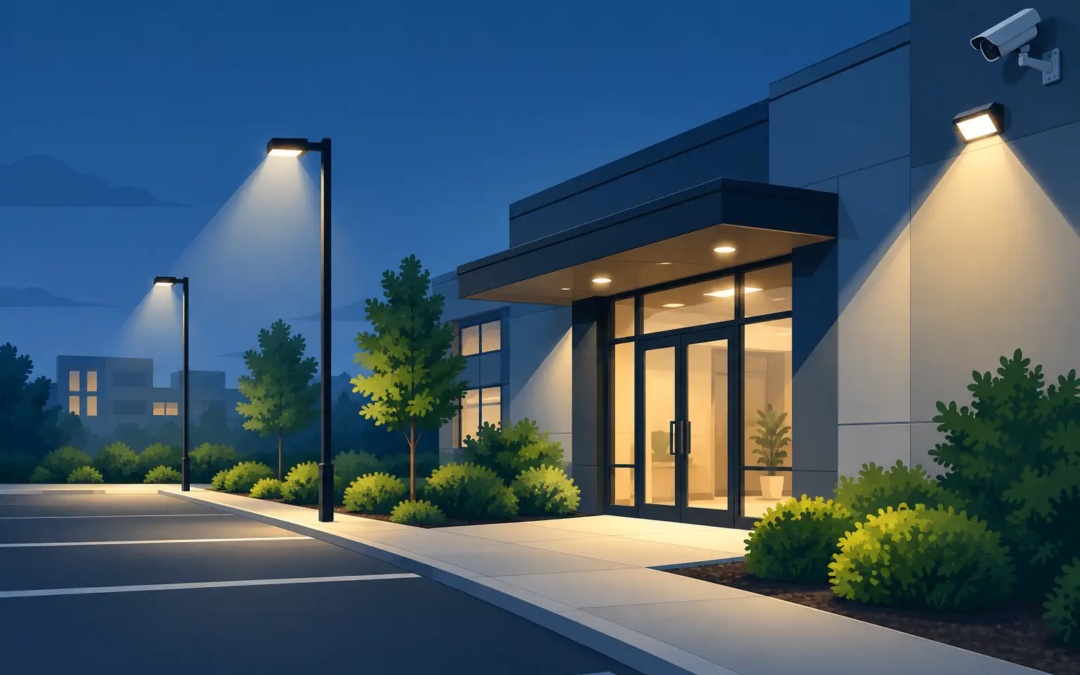
A dark side entrance, an unmarked walkway, or a parking area with deep shadows can create an avoidable security gap. Good security lighting planning is not about flooding every corner of a property with harsh light. It is about making the places people use, approach, and monitor easier to see after dark.
For homeowners and small business owners, the goal is practical: help legitimate visitors move safely, make suspicious activity more noticeable, and support cameras or neighbors who may need a clear view. A few well-chosen fixtures in the right locations can do more than a large number of poorly placed lights.
Start With the Property, Not the Fixture
Before comparing bulbs, brightness ratings, or motion sensors, walk the property at night. Look at it from the street, from the driveway, and from the perspective of someone walking toward each entrance. What cannot be seen clearly? Where would a person be able to stand without being noticed?
Pay close attention to the front door, back door, garage, side gates, first-floor windows, sheds, dumpsters, loading areas, and parking spaces. A small commercial property may also need lighting near employee entrances, delivery doors, cash-handling areas, and paths between the building and parking lot.
The best plan focuses on actual use. A backyard used regularly after sunset needs comfortable, steady light. A rarely used side yard may be better served by a motion-activated fixture. Lighting every area the same way can waste energy and create glare without improving security.
It also helps to consider what is outside your property line. Trees, fences, neighboring homes, public sidewalks, and nearby roads all affect where light should point. The goal is to illuminate your space, not shine into a neighbor’s bedroom or distract drivers.
Build Security Lighting Planning Around Key Zones
Most properties have three lighting zones: entrances, activity areas, and perimeter areas. Each has a different job.
Entrances need clear, reliable visibility
Doors should be easy to identify and approach. A visitor should be able to see steps, locks, doorbells, and anyone standing nearby. For homes, this usually means lighting at the front door, garage entry, rear door, and any frequently used side entrance.
For businesses, keep employee and customer entrances consistently lit during operating hours and closing routines. Reliable lighting can also make it easier for a camera to capture usable footage. A bright light directly behind a person’s face, however, can create a silhouette and make identification harder. Place fixtures so they light the approach and the person’s face from the front or side.
Activity areas need even light, not bright spots
Driveways, walkways, patios, parking spaces, and work areas benefit from light that is spread evenly. A single powerful fixture may leave darker areas around it, creating sharp contrast and hiding places in the shadows.
Look for fixtures that distribute light across the intended area rather than producing a narrow beam. The right brightness depends on the size of the space, its normal use, and nearby ambient light. A quiet residential walkway does not need the same output as a small business parking lot.
Perimeter areas need smart coverage
Fences, gates, alleyways, side yards, and rear property lines are often best handled with motion lighting. These locations do not always need constant illumination, but an unexpected light turning on can draw attention to movement and make a person feel exposed.
Motion-activated lights work well when they are aimed carefully and adjusted for sensitivity. If every passing car, tree branch, or neighborhood cat triggers the light, people may stop noticing it. Test the coverage area after installation and make small adjustments until it responds to activity where it matters.
Choose the Right Type of Light
LED fixtures are the practical choice for most security applications. They use less electricity than older lighting options, last longer, and come in many brightness levels and styles. That reduces maintenance, especially for fixtures mounted above garages, on exterior walls, or around commercial buildings.
Color temperature matters too. Cooler white light can make details appear sharper for cameras and task areas, but very blue-white lighting can feel harsh around a home. A neutral white light is often a comfortable balance for residential entrances and walkways. For small businesses, the right choice depends on whether the area is customer-facing, employee-only, or monitored by cameras.
There is no single brightness number that fits every property. Instead of choosing the highest output available, match the fixture to the location. Too little light leaves gaps. Too much light creates glare, washes out camera images, and may bother neighbors. Proper placement is usually more valuable than extra brightness.
Timers, Dusk Sensors, and Motion Sensors
Controls make security lighting easier to live with. A dusk-to-dawn sensor turns lights on when daylight fades and off in the morning. This is a good fit for front doors, building entrances, and areas where steady light improves safety.
Timers are useful when a property follows a regular schedule. A small business may keep parking and entrance lights on through closing, then reduce lighting later in the evening. Homeowners may prefer scheduled lighting for a porch or driveway while away.
Motion sensors are ideal for low-traffic spaces. They conserve electricity while still bringing attention to movement. Some fixtures combine dusk-to-dawn operation with brighter motion activation, keeping a low level of light on until activity is detected.
Avoid relying on smart features alone. App control can be convenient, but the lighting should still function predictably if Wi-Fi is unavailable or a phone is not nearby. Simple controls that work every night are often the best security choice.
Plan for Cameras Without Creating Glare
Lighting and cameras work better together when both are planned at the same time. Cameras need enough usable light to capture faces, vehicles, and movement. But a fixture placed directly beside or aimed toward a camera can cause glare, reflections, or overexposed video.
Check the camera view after dark. Watch for bright hotspots on walls, reflective signs, car windshields, or wet pavement. Move or angle the fixture if necessary. In some cases, lighting an area from a different side gives the camera a much clearer image.
If you use infrared cameras, remember that visible light can still improve color footage and help people recognize what they are seeing in real time. The right lighting should support monitoring without advertising every detail of your security setup.
Avoid Common Security Lighting Mistakes
A few mistakes show up often. The first is placing a single bright floodlight high on a building and assuming it covers everything. It may light a large area, but it can also create dark edges and severe glare.
Another is installing fixtures without checking them after dark. A light that seems properly aimed during the day can shine into windows, miss a gate, or leave a path unevenly lit at night. Test every fixture from the places people will actually stand and walk.
It is also wise to keep shrubs and trees trimmed away from lights. Landscaping can block coverage over time, while branches can set off motion sensors. Replace failed bulbs or damaged fixtures promptly. A broken exterior light can signal that an area receives little attention.
Finally, do not treat lighting as a replacement for locks, alarms, cameras, or good property habits. Lighting is one useful layer. It works best alongside secured doors and windows, clear address numbers, maintained landscaping, and a plan for responding when something looks wrong.
Keep the Plan Simple and Maintainable
A good lighting plan should be easy to maintain. Choose durable fixtures appropriate for outdoor use, use matching controls where possible, and make sure someone can safely reach fixtures that need occasional cleaning or adjustment.
For rental properties and small businesses, document which lights are controlled by switches, timers, or sensors. That prevents confusion when staff changes or a tenant reports that a fixture is not working. A simple seasonal check can catch blocked lights, failed sensors, damaged wiring, and overgrown landscaping before they become a larger problem.
If you are unsure where to start, begin with the entrance people use most and the darkest area near the building. Improve visibility there, test it after sunset, and add coverage only where the property truly needs it. Thoughtful lighting should make your property feel safer and easier to use, not turn it into a place that is difficult to live or work around.