

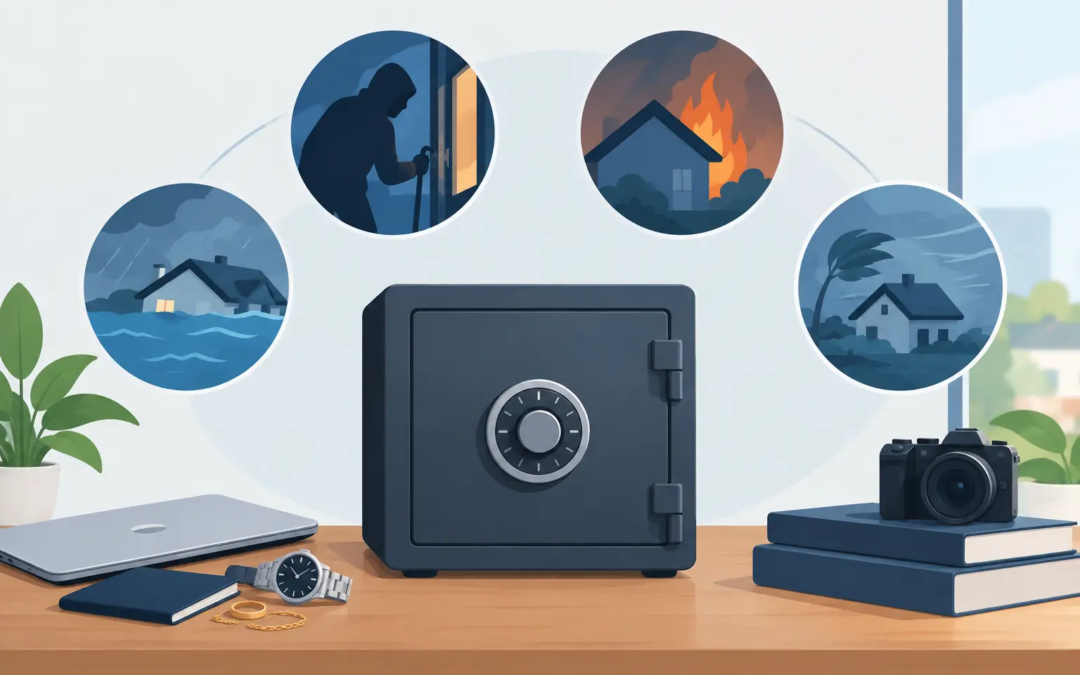
A safe can be one of the most useful security purchases you make – or an expensive box that does not protect what matters most. The difference usually comes down to choosing security safes for the risks you actually face, then installing them correctly. A homeowner protecting documents has different needs than a small business owner storing cash, keys, or sensitive records.
The goal is not to buy the heaviest safe or the one with the longest feature list. It is to choose a practical safe that protects your property from theft, fire, water damage, or unauthorized access without becoming difficult to use.
Start With What You Need to Protect
Before comparing lock types or fire ratings, make a clear list of what will go inside the safe. This keeps the decision simple and helps prevent a common mistake: buying a safe that is too small.
For a home, that list may include passports, birth certificates, property records, backup drives, jewelry, prescription medications, or a legally owned firearm. For a small business, it may include petty cash, customer files, spare keys, contracts, laptops, and backup media.
Think beyond what you own today. Documents accumulate, and many people add valuables after a safe is installed. A model that feels slightly larger than necessary is often the better choice, especially if it will be placed in a closet, office, or utility room where space is available.
Just as important, consider how often you need access. A safe used once or twice a year for records can prioritize fire protection and storage space. A safe used daily for business deposits or keys should be easy for authorized people to open while remaining out of reach to everyone else.
Match Security Safes to the Risk
Most safes are designed around one or more types of protection. A safe that performs well in a fire may not offer strong burglary resistance, and a theft-resistant safe may not be fully waterproof. Reading the label is useful, but understanding the purpose behind the rating is more helpful.
Theft and forced entry
If theft is your main concern, look at the safe’s construction, door design, locking bolts, and whether it can be anchored to the floor or wall. Weight can slow down a thief, but weight alone is not security. A safe that is not bolted down can sometimes be removed and opened elsewhere.
For many homes and small businesses, anchoring is one of the most valuable parts of the installation. A properly secured safe is harder to carry away, pry open, or tip over. The floor, wall material, and location all affect how it should be mounted, so follow the manufacturer’s requirements rather than improvising with household hardware.
Avoid assuming that a compact lockbox provides the same protection as a burglary-rated safe. Small lockboxes can be useful for temporary storage or quick access, but they are generally not the right choice for high-value jewelry, cash reserves, or irreplaceable records.
Fire and water damage
Fire-resistant safes are built to keep internal temperatures below a certain level for a stated period. Common ratings may refer to 30, 60, or 120 minutes of fire exposure. More time can be useful, but the right rating depends on your property, what you are storing, and where the safe will sit.
Paper records, electronic media, and digital storage devices do not all tolerate heat the same way. A standard fire safe may be suitable for paper documents, while hard drives, USB drives, and other media may need protection designed specifically for them. If digital files are essential to your household or business, keep secure backups in more than one location rather than relying on a single safe.
Water resistance deserves separate attention. Firefighting efforts, burst pipes, and storm-related flooding can damage contents even if the safe survives a fire. If you are placing a safe in a basement, garage, or low-lying area, choose a location carefully and check the safe’s stated water protection. Raising the safe off the floor may help in minor water events, but it is not a substitute for a properly rated product.
Unauthorized access at home or work
Sometimes the concern is not a break-in. It may be keeping children away from medications or firearms, limiting access to confidential documents, or controlling who can retrieve business keys and cash.
In those cases, access control matters as much as physical strength. A safe with a reliable lock, a clear access policy, and limited key or code sharing can solve a real problem without turning daily routines into a hassle. For small businesses, decide who needs access, when they need it, and how you will handle employee changes. A shared code that is never updated is a weak point, even with a well-built safe.
Choose a Lock You Will Use Correctly
There is no single best lock for every property. The right choice depends on your comfort level, access needs, and willingness to manage keys, batteries, or combinations.
Traditional combination locks do not require batteries and can be dependable over many years. They can be slower to open, however, and they require users to remember the correct dialing process. Electronic keypad locks are convenient for frequent access and can make code changes easier. Their trade-off is that batteries need to be checked and replaced as recommended.
Key locks are simple, but keys can be lost, copied, or left in an obvious place. Biometric locks can provide quick access for approved users, though performance may vary based on the model, finger placement, and battery condition. For items that must be accessed quickly, test the lock yourself before relying on it in an emergency.
Whichever lock you choose, keep backup access information secure and separate from the safe. Do not store override keys in a desk drawer beside it or write the combination on a note labeled “safe.” If more than one person needs access, make sure each person understands the process and knows what to do if the lock does not open normally.
Location Is Part of the Protection Plan
A safe should be accessible enough to use, but not placed where it is immediately visible to every visitor. A bedroom closet, home office, secured utility area, or back office may be appropriate depending on the property layout and the safe’s purpose.
Do not choose a location based only on hiding the safe. Consider fire exposure, moisture, floor strength, access for installation, and whether the safe can be securely anchored. A large safe on an upper floor may create structural or moving challenges. A basement may be more discreet but could bring greater flood risk. The best location is often a reasonable compromise, not a perfect one.
For a small business, keep operational needs in mind. A deposit safe placed too far from the point of use may lead employees to take shortcuts. A key safe installed in a public-facing area may expose staff to avoidable risk. A practical setup supports the way your property operates every day.
Avoid These Common Buying Mistakes
Price matters, but the lowest-cost safe may not provide the protection you expect. It is also easy to focus on a single feature, such as a digital lock or a fire label, while overlooking construction quality and anchoring options.
Another mistake is treating a safe as a replacement for broader security. A safe works best as one layer in a sensible plan that may also include good locks, exterior lighting, monitored alarms, cameras, and clear procedures for staff or family members. If someone has time and privacy to attack a safe, every additional layer that creates delay or alerts can matter.
Finally, do not wait until after a burglary, fire, or workplace incident to organize essential documents and valuables. Know what is in the safe, review access regularly, and update your plan when your household or business changes.
A well-chosen safe does not need to be complicated. Pick one that fits your real risks, install it properly, and make it part of the everyday security habits that protect your property when you are not there.