

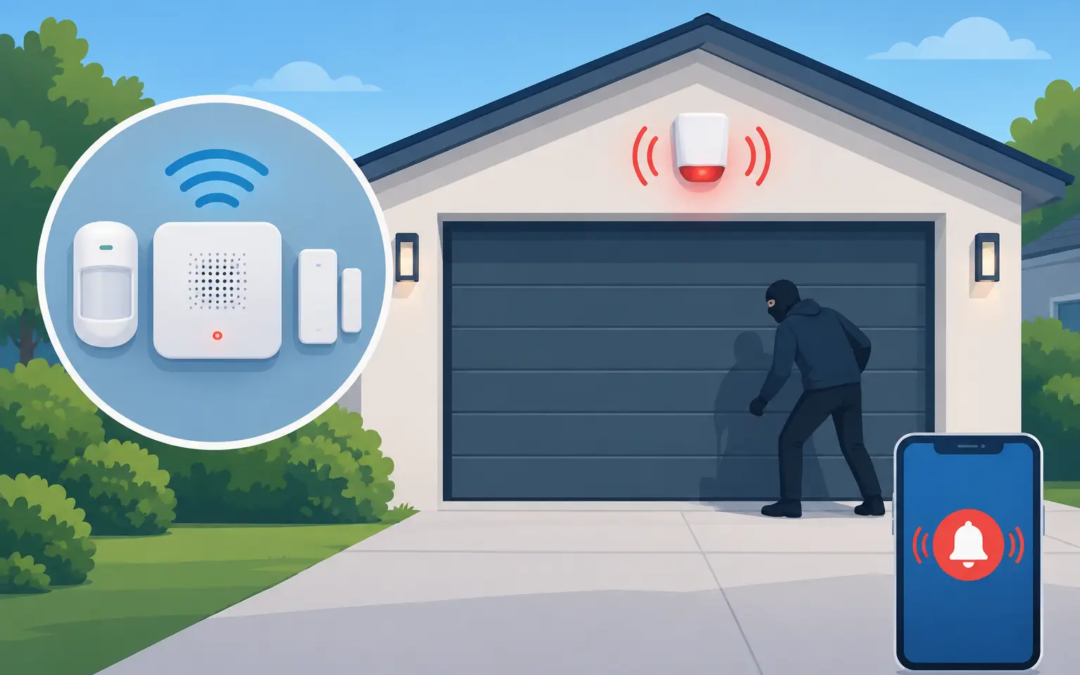
A garage is often the easiest way into a home and one of the most attractive targets for a quick theft. It may hold vehicles, tools, bikes, inventory, or a door leading directly inside. The top garage alarms are not necessarily the most complicated systems. They are the ones that detect the risks your garage actually faces, alert the right people, and stay dependable when you need them.
For most homeowners and small business owners, the best approach is to start with the garage door, the service door, and any windows. Then decide whether you need a loud local alarm, phone alerts, professional monitoring, or a combination of all three.
What Makes a Garage Alarm Worth Buying?
A garage is not just another room. Temperature swings, dust, vehicles, large doors, and occasional poor Wi-Fi coverage can all affect how an alarm performs. A good garage setup should be simple enough to use every day without leaving doors or sensors bypassed out of frustration.
The basic job is clear: detect an unauthorized opening or movement, sound an alarm or send an alert, and give you a reasonable way to respond. The right system also reduces false alarms. A motion sensor that trips every time a pet enters, or a sensor that loses connection in cold weather, will not build confidence.
Look first at coverage and reliability. A contact sensor on the overhead garage door can tell you when it opens, while a separate sensor on the side or service door covers another common entry point. Motion detection adds another layer for garages with windows or multiple access points. If there is an interior door to the house, include it in the system rather than treating the garage as a separate space.
Top Garage Alarms by Protection Need
There is no single best choice for every property. The top garage alarms generally fall into a few practical categories, each suited to a different level of risk and budget.
- Standalone garage door alarms are designed to sound a siren when the main door opens. They are affordable and simple, but usually do not provide alerts when you are away from the property.
- DIY smart alarm systems use door contacts, motion sensors, a hub, and a mobile app. They work well for homeowners and renters who want to know when the garage is opened without committing to a complex installation.
- Professionally monitored alarm systems send an alarm event to a monitoring center that can contact you and, when appropriate, request emergency response. They are a strong fit for detached garages, valuable equipment, second homes, and small businesses.
- Cellular-connected systems use a cellular signal rather than relying only on home internet. This can be useful where Wi-Fi is unreliable or when you want alerts to continue during an internet outage.
- Alarm and camera combinations pair intrusion detection with a visual check of the space. A camera does not replace an alarm, but it can help you quickly see whether an alert is a delivery, a family member, or a real concern.
A simple system with door sensors and a monitored panel may be more useful than a long list of devices that do not address the garage’s entry points. Start with the likely paths someone would use, then add features only when they solve a real problem.
Best for a Typical Attached Garage
For an attached garage, prioritize the overhead door, side door, and interior door to the home. A contact sensor on each door provides a clear record of openings and closings. Add a motion sensor if the layout allows it to cover the center of the garage without facing an area where pets regularly move.
An audible siren is especially useful in an attached garage because it can alert people inside the house. Mobile notifications add peace of mind when the home is empty. If the garage contains expensive tools, bicycles, or a vehicle that is frequently left unlocked, professional monitoring may be worth the added monthly cost.
Best for a Detached Garage or Outbuilding
Detached garages need more independent protection because an alarm may not be heard from the house. A system with a loud siren and remote alerts is a sensible baseline. Cellular backup becomes more valuable if the building is far from the home’s Wi-Fi router or if its walls weaken the signal.
Before choosing equipment, test your Wi-Fi and cellular coverage inside the garage. A smart device is only as useful as its connection. In some cases, a Wi-Fi extender can help, but a cellular-capable panel may be the simpler and more dependable choice.
Best for Small Business Garages and Workspaces
A small contractor garage, service bay, or workshop often has a higher concentration of valuable equipment and more people coming and going. These spaces benefit from monitored intrusion protection, separate user codes, and clear opening and closing routines.
Consider contacts on every exterior door, motion detection in the work area, and glass-break detection if there are accessible windows. A monitored system creates a response path after hours, while user codes can help identify whether an employee, manager, or unauthorized person disarmed the system. Cameras can support the system, particularly around the exterior doors, but detection should not depend on someone noticing a video alert in time.
Features That Matter More Than Fancy Extras
When comparing garage alarms, look beyond the number of devices included in a package. The following features have a direct impact on daily use and protection:
- Reliable door and window contact sensors for each accessible entry point.
- A loud siren that can be heard inside the garage and nearby living or work areas.
- Mobile alerts that tell you which sensor was triggered.
- Battery backup so the system continues working during a power outage.
- Cellular backup or cellular primary service when internet reliability is a concern.
- Professional monitoring when you want a response option beyond checking alerts yourself.
You may not need every feature. A renter with a single-car garage may prefer a portable smart system with a door sensor and app alerts. A property manager overseeing several units may place more value on monitored service and easy code management. The key is choosing features you will actually use.
Installation Details That Prevent Gaps
Garage doors need special attention. A standard contact sensor should be placed where it clearly detects whether the door is fully closed or raised. Depending on the type of door and sensor, that may mean mounting it near the top of the door track or using a sensor specifically designed for overhead doors. Test it several times after installation, including when the door is only partly open.
Place motion sensors where they can see the main floor area, but avoid aiming them directly at a garage door that receives strong sun or at heating equipment that creates sudden temperature changes. Do not put sensors behind shelves, vehicles, or large storage cabinets. A clear line of sight matters.
For garages with extreme heat or cold, confirm the operating temperature range of the equipment. Battery performance can drop in cold conditions, and adhesive mounts may fail in heat. Hard-mounted devices or manufacturer-approved mounting hardware can be a better long-term choice for challenging spaces.
It also helps to build a habit around the system. Arm it when leaving, confirm the garage door is shut, and review alerts when something does not look right. The most effective alarm is one everyone in the household or business knows how to use.
Decide Whether Monitoring Is Right for You
Self-monitored alarms can be a good value if you are usually able to see and act on phone notifications. They give you direct control and often have lower monthly costs. Their limitation is simple: if you are driving, asleep, traveling, or unable to answer your phone, the alert may not lead to a quick response.
Professional monitoring adds a second layer of support. When a verified alarm event occurs, the monitoring center follows the agreed response process, which may include calling you, your contacts, or emergency services. It is often a practical choice for businesses, frequent travelers, properties with high-value tools, and anyone who wants less responsibility during an emergency.
Ask how the provider handles alarm signals, cancellation requests, power loss, and communication failures. Clear answers are more valuable than a package full of features you do not need.
A Simple Way to Choose
Walk through your garage as if you were trying to enter without a key. Note every exterior door, window, connecting door, and area where valuable items are kept. Then match those risks to sensors, decide how you want to be notified, and choose whether a monitored response would help.
At Simple Security Solutions, the goal is to make that decision easier, not more technical. A garage alarm should give you a clear answer when something opens, moves, or goes wrong – and the confidence to get on with your day.