

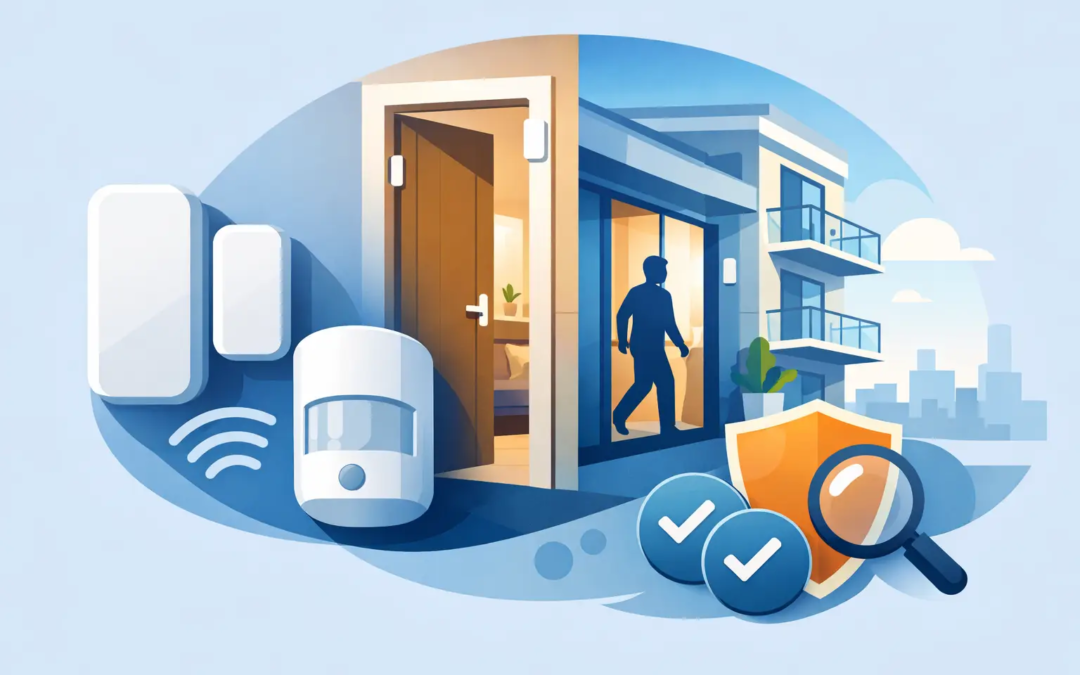
A front door is the main access point to most apartments, but it is not the only one worth protecting. Patio doors, balcony doors, and accessible windows can create gaps in an otherwise secure setup. The best entry sensors for apartments help you know when an opening is used, without turning your rental into a complicated construction project.
For most renters, the right choice is a simple wireless contact sensor. It mounts on the door or window frame, pairs with an alarm system or mobile app, and sends an alert when the two pieces separate. The details matter, though. Your lease, door style, building rules, and whether you want professional monitoring can all affect which sensor makes sense.
What the best entry sensors for apartments have in common
An entry sensor has two small parts: a sensor and a magnet. When a door or window is closed, the two pieces sit close together. When it opens, they separate and trigger an alert or alarm. It is a simple idea, which is exactly why contact sensors remain one of the most useful tools in a home security system.
For apartment living, look for a wireless model with adhesive mounting. It avoids drilling holes in a door, frame, or window casing, which is helpful when your landlord does not allow permanent changes. Quality adhesive strips hold securely when surfaces are clean and dry, and many can be removed carefully at move-out.
A good apartment sensor should also have reliable battery life, clear low-battery alerts, and a strong connection from the sensor location to the hub or control panel. A sensor that looks good on paper but drops offline near a metal door or at the far end of the unit will not deliver the confidence you expect.
Four entry sensor options that fit apartment life
The best option depends less on flashy features and more on how you plan to use the system. Start with the openings that matter most, then choose the level of notification and support you want.
Standard wireless contact sensors
A basic wireless contact sensor is the practical choice for many apartments. It alerts the system when a door or window opens and can sound an alarm if the system is armed. These sensors are affordable, compact, and usually easy to install with adhesive.
Use them on your primary entry door first. If your unit has a sliding patio door or ground-floor windows, add sensors there next. This option works well for renters who want dependable intrusion alerts without adding cameras, smart locks, or multiple monthly services.
The trade-off is that a standard sensor only tells you whether an opening is open or closed. It will not show who entered or automatically contact emergency responders unless it is part of a monitored system.
Smart entry sensors with mobile alerts
Smart sensors connect to an app, allowing you to receive a notification when a door opens. That can be useful when you are at work, traveling, or waiting for a maintenance visit. Depending on the system, you may also be able to review activity history or set schedules that remind you when a door has been left open.
This is a strong fit for renters who want everyday awareness, not just an alarm during an emergency. For example, a smart sensor can let you know when a child arrives home or when a cleaner enters during an approved appointment.
Keep the practical limits in mind. App alerts depend on your internet connection and phone settings. If notifications are silenced or the Wi-Fi is down, you may not see an alert right away. Smart features are helpful, but they should support basic security rather than replace it.
Professionally monitored entry sensors
With professional monitoring, a triggered sensor can lead to a response from a monitoring center when the system is armed. The center may contact you and, when appropriate, request emergency dispatch. This adds a layer of support when you cannot answer your phone or are away from home.
Monitored sensors make sense for renters who travel often, live alone, keep valuable equipment at home, or simply want someone else watching for alarm events. They can also be useful in apartments where a break-in might not be noticed quickly by nearby neighbors.
The main trade-off is an ongoing monthly cost. Before signing up, ask what happens during an alarm, whether cellular backup is included, and whether equipment can move with you. Clear answers are more valuable than a long list of features you may never use.
Sensors made for sliding doors and windows
Not every entry point has the same shape. A sliding glass door may need a slim sensor that fits without interfering with the track, lock, or blinds. Windows can require smaller sensors, especially when the frame has limited flat space.
Measure before buying. Check where the sensor and magnet will sit when the opening is fully closed. They need to align closely, and neither piece should scrape against the frame during normal use. For a sliding door, also test the lock and make sure the sensor does not prevent the door from closing tightly.
How to choose the right sensor setup
Start with your actual risks, not a preset package. An apartment on an upper floor with one hallway entrance may only need a sensor on the front door. A first-floor unit with a patio door and accessible windows needs broader coverage. If you have a dog walker, roommate, or frequent maintenance access, mobile alerts and separate user codes may be more useful than adding extra sensors everywhere.
Check your lease before mounting anything. Adhesive-mounted devices are commonly renter-friendly, but some buildings have rules about exterior doors, shared entryways, or alterations to window frames. Do not place sensors on the outside of a unit door or in a common hallway without written approval.
Choose a system that can grow with you. You may begin with two door sensors and later decide to add a motion detector, smoke alarm, or water sensor. A simple system that supports additions is often a better value than buying separate devices that do not work together.
Also consider how the system handles arming. You want to be able to leave quickly without accidental alarms, while still protecting the apartment when everyone is out or asleep. Entry and exit delays should be easy to set, and anyone who lives in the unit should understand how to arm and disarm the system.
Install entry sensors without creating problems at move-out
Most adhesive sensors install in minutes, but careful placement makes a difference. Clean the mounting area with the wipe recommended by the manufacturer or a small amount of rubbing alcohol. Let it dry completely before applying the adhesive. Dust, moisture, and textured surfaces can weaken the hold.
Mount the sensor on the frame when possible and the magnet on the moving door or window. This usually protects the device from bumps and keeps alignment more consistent. Follow the spacing instructions for that specific model. A gap that is too large can cause false open alerts or prevent the sensor from working at all.
After installation, open and close the entry several times while checking the app or control panel. Then arm the system and test it again. Testing is not a one-time task. Check sensors after battery replacement, furniture changes near a window, or any time a door starts sticking or shifting.
When it is time to move, remove adhesive slowly and steadily rather than pulling it straight off. Warm air from a hair dryer on a low setting can help soften some adhesive, but avoid overheating painted surfaces, vinyl frames, or the sensor itself. Keep any original mounting supplies if you plan to reuse the equipment in your next home.
Small habits that make sensors more useful
Entry sensors work best when they are part of a routine. Arm the system when the apartment is empty, check that the patio door is closed before bed, and respond to low-battery notices promptly. A sensor cannot protect an opening that has been left unsecured because the lock was never engaged.
Avoid using sensor alerts as a substitute for communication with roommates or building management. If maintenance is scheduled, disarm the system or make sure everyone knows how the visit will be handled. This reduces false alarms and keeps security from becoming a daily frustration.
The right apartment security setup should feel easy enough to use every day. Choose sensors that fit your space, your lease, and your routine, then test them until using them feels as natural as locking the door behind you.